Museums closed Native American exhibits 6 months ago. Tribes are still waiting to get items back
Advertisement
Read this article for free:
or
Already have an account? Log in here »
To continue reading, please subscribe:

Digital Subscription
One year of digital access for only $205*
- Enjoy unlimited reading on winnipegfreepress.com
- Read the E-Edition, our digital replica newspaper
- Access News Break, our award-winning app
- Play interactive puzzles
*First annual payment billed as $205.00 + GST for one year. This annual subscription will automatically renew at $233.00 + GST every 52 weeks (10% off the regular annual price of $259.35). Offer available to new and qualified returning subscribers only. Cancel any time.
To continue reading, please subscribe:
Add Free Press access to your Brandon Sun subscription for only an additional
$1 for the first 4 weeks*
- Enjoy unlimited reading on winnipegfreepress.com
- Read the E-Edition, our digital replica newspaper
- Access News Break, our award-winning app
- Play interactive puzzles
*Your next Brandon Sun subscription payment will increase by $1.00 and you will be charged $17.95 plus GST for four weeks. After four weeks, your payment will increase to $24.95 plus GST every four weeks.
Read unlimited articles for free today:
or
Already have an account? Log in here »
Hey there, time traveller!
This article was published 28/07/2024 (798 days ago), so information in it may no longer be current.
NEW YORK (AP) — Tucked within the expansive Native American halls of the American Museum of Natural History is a diminutive wooden doll that holds a sacred place among the tribes whose territories once included Manhattan.
For more than six months now, the ceremonial Ohtas, or Doll Being, has been hidden from view after the museum and others nationally took dramatic steps to board up or paper over exhibits in response to new federal rules requiring institutions to return sacred or culturally significant items to tribes — or at least to obtain consent to display or study them.
Museum officials are reviewing more than 1,800 items as they work to comply with the requirements while also eyeing a broader overhaul of the more than half-century-old exhibits.
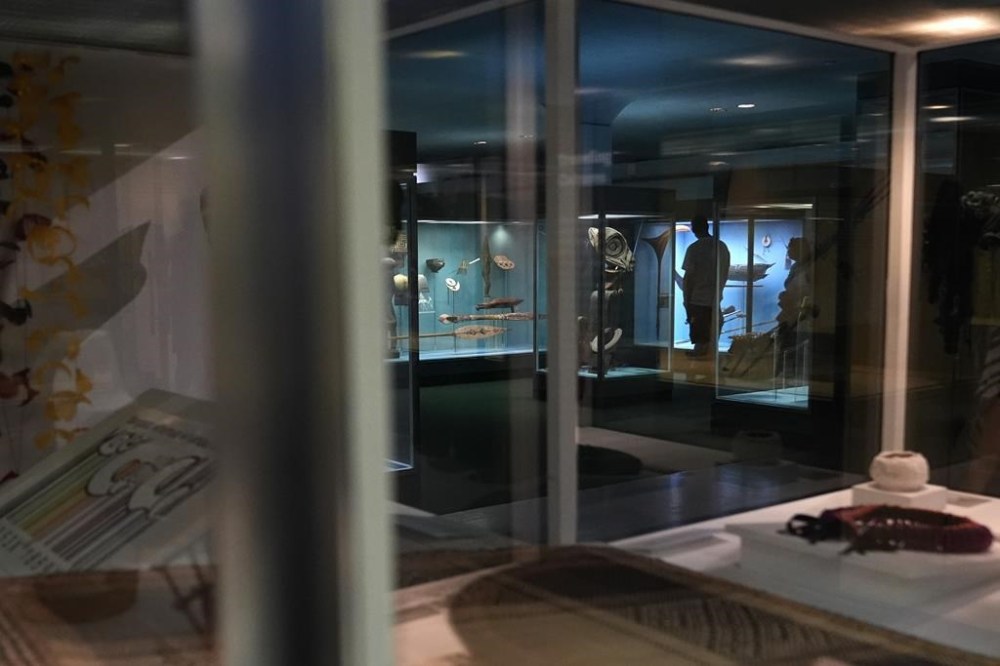
But some tribal leaders remain skeptical, saying museums have not acted swiftly enough. The new rules, after all, were prompted by years of complaints from tribes that hundreds of thousands of items that should have been returned under the federal Native American Graves Protection and Repatriation Act of 1990 still remain in museum custody.
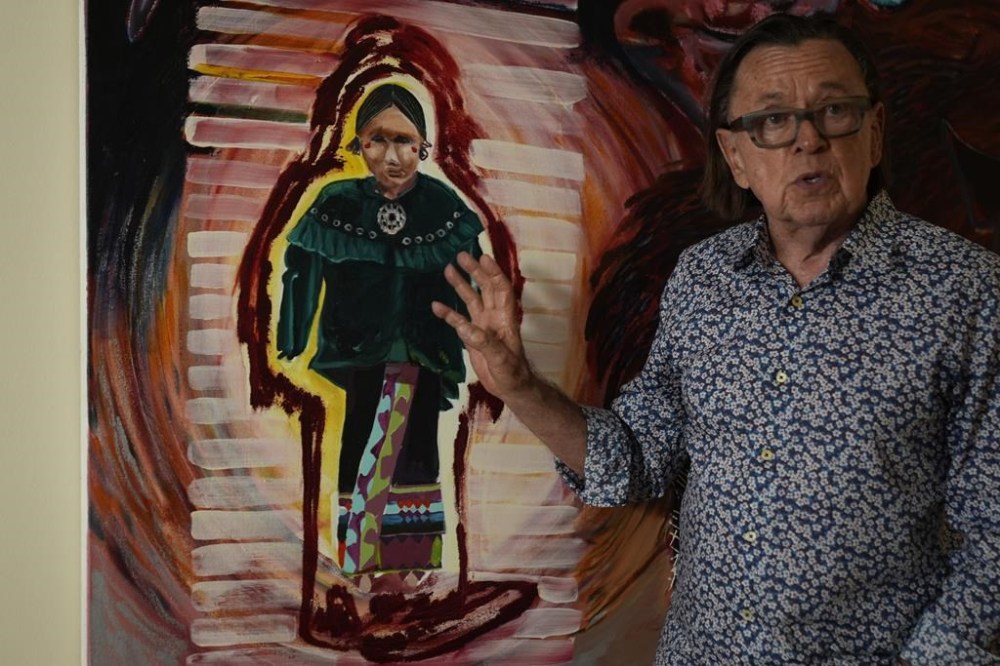
“If things move slowly, then address that,” said Joe Baker, a Manhattan resident and member of the Delaware Tribe of Indians, descendants of the Lenape peoples European traders encountered more than 400 years ago. “The collections, they’re part of our story, part of our family. We need them home. We need them close.”
Sean Decatur, the New York museum’s president, promised tribes will hear from officials soon. He said staff these past few months have been reexamining the displayed objects in order to begin contacting tribal communities.
Museum officials envision a total overhaul of the closed Eastern Woodlands and Great Plains halls — akin to the five-year, $19 million renovation of its Northwest Coast Hall, completed in 2022 in close collaboration with tribes, Decatur added.
“The ultimate aim is to make sure we’re getting the stories right,” he said.
Discussions with tribal representatives over the Ohtas began in 2021 and will continue, museum officials said, even though the doll does actually not fall under the Native American Graves Protection and Repatriation Act because it is associated with a tribe outside the U.S., the Munsee-Delaware Nation in Ontario, Canada.
The museum also plans to open a small exhibit in the fall incorporating Native American voices and explaining the history of the closed halls, why changes are being made and what the future holds, he said.
Lance Gumbs, vice chairman of the Shinnecock Indian Nation, a federally recognized tribe in New York’s Hamptons, said he worries about the loss of representation of local tribes in public institutions, with exhibit closures likely stretching into years.
The American Museum of Natural History, he noted, is one of New York’s major tourism draws and also a mainstay for generations of area students learning about the region’s tribes.
He suggests museums use replicas made by Native peoples so that sensitive cultural items aren’t physically on display.
“I don’t think tribes want to have our history written out of museums,” Gumbs said. “There’s got to be a better way than using artifacts that literally were stolen out of gravesites.”
Gordon Yellowman, who heads the department of language and culture for the Cheyenne and Arapaho Tribes, said museums should look to create more digital and virtual exhibits.
He said the tribes, in Oklahoma, will be seeking from the New York museum a sketchbook by the Cheyenne warrior Little Finger Nail that contains his drawings and illustrations from battle.
The book, which is in storage and not on display, was plucked from his body after he and other tribe members were killed by U.S. soldiers in Nebraska in 1879.
“These drawings weren’t just made because they were beautiful,” Yellowman said. “They were made to show the actual history of the Cheyenne and Arapaho people.”
Institutions elsewhere are taking other approaches.
In Chicago, the Field Museum has established a Center for Repatriation after covering up several cases in its halls dedicated to ancient America and the peoples of the coastal Northwest and Arctic.
The museum has also since returned four items to tribes, with three others pending, through efforts that were underway before the new regulations, according to spokesperson Bridgette Russell.
At the Cleveland Museum in Ohio, a case displaying artifacts from the Tlingit people in Alaska has been reopened after their leadership gave consent, according to Todd Mesek, the museum’s spokesperson. But two other displays remain covered up, with one containing funerary objects from the ancient Southwest to be redone with a different topic and materials.
And at Harvard, the Peabody Museum’s North American Indian hall reopened in February after about 15% of its roughly 350 items were removed from displays, university spokesperson Nicole Rura said.
Chuck Hoskin, chief of the Cherokee Nation, said he believes many institutions now understand they can no longer treat Indigenous items as “museum curiosities” from “peoples that no longer exist.”
The leader of the tribe in Oklahoma said he visited the Peabody this year after the university reached out about returning hair clippings collected in the early 1930s from hundreds of Indigenous children, including Cherokees, forced to assimilate in the notorious Indian boarding schools.
“The fact that we’re in a position to sit down with Harvard and have a really meaningful conversation, that’s progress for the country,” he said.
As for Baker, he wants the Ohtas returned to its tribe. He said the ceremonial doll should never have been on display, especially arranged as it was among wooden bowls, spoons and other everyday items.
“It has a spirit. It’s a living being,” Baker said. “So if you think about it being hung on a wall all these years in a static case, suffocating for lack of air, it’s just horrific, really.”
___
Follow Philip Marcelo at twitter.com/philmarcelo.