Ontario’s chief electoral officer seeks more tools to fight misinformation
Advertisement
Read this article for free:
or
Already have an account? Log in here »
To continue reading, please subscribe:

Digital Subscription
One year of digital access for only $205*
- Enjoy unlimited reading on winnipegfreepress.com
- Read the E-Edition, our digital replica newspaper
- Access News Break, our award-winning app
- Play interactive puzzles
*First annual payment billed as $205.00 + GST for one year. This annual subscription will automatically renew at $233.00 + GST every 52 weeks (10% off the regular annual price of $259.35). Offer available to new and qualified returning subscribers only. Cancel any time.
To continue reading, please subscribe:
Add Free Press access to your Brandon Sun subscription for only an additional
$1 for the first 4 weeks*
- Enjoy unlimited reading on winnipegfreepress.com
- Read the E-Edition, our digital replica newspaper
- Access News Break, our award-winning app
- Play interactive puzzles
*Your next Brandon Sun subscription payment will increase by $1.00 and you will be charged $17.95 plus GST for four weeks. After four weeks, your payment will increase to $24.95 plus GST every four weeks.
Read unlimited articles for free today:
or
Already have an account? Log in here »
Hey there, time traveller!
This article was published 01/11/2024 (714 days ago), so information in it may no longer be current.
TORONTO – The rise of artificial intelligence and its ability to rapidly spread misinformation and disinformation during election campaigns should be addressed by increasing transparency around political ads and allowing for the removal of misleading content about the electoral process, Ontario’s chief electoral officer recommends.
Greg Essensa recently tabled a report in the Ontario legislature, asking the government to update laws to give him more tools to protect the integrity of the electoral process.
“The current authority of the Chief Electoral Officer (CEO) under the Election Act and the Election Finances Act to investigate, thwart and punish misconduct is insufficient to address growing threats in a rapidly evolving digital landscape where voter perceptions can be improperly manipulated by fake news and AI-generated content that is amplified by algorithms,” Essensa wrote.
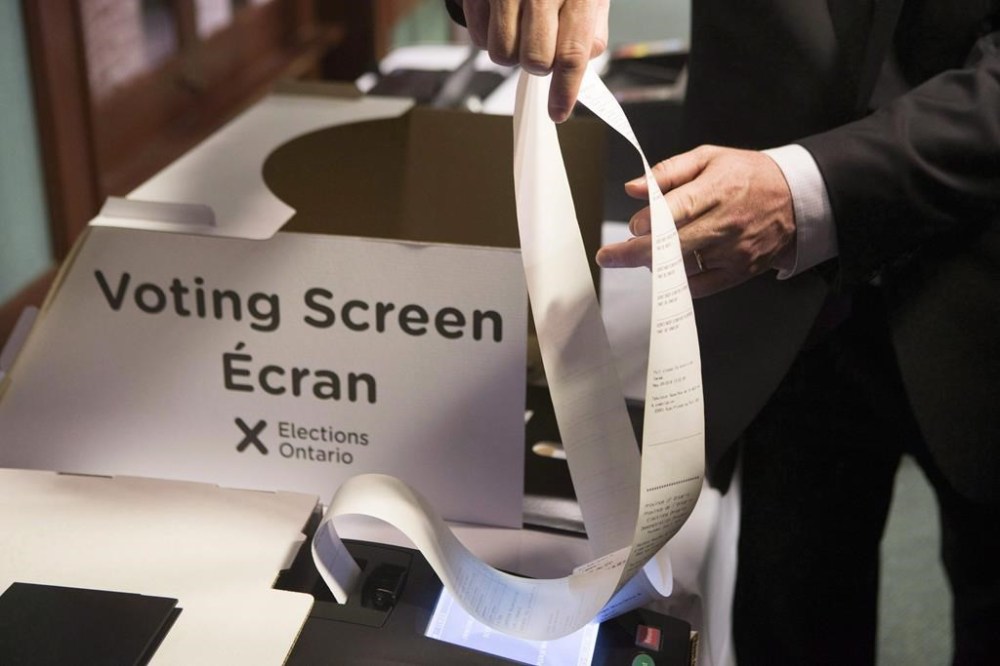
The report largely deals with concerns around communications about the electoral process itself, such as false or misleading information about voting procedures, ballot counting, candidacy withdrawals and voter privacy. In 2021, social media posts impersonated Elections Alberta during that province’s municipal elections, Essensa wrote.
“For (electoral management bodies), the spread of synthetic content on social media has become a significant problem, with false and misleading information now being generated at unprecedented speeds,” Essensa wrote.
“For example, this can include convincing text messages from candidates, false announcements in different languages about voting processes, or fake websites that look like official government ones.”
Social media companies such as Meta and X do have policies about misleading content, but the rapid spread of misinformation often far outpaces fact checking or content moderation, the report said.
Among the changes Essensa is urging is requiring election advertisements that are automated — done by bots — to be labelled as such. Artificial intelligence can amplify the spread of misinformation both by extending the reach and personalizing it, Essensa wrote.
The chief electoral officer should also have the authority to levy administrative penalties of up to $20,000 for an individual and up to $100,000 for a corporation if they violate misinformation or disinformation political advertising regulations, Essensa wrote.
He is also recommending that the chief electoral officer be able to require people or companies to remove false or misleading content about the electoral process, with fines for non-compliance of up to $20,000 per day for individuals and up to $50,000 per day for organizations.

As well, Essensa would like to require all election advertisers to post their digital ads in a public registry during elections with the name of the person or organization sponsoring the ad, the cost, publication dates, source of funding, targeting criteria and whether AI has been used.
A spokesperson for Attorney General Doug Downey acknowledged the report in a short statement but made no comments about its recommendations.
“We understand the importance of maintaining the integrity of Ontario’s elections and are currently reviewing the report,” Jack Fazzari wrote.
The next set provincial election date is in June 2026, but opposition parties are preparing for Premier Doug Ford to possibly call an early election in the spring of 2025.
This report by The Canadian Press was first published Nov. 1, 2024.