NORAD’s Santa tracker was a Cold War morale boost. Now it attracts millions of kids
Advertisement
Read this article for free:
or
Already have an account? Log in here »
To continue reading, please subscribe:

Digital Subscription
One year of digital access for only $205*
- Enjoy unlimited reading on winnipegfreepress.com
- Read the E-Edition, our digital replica newspaper
- Access News Break, our award-winning app
- Play interactive puzzles
*First annual payment billed as $205.00 + GST for one year. This annual subscription will automatically renew at $233.00 + GST every 52 weeks (10% off the regular annual price of $259.35). Offer available to new and qualified returning subscribers only. Cancel any time.
To continue reading, please subscribe:
Add Free Press access to your Brandon Sun subscription for only an additional
$1 for the first 4 weeks*
- Enjoy unlimited reading on winnipegfreepress.com
- Read the E-Edition, our digital replica newspaper
- Access News Break, our award-winning app
- Play interactive puzzles
*Your next Brandon Sun subscription payment will increase by $1.00 and you will be charged $17.95 plus GST for four weeks. After four weeks, your payment will increase to $24.95 plus GST every four weeks.
Read unlimited articles for free today:
or
Already have an account? Log in here »
Hey there, time traveller!
This article was published 20/12/2024 (637 days ago), so information in it may no longer be current.
The Christmas tradition has become nearly global in scope: Children from around the world track Santa Claus as he sweeps across the earth, delivering presents and defying time.
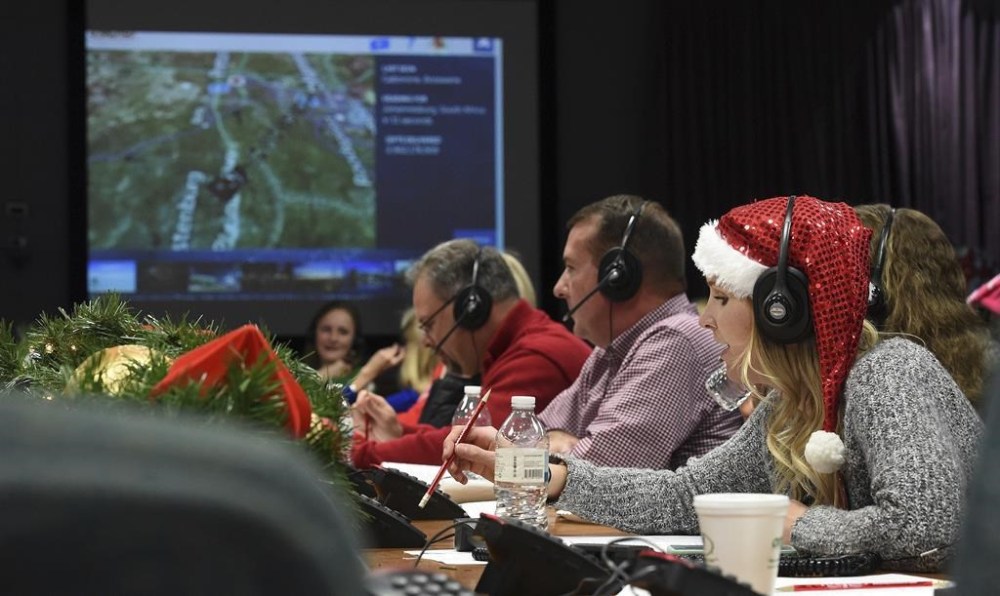
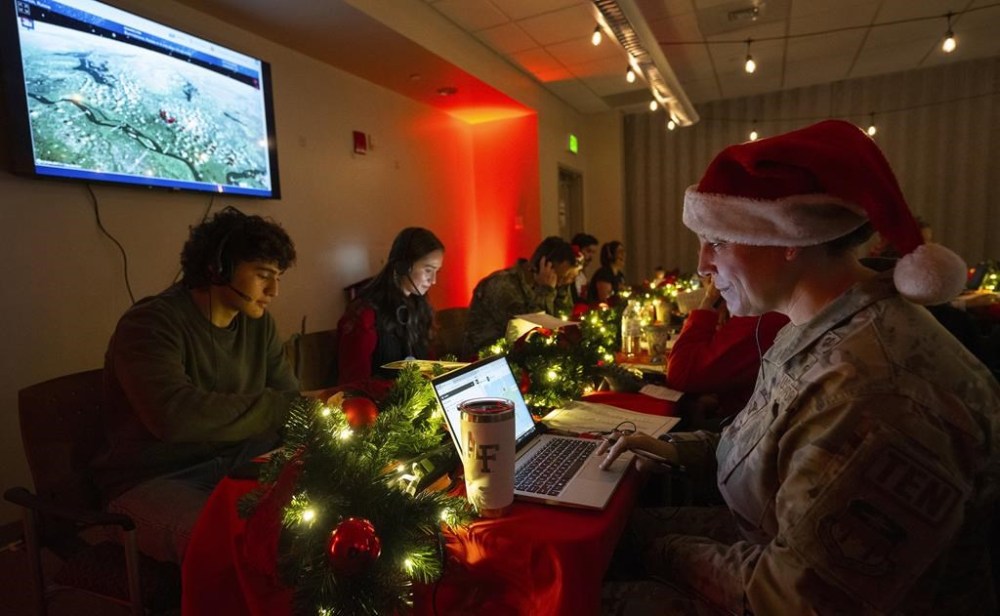
Each year, at least 100,000 kids call into the North American Aerospace Defense Command to inquire about Santa’s location. Millions more follow online in nine languages, from English to Japanese.
On any other night, NORAD is scanning the heavens for potential threats, such as last year’s Chinese spy balloon. But on Christmas Eve, volunteers in Colorado Springs are fielding questions like, “When is Santa coming to my house?” and, “Am I on the naughty or nice list?”
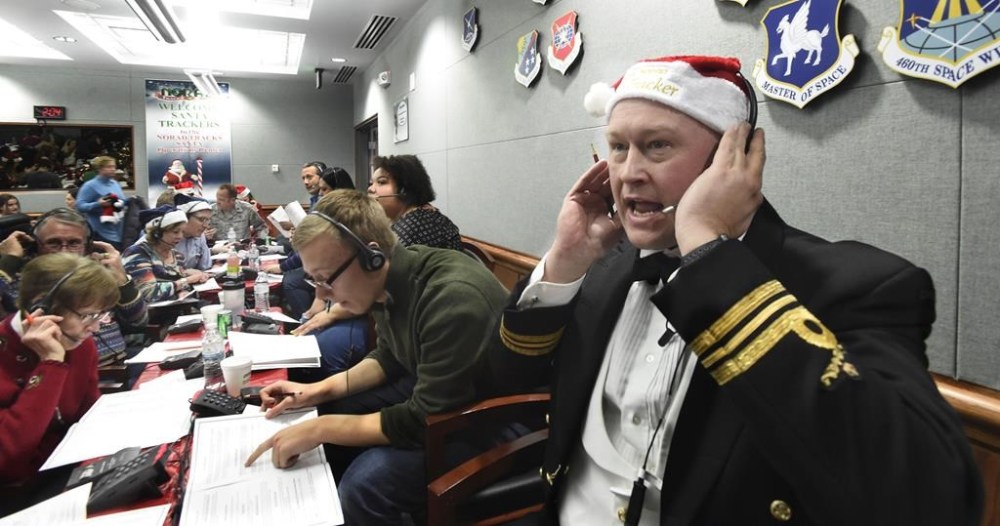
“There are screams and giggles and laughter,” said Bob Sommers, 63, a civilian contractor and NORAD volunteer.
Sommers often says on the call that everyone must be asleep before Santa arrives, prompting parents to say, “Do you hear what he said? We got to go to bed early.”
NORAD’s annual tracking of Santa has endured since the Cold War, predating ugly sweater parties and Mariah Carey classics. The tradition continues regardless of government shutdowns, such as the one in 2018, and this year.
Here’s how it began and why the phones keep ringing.
The origin story is Hollywood-esque
It started with a child’s accidental phone call in 1955. The Colorado Springs newspaper printed a Sears advertisement that encouraged children to call Santa, listing a phone number.
A boy called. But he reached the Continental Air Defense Command, now NORAD, a joint U.S. and Canadian effort to spot potential enemy attacks. Tensions were growing with the Soviet Union, along with anxieties about nuclear war.
Air Force Col. Harry W. Shoup picked up an emergency-only “red phone” and was greeted by a tiny voice that began to recite a Christmas wish list.
“He went on a little bit, and he takes a breath, then says, ‘Hey, you’re not Santa,’” Shoup told The Associated Press in 1999.
Realizing an explanation would be lost on the youngster, Shoup summoned a deep, jolly voice and replied, “Ho, ho, ho! Yes, I am Santa Claus. Have you been a good boy?”
Shoup said he learned from the boy’s mother that Sears mistakenly printed the top-secret number. He hung up, but the phone soon rang again with a young girl reciting her Christmas list. Fifty calls a day followed, he said.
In the pre-digital age, the agency used a 60-by-80 foot (18-by-24 meter) plexiglass map of North America to track unidentified objects. A staff member jokingly drew Santa and his sleigh over the North Pole.
The tradition was born.
“Note to the kiddies,” began an AP story from Colorado Springs on Dec. 23, 1955. “Santa Claus Friday was assured safe passage into the United States by the Continental Air Defense Command.”
In a likely reference to the Soviets, the article noted that Santa was guarded against possible attack from “those who do not believe in Christmas.”
Is the origin story humbug?
Some grinchy journalists have nitpicked Shoup’s story, questioning whether a misprint or a misdial prompted the boy’s call.
In 2014, tech news site Gizmodo cited an International News Service story from Dec. 1, 1955, about a child’s call to Shoup. Published in the Pasadena Independent, the article said the child reversed two digits in the Sears number.
“When a childish voice asked COC commander Col. Harry Shoup, if there was a Santa Claus at the North Pole, he answered much more roughly than he should — considering the season:
‘There may be a guy called Santa Claus at the North Pole, but he’s not the one I worry about coming from that direction,’” Shoup said in the brief piece.
In 2015, The Atlantic magazine doubted the flood of calls to the secret line, while noting that Shoup had a flair for public relations.
Phone calls aside, Shoup was indeed media savvy. In 1986, he told the Scripps Howard News Service that he recognized an opportunity when a staff member drew Santa on the glass map in 1955.
A lieutenant colonel promised to have it erased. But Shoup said, “You leave it right there,” and summoned public affairs. Shoup wanted to boost morale for the troops and public alike.
“Why, it made the military look good — like we’re not all a bunch of snobs who don’t care about Santa Claus,” he said.
Shoup died in 2009. His children told the StoryCorps podcast in 2014 that it was a misprinted Sears ad that prompted the phone calls.
“And later in life he got letters from all over the world,” said Terri Van Keuren, a daughter. “People saying ‘Thank you, Colonel, for having, you know, this sense of humor.’”
A rare addition to Santa’s story
NORAD’s tradition is one of the few modern additions to the centuries-old Santa story that have endured, according to Gerry Bowler, a Canadian historian who spoke to the AP in 2010.

Ad campaigns or movies try to “kidnap” Santa for commercial purposes, said Bowler, who wrote “Santa Claus: A Biography.” NORAD, by contrast, takes an essential element of Santa’s story and views it through a technological lens.
In a recent interview with the AP, Air Force Lt. Gen. Case Cunningham explained that NORAD radars in Alaska and Canada —- known as the northern warning system — are the first to detect Santa.
He leaves the North Pole and typically heads for the international dateline in the Pacific Ocean. From there he moves west, following the night.
“That’s when the satellite systems we use to track and identify targets of interest every single day start to kick in,” Cunningham said. “A probably little-known fact is that Rudolph’s nose that glows red emanates a lot of heat. And so those satellites track (Santa) through that heat source.”
NORAD has an app and website, www.noradsanta.org, that will track Santa on Christmas Eve from 4 a.m. to midnight, mountain standard time. People can call 1-877-HI-NORAD to ask live operators about Santa’s location from 6 a.m. to midnight, mountain time.