

Quebec government tables bill to combat election disinformation and interference
Advertisement
Read this article for free:
or
Already have an account? Log in here »
To continue reading, please subscribe:
Monthly Digital Subscription
$1 per week for 24 weeks*
- Enjoy unlimited reading on winnipegfreepress.com
- Read the E-Edition, our digital replica newspaper
- Access News Break, our award-winning app
- Play interactive puzzles
*Billed as $4.00 plus GST every four weeks. After 24 weeks, price increases to the regular rate of $19.95 plus GST every four weeks. Offer available to new and qualified returning subscribers only. Cancel any time.
Monthly Digital Subscription
$4.99/week*
- Enjoy unlimited reading on winnipegfreepress.com
- Read the E-Edition, our digital replica newspaper
- Access News Break, our award-winning app
- Play interactive puzzles
*Billed as $19.95 plus GST every four weeks. Cancel any time.
To continue reading, please subscribe:
Add Free Press access to your Brandon Sun subscription for only an additional
$1 for the first 4 weeks*
*Your next subscription payment will increase by $1.00 and you will be charged $16.99 plus GST for four weeks. After four weeks, your payment will increase to $23.99 plus GST every four weeks.
Read unlimited articles for free today:
or
Already have an account? Log in here »
Hey there, time traveller!
This article was published 03/04/2025 (357 days ago), so information in it may no longer be current.
QUÉBEC – The Quebec government introduced a bill on Thursday to “preserve the integrity of the electoral process” by tackling deliberate disinformation and election interference.
The bill tabled by Jean-François Roberge, the province’s minister for democratic institutions, would make it an offence to knowingly spread false information to influence or disturb an election or compromise the public’s trust in the electoral process.
Roberge says it would also be an offence to assume the identity of the chief electoral officer or a candidate in order to mislead the public.
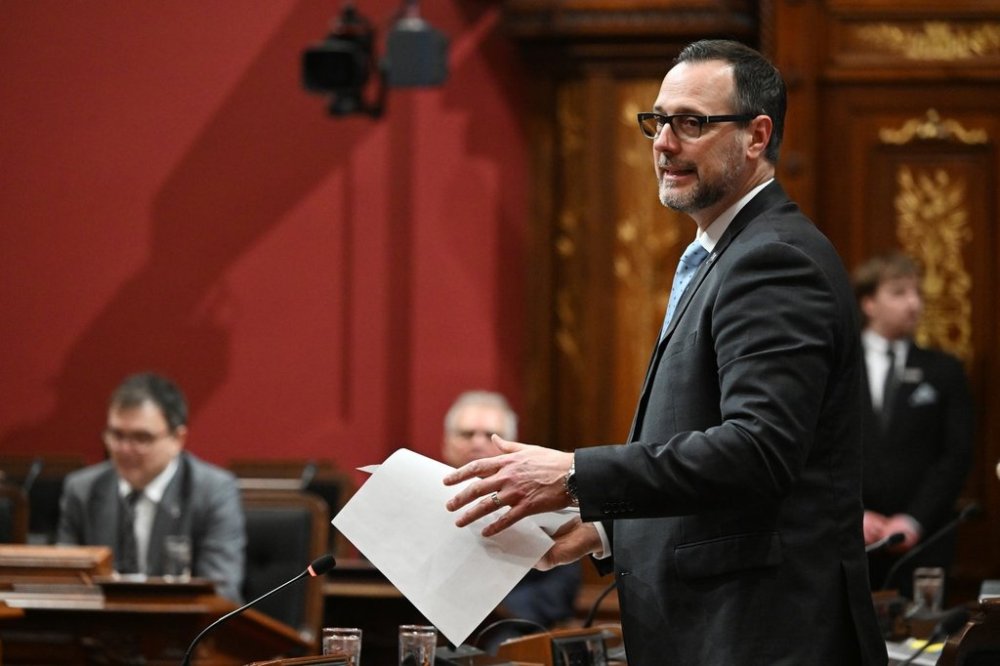
“What is targeted in this case, I would say, are individuals or legal entities who come to spread information that they know to be false in order to disrupt the conduct of an election or influence the vote, but with the intention of causing harm and knowing that it is false,” he said.
Roberge said examples of false representations include AI-generated deepfakes that impersonate candidates, or lies about a candidate’s resume or qualifications to influence a vote.
Other infractions listed in the bill include spreading misinformation on the time or place a vote is taking place, on results of an election or on a candidate’s “place of birth, education, professional qualifications or affiliation with a group or association.”
He told reporters that the infractions would apply only to people who act deliberately to misinform voters, and not to those who are exercising their rights to free speech by expressing political opinions.
“We have to be very careful when we talk about freedom of expression, but that’s different than a situation where someone purposefully and voluntarily spreads false information with the goal of misleading people and disrupting the holding of an election,” he said. The bill specifies that it is not an offence to use a candidate’s image or voice for the purposes of parody or satire.
Fines would range from $1,000 to $10,000 for a first offence for an individual, and between $5,000 and $30,000 for a company or organization. Those amounts would rise for repeat offenders.
Roberge said infractions would be investigated by Quebec’s chief electoral officer, and that sanctions would apply whether a person is a Quebecer, a Canadian or a foreign actor. “Just because people are not in Quebec or Canada doesn’t mean they can’t be prosecuted under Quebec and Canadian laws,” he said.
The proposed legislation also requires parties to disclose expenses incurred for advertising during the pre-election period, and puts rules in place on protecting voters’ personal information.
It would also strip official status from parties that do not field at least two candidates in a general election.
This report by The Canadian Press was first published April 3, 2025.