Every yard makes a difference. Native-plant champion Doug Tallamy’s got a new book explaining how
Advertisement
Read this article for free:
or
Already have an account? Log in here »
To continue reading, please subscribe:

Digital Subscription
One year of digital access for only $205*
- Enjoy unlimited reading on winnipegfreepress.com
- Read the E-Edition, our digital replica newspaper
- Access News Break, our award-winning app
- Play interactive puzzles
*First annual payment billed as $205.00 + GST for one year. This annual subscription will automatically renew at $233.00 + GST every 52 weeks (10% off the regular annual price of $259.35). Offer available to new and qualified returning subscribers only. Cancel any time.
To continue reading, please subscribe:
Add Free Press access to your Brandon Sun subscription for only an additional
$1 for the first 4 weeks*
- Enjoy unlimited reading on winnipegfreepress.com
- Read the E-Edition, our digital replica newspaper
- Access News Break, our award-winning app
- Play interactive puzzles
*Your next Brandon Sun subscription payment will increase by $1.00 and you will be charged $17.95 plus GST for four weeks. After four weeks, your payment will increase to $24.95 plus GST every four weeks.
Read unlimited articles for free today:
or
Already have an account? Log in here »
Hey there, time traveller!
This article was published 08/04/2025 (540 days ago), so information in it may no longer be current.
If you’re a human living on this planet, you should get to know Doug Tallamy, the entomologist and University of Delaware professor whose groundbreaking 2006 book, “Bringing Nature Home,” supercharged the native plants movement.
Tallamy made a case that our native birds and insects evolved with native plants, so they recognize them as food. The loss of these native plants and habitats to development poses an existential threat not just to wildlife, but to us.
Since then, Tallamy co-founded Homegrown National Park, a grassroots movement whose mission is to “urgently inspire everyone to address the biodiversity crisis by adding native plants and removing invasive ones where we live, work, learn, pray, and play.”
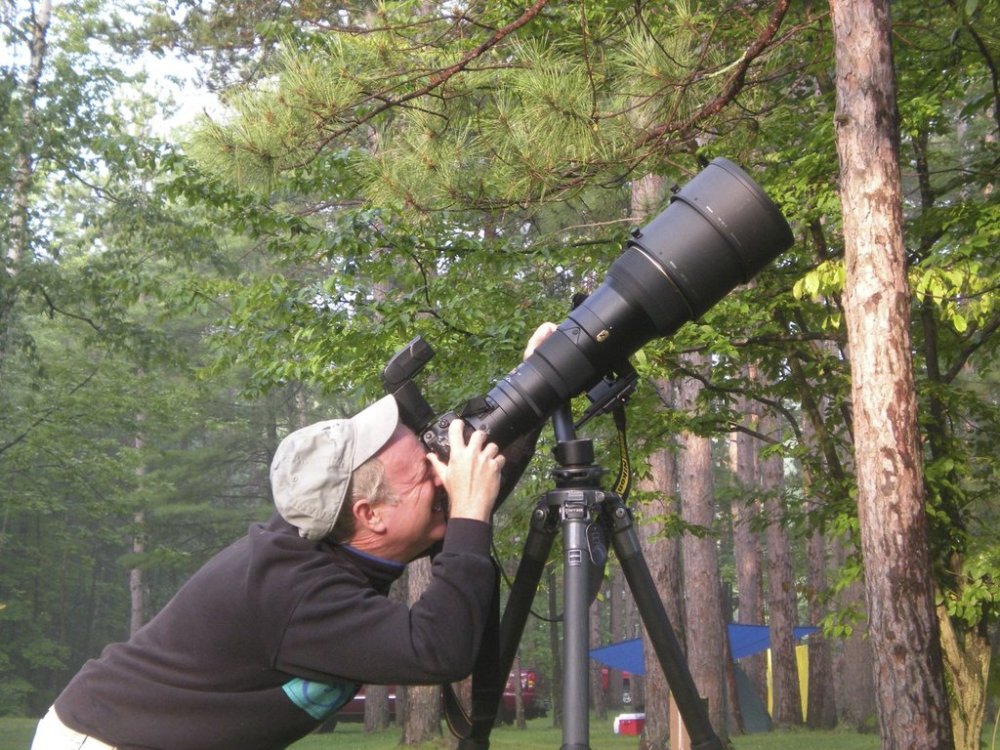
Tallamy chatted with The Associated Press about his decades-long research, his new book, “How Can I Help?” and what he’s planning next.
The interview has been edited for length and clarity.
AP: What initially inspired you to focus on native plants and their relationships with insects?
TALLAMY: I am an entomologist, so I always think about insects, but it was when my wife, Cindy, and I moved into our home in Oxford, Pennsylvania. The developer had mowed the land for hay, and when you do that, what comes back is all the invasive plants from Asia, so we ended up with 10 acres of invasive species. Watching the insects interact with those plants showed very clearly that our native insects do very poorly with them.
So we put the plants that they require back. Ever since, I’ve been measuring the number of bird species that have bred on our property — 62 — and the number of moth species — 1,337 — that produce the caterpillars that those birds need to reproduce. And that tells me it works.
About 80% of the plants in our residential landscapes are non-native plants. They don’t have to be invasive to wreck the food web. So that led me in a whole new research direction to find out what is happening to the food web.
We got the numbers that supported the argument that native plants are essential, insects are essential, insects are declining, the birds that need them are declining.
AP: How has public awareness of native plants and biodiversity evolved since you wrote “Bringing Nature Home”?
TALLAMY: I have been talking about it for 20 years and can measure the public response. I get three or four speaking requests a day. Interest is going through the roof.
My message is that you can be part of the solution instead of contributing to the problem just by how you landscape your property. You can reduce the area that you have in lawn, you can put in powerful plants that support biodiversity and you can watch it come back to your own yard. And that empowers people.
AP: What are the biggest misconceptions that people have about insect conservation and native plants?
TALLAMY: A common one is that native landscaping is essentially the lack of landscaping and you just stop doing anything. That’s not true at all. They think all native plant landscapes are wild and messy, but they don’t have to be, by any stretch.
Another misconception is that if you use native plants instead of crape myrtle from Asia, it’s going to lower your property value. These are the talking points of homeowners’ associations. If you don’t have most of your property in lawn, you’re not a good citizen.
AP: How do you respond to people who fear that “wild” look?
We do have lawn as a status symbol. So, I don’t suggest we get rid of lawn. Instead, reduce the amount of area that’s in lawn.
You should use lawn where you walk because it’s the best plant to walk on without killing it. Line your sidewalk and your driveway with lawn, and have swaths of grass going through your property where you’re going to walk.
Keep it low and manicured to show you understand what the culture is and that you’re intentional and taking care of your yard.
And when you do that, nobody even notices. You don’t get cited. You get cited when you try to put a big meadow in your front yard because nobody’s used to that.
AP: What simple actions can homeowners take to make the biggest impact on their local ecosystem?
TALLAMY: There are two.
First, reduce the lawn. Every property has to support pollinators, every property has to manage the watershed in which it lies and every property has to sequester carbon (plants remove carbon dioxide from the atmosphere). That’ll help combat climate change. And every property has to support the viable food webs of the animals associated with the property.
Lawn does none of those things.
If you have a lot of lawn, you get a lot of runoff, and you’re polluting your watershed with the fertilizers and the pesticides you put on the lawn. When you have a well-planted property, it keeps the water on site, cleans it, helps it soak into the ground and recharges your water table.
AP: What’s the second action?
TALLAMY: Choose plants that are going to support that food web, the ones that will share the most energy with other living things. That’s the problem with plants from other continents; our insects can’t eat them. So, there are no insects for the birds, and the food web stops.
In 84% of the counties where they occur, oaks are the No. 1 plant for passing along that energy. If you’re going to plant a tree, that is the best plant to choose.
AP: In your new book, “How can I Help?”, you answer 499 questions you’re most frequently asked and address the importance of ecological balance. How would you explain that to homeowners who may not be familiar with the science?
TALLAMY: I included chapters like that because we were never taught these things. How can I expect somebody to understand that conservation is important when they don’t know what biodiversity does, when they don’t know how much we depend on it totally? Or what evolution or natural selection is.
So, it’s a little primer to basic ecological knowledge that will help you understand how important these issues are.
AP: What upcoming projects are you excited about?
TALLAMY: Well, I’m getting closer to retirement, but I just graduated a master’s student who is looking at how we landscape underneath our trees.
We talk about the importance of trees in creating the caterpillars that drive the food web. But those caterpillars drop from the tree and they pupate in the ground. And how we landscape under those trees determines whether or not those caterpillars will survive. So, that’s really an important addition to our landscape management tools.
You want uncompacted areas where we’re not walking, which means beds around our trees. If you’re mowing or walking under it, you’re squishing all those caterpillars.
So, we ranked all of the plant genera in North America in terms of their ability to support caterpillars and keep that food web going. We haven’t published it yet, but now we’ve got that data for every country in the world.
AP: Anything else you’d like to share?
TALLAMY: I always like to convey a sense of responsibility. It’s not just the job of a few ecologists or conservation biologists. It’s everybody’s responsibility because we all need it.
You can do that by voting properly. You can do that by not hindering conservation efforts, or you can actively do it right on your own property. But everybody has a responsibility to do it.
___
Jessica Damiano writes weekly gardening columns for the AP and publishes the award-winning Weekly Dirt Newsletter. You can sign up here for weekly gardening tips and advice.
___
For more AP gardening stories, go to https://apnews.com/hub/gardening.