Matthew Goode is both good and bad cop in Netflix’s ‘Dept. Q’
Advertisement
Read this article for free:
or
Already have an account? Log in here »
To continue reading, please subscribe:

Digital Subscription
One year of digital access for only $205*
- Enjoy unlimited reading on winnipegfreepress.com
- Read the E-Edition, our digital replica newspaper
- Access News Break, our award-winning app
- Play interactive puzzles
*First annual payment billed as $205.00 + GST for one year. This annual subscription will automatically renew at $233.00 + GST every 52 weeks (10% off the regular annual price of $259.35). Offer available to new and qualified returning subscribers only. Cancel any time.
To continue reading, please subscribe:
Add Free Press access to your Brandon Sun subscription for only an additional
$1 for the first 4 weeks*
- Enjoy unlimited reading on winnipegfreepress.com
- Read the E-Edition, our digital replica newspaper
- Access News Break, our award-winning app
- Play interactive puzzles
*Your next Brandon Sun subscription payment will increase by $1.00 and you will be charged $17.95 plus GST for four weeks. After four weeks, your payment will increase to $24.95 plus GST every four weeks.
Read unlimited articles for free today:
or
Already have an account? Log in here »
Hey there, time traveller!
This article was published 29/05/2025 (500 days ago), so information in it may no longer be current.
LONDON (AP) — Being a leading man? Matthew Goode quite likes it.
He’s the star of “Dept. Q,” based on the books by Danish author Jussi Adler-Olsen and set in the cold case division of an Edinburgh police station. From “The Queen’s Gambit” showrunner Scott Frank, the nine-part miniseries launches Thursday and sees Goode playing a one-man combination of good cop/bad cop. While Detective Chief Inspector Carl Morck is a brilliant investigator, he is equally successful at annoying people — even begrudging respect for his talent quickly turns into intense dislike.
It’s not that Goode hasn’t been No. 1 on the call sheet before, it’s just that he didn’t enjoy it.
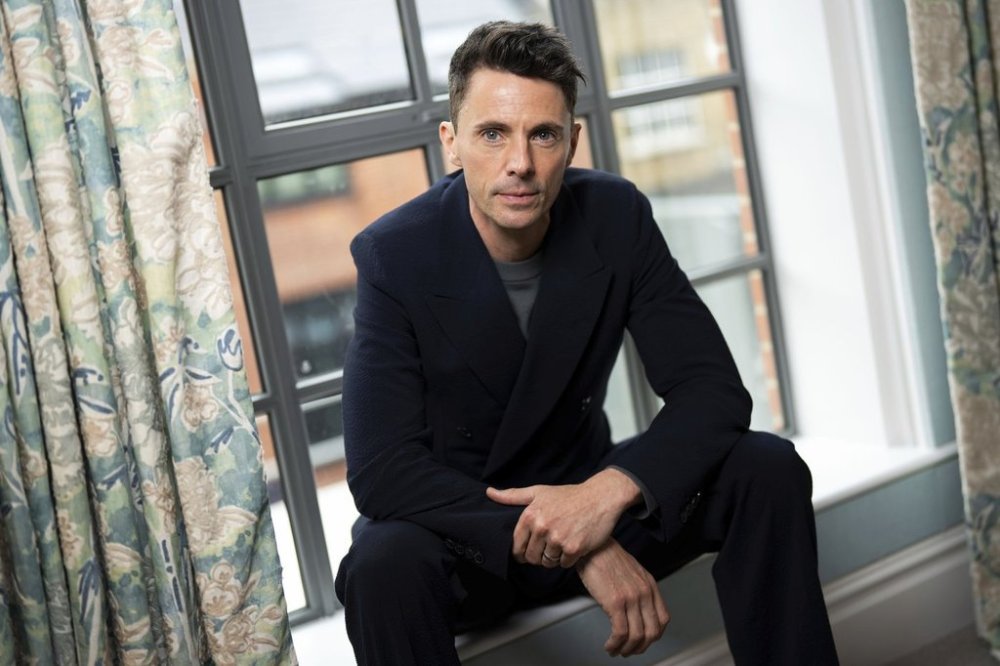
“It’s something I shied away from after the beginning of my career where I was there for a bit and then I had some sort of bad things … things weren’t necessarily positive at that point, after that. And I just went, I just want to be, you know, not the lead anymore,” he says.
Goode also acknowledges that actors don’t get to choose if a main part is “bestowed” on them and notes that Frank fought to cast him in “Dept. Q.” The pair first worked together on “The Lookout” (2007) with the English actor portraying an American thief, a long way from the period dramas Goode has been recently known for, playing suave Brits in “The Crown,” “Downton Abbey” and “Freud’s Last Session.”
Goode and Frank talked and teased each other in an interview with The Associated Press about working together, cast bonding and breaking Goode out of his period drama groove. The conversation has been edited for clarity and brevity.
AP: To start with, can I get you to describe your relationship?
GOODE: Father and son.
FRANK: Taxing, toxic, troubling.
GOODE: Well, he’s the genius and I just do what he says, basically.
FRANK: I wish. We go way back. We made a film together, the first film I ever directed, in fact. And I was lucky that I had Matthew because he was outstanding and made it easier for me at that point. And I think we both just really know one another and I love this man — I would work with him in everything I ever did, but he’s a pain in the ass.
GOODE: Well, you know. There has to be some cost!
FRANK: He is Carl Morck, in many ways. To know him is to want to strangle him. Does that sum it up?
GOODE: OK, so now you see what I’m working with. This is the second time he’s given me a character that I genuinely don’t think that many other people would have taken that chance, because I don’t really scream Kansas City bank robber (in “The Lookout”). And I think this is a part that some people would have kind of gone, it’s a bit more sort of Tom Hardy-ish, perhaps. But that’s what we are, we’re actors, but you don’t necessarily get to be versatile a lot of the time, so I feel very indebted to you.
AP: And did you write this with Matthew in mind?
FRANK: I had always thought he would be terrific for this, and I didn’t know if we would end up doing it together, but from the minute I started thinking about it, doing it here, I really thought, oh, and I knew he would love it.
I think a lot of times people only see actors in one way or a particular way, is because they don’t really see them, they just see the roles they’ve already played, they’re not really paying attention to what else is happening.
AP: It’s not a period drama.
GOODE: There you go, that’s a prime example, yeah.
AP: So is that part of the appeal?
GOODE: I mean a career is, for want of a better way of explaining it, is a bit like a river where essentially you can go, there’s the main channel in it, but there’s eddies and you get caught in certain things and you get cast in certain ways. So you’re not really ever particularly in control of it. Certainly unless you have your own production company or you become a massive star where you actually sort of have the keys to Hollywood and then you have a bit more of a sphere of influence and you can dip your toes in different waters. And he had to fight for me a little bit for this one. He had to go bat for me to actually do the part.
AP: Have you played a detective before?
GOODE: No, this is my first time, I think. I’ve got a memory like a sieve now; I’ve got three kids, that’s the only thing I really think about. But no, I think this is my first time.
FRANK: I don’t think you have.
GOODE: Only with my wife with some dress up, but that’s about it.
AP: Carl seems to wind everybody up.
FRANK: A lot of people he winds up are people you want him to wind up and then a lot of times he’s shooting down. But then, the people he’s shooting down at surprise you by coming straight back at him. They don’t necessarily let him get away with Carl being Carl.
AP: And he’s not a posh character.
GOODE: No because (Frank) transposed it from the original Danish setting, Copenhagen, and it works brilliantly, obviously, in Edinburgh, and it becomes this amazing character. But he made the character English. But we haven’t given too much detail yet as to as to his past, which I love the fact, because we’re aiming to be able to keep doing this because there’s 10 books.
AP: I spoke to Leah Byrne and Alexej Manvelov, who both had first day nerves and are so good in this. Did it surprise you that they needed reassurance?
FRANK: We all need reassurance. Including me.
GOODE: Every actor I’ve ever met.
FRANK: Your first day is really scary. There are all these people … and acting, as I like to say, is the most difficult job in all of this because you’re making yourself so vulnerable in front of a hundred strangers. So Day 1 is even worse.

AP: And Matthew went out with Alexej for a long lunch?
GOODE: I know it sounds a bit unprofessional, but actually, it’s really, for me, that’s the way that I like to work is to give myself to the other people that I’ve got major relationships in the show with, because I’m not competitive as an actor. I really want to share the screen. I find it weird when it doesn’t happen the other way toward me. And so that’s a really important relationship … and I wanted us to have a great friendship.
FRANK: The one thing you can’t fix in post-production is casting if you’ve not cast well. And there were a lot of different relationships happening here, so they all had to work together. And they were all terrific. I would be surprised every day by something one of these actors would do. And, what was really fun for me too, is how much Matthew appreciated the skill on the other side. He was never like threatened or felt he was being shown up, it was like this delight.
GOODE: Probably was being shown up.
FRANK: Oh, you were, trust me, they all steal it from you.