Everything you need to know about ‘BTS: The Return,’ the new Netflix documentary
Advertisement
Read this article for free:
or
Already have an account? Log in here »
To continue reading, please subscribe:

Digital Subscription
One year of digital access for only $205*
- Enjoy unlimited reading on winnipegfreepress.com
- Read the E-Edition, our digital replica newspaper
- Access News Break, our award-winning app
- Play interactive puzzles
*First annual payment billed as $205.00 + GST for one year. This annual subscription will automatically renew at $233.00 + GST every 52 weeks (10% off the regular annual price of $259.35). Offer available to new and qualified returning subscribers only. Cancel any time.
To continue reading, please subscribe:
Add Free Press access to your Brandon Sun subscription for only an additional
$1 for the first 4 weeks*
- Enjoy unlimited reading on winnipegfreepress.com
- Read the E-Edition, our digital replica newspaper
- Access News Break, our award-winning app
- Play interactive puzzles
*Your next Brandon Sun subscription payment will increase by $1.00 and you will be charged $17.95 plus GST for four weeks. After four weeks, your payment will increase to $24.95 plus GST every four weeks.
Read unlimited articles for free today:
or
Already have an account? Log in here »
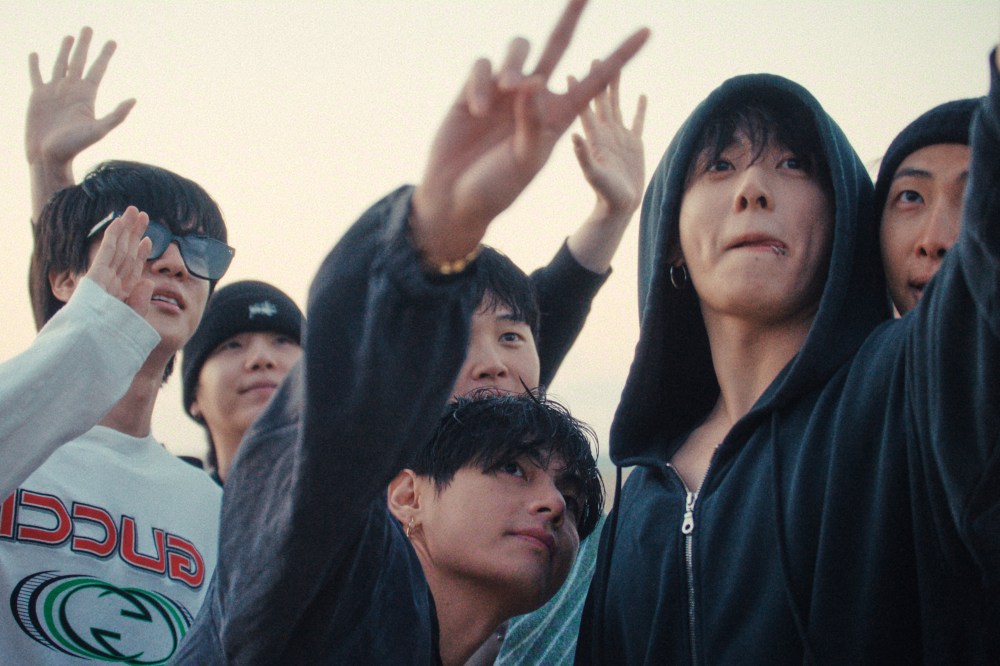
NEW YORK (AP) — All seven members log onto a livestream, broadcast from a beach. A few years ago, it was a common image. But after the K-pop boy band BTS pressed pause on their full-band duties for nearly four years, it was revelatory.
That’s the scene that begins “BTS: The Return,” a new Netflix documentary from director Bao Nguyen (“The Stringer,” “The Greatest Night in Pop”), produced by This Machine (“Martha,” “Karol G”) and HYBE, the South Korean entertainment company behind BTS and countless other international acts.
The mostly-Korean language film offers an intimate look at BTS’ journey to their latest album, “ARIRANG,” released Friday. It also follows the seven member group — RM, Jin, Jimin, V, Suga, Jung Kook and j-hope — as they learned to reacclimate to their life in the fast lane, together again.

Here are key takeaways from the documentary film, which premieres on Netflix on Friday, March 27.
South Korea’s mandatory military service comes up fast
As BTS fans are well aware, “ARIRANG” is the band’s first full-length release since all seven members completed South Korea’s mandatory military service. In South Korea, all able-bodied men aged 18-28 are required by law to perform 18-21 months of military service under a conscription system meant to deter aggression from North Korea.
In their documentary, mention of BTS’ service emerges right away. In the first minute, while the band films their live video on the beach, RM mentions that he “learned to hustle” in the military. Then it cuts to footage of the guys getting their heads shaved and wearing their uniforms — and quickly thereafter, rejoining the band. In reality, they were separated for a number of years. Before announcing their comeback in June, all seven members hadn’t been seen broadcasting live together since September 2022.
The road to ‘ARIRANG’ was swift
Shortly after returning from their mandatory service, the band decamped to Los Angeles during the summer of 2025 to begin work on “ARIRANG,” their 14-track, fifth studio album and first in nearly four years.
They lived in the same house together. It was tight quarters, and a tight turnaround: In the film, Jin says he joined the band in Los Angeles the day after completing his 2025 solo tour. For that reason, he missed some of the early writing and recording.
The journey was also bumpy. As RM mentions in the movie, a long lifespan for a K-pop group is not guaranteed.
Fans of the genre might be familiar with what is referred to as the “seven-year curse,” where a group disbands, or loses members, or contracts expires, and they fall apart. That has not been the case for BTS, still widely regarded one of the most popular bands on the planet. The question then, for them, became: Where does their sound go from here?
“We’re doing a lot of experiments, trying to find out, like, what makes us special,” RM said. “What makes us BTS?”
They also felt the pressure to deliver a good album, and fast. “We’ve been out for too long,” said Jimin in one dinner scene. “Now that we’re finally out of the military, we don’t want to extend this break.”
Los Angeles was a creative hub
Working in and around Hollywood was a source of creativity for the band. The documentary shows clips of the guys in the studio working with some recognizable producers like Diplo and the South Korean songwriter Pdogg.
It also shows the band struggling to land a lead single and their in-studio dynamics: Suga playing guitar, serious and studious, V comforting an anxious Jin, so on and so forth.
Then they returned to South Korea to finish and mix the album.
The album really started to connect when they had a story
Boyoung Lee, executive creative director at Big Hit Music, told the band that in 1896, a group of Koreans arrived in the U.S. for an education, where they met music producer and ethnologist Alice C. Fletcher. Together, they recorded the first-ever Korean-language song in the U.S.: “Arirang,” the traditional Korean folk song that dates back to the 1400s and that inspired BTS’ album title.
It also meant that the album was a true celebration of South Korea and BTS’ efforts to bring their country and culture to the world. In one scene, Suga mentions changes needed to the song “Normal,” which he felt originally featured too much English and not enough Korean. “For this album, authenticity matters,” RM agreed.
Preparing for their comeback was daunting
Some members expressed reservations about how they may be received — what did their fans want from them, after so much time apart? And in an industry that demands reinvention? So, they worked as hard as they could, and in surprising ways: In one scene, V throws a baseball in a parking lot — seemingly to blow off steam. Days later he’s throwing a pitch at Los Angeles’ Dodgers Stadium. It’s clear he was practicing as to not disappoint their fans.
Even when the band is relaxing at night together at their shared home in Los Angeles — enjoying pork belly, soju and beer — they are still shown talking about their music, what could’ve been done differently in the studio, what they might want to try in the future. It’s a 24/7 process.
“I wonder if we’ve done a good job here,” Jung Kook asks aloud.
They were unsure about ‘Swim’ as the first ‘ARIRANG’ single
Some members of the band thought the song “Swim” might be too low in energy to serve as their lead single. But they also weren’t sure about “Dynamite” back in 2020, which became a huge international smash. It was their first all-English-language single and it debuted at No. 1 on the Billboard Hot 100 — a first for an all-South Korean musical act.
Suga appeared to be an early believer in “Swim.” “‘Oh, they can come back with a song like this?’ I think it’ll be cool,” he told his band mates, fantasizing about fan reaction.
“It’s a cool, mature song for us,” RM agreed. “It’s time we give off a grown-up vibe.”
Appearing more adult — and writing songs that mirror where they are in their lives — was a priority.
“We’ve all gotten older in general,” said Suga. “We tried to express more about being an adult.”

Advertisement Advertise With Us
Advertisement Advertise With Us