Fact File: Federal hate crimes legislation does not criminalize quoting the Bible

Advertisement

Advertise with us

Multiple social media posts claim that federal legislation amending the Criminal Code to address hate-motivated crimes has made it a crime to quote the Bible. Experts say that under the bill, which hasn't been passed into law yet, sharing passages from the Bible would not meet the threshold for hate speech.

Read this article for free:


or

Already have an account? Log in here »

To continue reading, please subscribe:

Subscribe and receive a limited-edition Free Press branded hat or tote.

Digital Subscription

One year of digital access for only $205*

  • Enjoy unlimited reading on winnipegfreepress.com
  • Read the E-Edition, our digital replica newspaper
  • Access News Break, our award-winning app
  • Play interactive puzzles

*First annual payment billed as $205.00 + GST for one year. This annual subscription will automatically renew at $233.00 + GST every 52 weeks (10% off the regular annual price of $259.35). Offer available to new and qualified returning subscribers only. Cancel any time.

To continue reading, please subscribe:

Add Free Press access to your Brandon Sun subscription for only an additional

$1 for the first 4 weeks*

  • Enjoy unlimited reading on winnipegfreepress.com
  • Read the E-Edition, our digital replica newspaper
  • Access News Break, our award-winning app
  • Play interactive puzzles
Start now

*Your next Brandon Sun subscription payment will increase by $1.00 and you will be charged $17.95 plus GST for four weeks. After four weeks, your payment will increase to $24.95 plus GST every four weeks.

Multiple social media posts claim that federal legislation amending the Criminal Code to address hate-motivated crimes has made it a crime to quote the Bible. Experts say that under the bill, which hasn’t been passed into law yet, sharing passages from the Bible would not meet the threshold for hate speech.

THE CLAIM

“Canada just criminalized the Bible,” Terrence K. Williams, a conservative comedian and social media commentator, said in a post on Facebook last month. 

Minister of Seniors Joanne Thompson holds a bible during a cabinet swearing-in ceremony at Rideau Hall in Ottawa, on Friday, Dec. 20, 2024. THE CANADIAN PRESS/Sean Kilpatrick

The U.S. comedian’s post, which earned more than 160,000 likes, claimed Canadian pastors and “everyday Christians” face the risk of prosecution for expressing their faith.

In a similar post on X from last month with around 30,000 likes, American actor Kevin Sorbo claimed Canada had “criminalized reading the Bible.”

Both posts contained an image of Mark Carney with text that reads, “Canada just criminalized the Bible. Bill C-9 passed by Canada’s lawmakers. Now quoting Scripture on marriage, sin, or God’s design for sexuality can be prosecuted as ‘wilful promotion of hatred.'”

The claim, initially spread by conservatives in Canada and the United States, has spread beyond North America. 

In a TikTok posted April 2, a religious leader addresses an event called the “Jalingo Healing and Deliverance Crusade,” in the Nigerian city of Jalingo.

“Did you people hear that they just passed a legislation in Canada?” the man asks the congregation. “Any Scripture you quote that is referencing man and woman, a husband and wife, is now becoming illegal and can take you to face the court,” he says. “Because it means you are discriminating against man who marry man and woman who marry woman.”

THE FACTS
 

The federal government’s hate crimes bill would define hatred in criminal law for the first time and make it a criminal offence to wilfully promote hatred through the use of hate symbols. Bill C-9 would also make it an offence to intimidate or stop someone from entering a religious or cultural building.

At issue for some opponents of the legislation is an amendment the Bloc Québécois successfully negotiated with the Liberals.

The amendment removes from the Criminal Code a religious exemption for hate speech that is deemed to be a good-faith expression, argument or opinion based on “a belief in a religious text.”

The Liberals argue they dealt with concerns about the change by clarifying in the legislation that religious statements on matters of public interest will not be criminalized as long as they do not wilfully promote hatred against an identifiable group.

The Conservatives and civil liberties groups continue to criticize the bill, which they say could attack freedom of religion and restrict the right to protest. The bill passed its third reading in the House of Commons on March 25 and now awaits approval from the Senate before becoming law.

Richard Moon, a professor emeritus in the faculty of law at the University of Windsor, said the legislation would not make it illegal to share passages from the Bible in person or on social media.

He said that what counts as hate speech under the bill must be “very extreme in character” and either vilify or express detestation against members of a specific group.

Moon referred to a Supreme Court of Canada case that laid out examples of what might count as extreme speech. That speech includes descriptions of members of a group as “subhuman, or animalistic, or as inherently violent or as dangerous to children,” he said. 

Calling homosexuality sinful, for example, would not meet the threshold of extreme speech, Moon said. Neither would simply sharing a Bible passage, even if it’s interpreted by some to be promoting discrimination or hatred against a certain group.

“Simply making reference to Biblical text, given how it’s interpreted by different people in different ways, in different contexts, would not itself constitute hate speech,” he said. 

Howard Sapers, executive director of the Canadian Civil Liberties Association, agreed that simply quoting the Bible isn’t going to become a crime.

“What may be criminalized is what would be criminalized today, which is if you’re using the quote in a way that wilfully promotes hatred, specifically against an identifiable group,” he said. “Hate speech is still hate speech, and hate speech is still a crime. And you cannot hide behind a religious identity to argue that it’s no longer a crime.” 

Moon said he doesn’t believe religious groups should be concerned about Bill C-9, even with the removal of the religious exemption defence. He said “ordinary” conservative religious views about same sex marriage or sexual orientation aren’t an issue under the bill. 

“None of that would run afoul of the Criminal Code ban on hate speech as it has been interpreted by the courts, without the defence,” he said. 

However, Sapers said his association is concerned the exemption’s removal could limit freedom of religion and religious expression. 

“Our concern about the removal of that exemption is that it hasn’t been replaced with anything that could be considered to be an adequate alternative,” he said. He added that it could potentially lead to the prosecution of a religious minority whose doctrine is judged to meet the threshold for hate speech.

This report by The Canadian Press was first published April 15, 2026. 

Report Error Submit a Tip

The Free Press acknowledges the financial support it receives from members of the city’s faith community, which makes our coverage of religion possible.
More Stories

Obsessed stalker who shot, killed young woman at bus stop in 1993 dies behind bars at age 74

Erik Pindera 3 minute read Preview

Obsessed stalker who shot, killed young woman at bus stop in 1993 dies behind bars at age 74

Erik Pindera 3 minute read 5:53 PM CDT

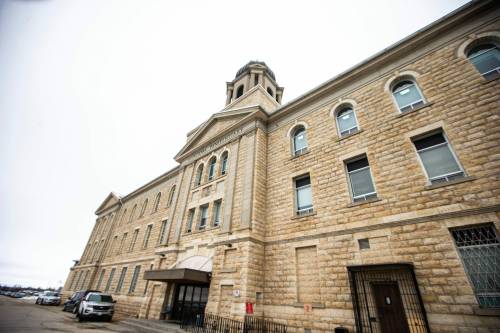
A Winnipeg man who stalked a woman for several years before shooting her dead in the street in 1993 has died in Stony Mountain prison.

On Monday, 74-year-old Ronald Edd Bell died of apparent natural causes at the federal prison just north of Winnipeg, the Correctional Service of Canada said.

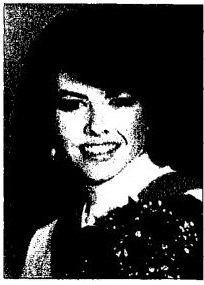
Bell had been in prison since May 30, 1994, when he was given a life sentence with no chance of parole for 18 years for killing Terry-Lyn Babb, 25, on Jan. 21, 1993.

Bell walked up behind an unsuspecting Babb, who was waiting at a bus stop at Sherbrook Street and Wolseley Avenue, and shot her in the head with a pistol in front of horrified witnesses, says the Free Press report of his sentencing hearing.

Read
5:53 PM CDT

Completely separating inmates unrealistic, inquest judge says in report on three Stony Mountain slayings

Erik Pindera 5 minute read Preview

Completely separating inmates unrealistic, inquest judge says in report on three Stony Mountain slayings

Erik Pindera 5 minute read 1:43 PM CDT

Nothing short of keeping inmates separated at all times could have prevented three unrelated prisoner-on-prisoner killings several years ago in Stony Mountain Institution’s maximum-security unit, an inquest judge has found.

Provincial court Judge Lindy Choy made the finding after overseeing an inquest earlier this year into the slayings of Adrian Fillion, 42, Michael Monney, 27, and Nolan Thomas, 26, all of which occurred at the hands of fellow maximum-security inmates in the federal prison just north of Winnipeg. The killings occurred when cells were unlocked, allowing inmates to briefly move around to other areas in the cell block.

“The overall impression I was left with from the (Stony Mountain Institution) witnesses was that management of inmates in a custodial facility is a very complex undertaking. There are clearly multiple levels of oversight involved in any decisions that are made and it is all done in a very structured manner,” Choy wrote in her report on the inquest, which was made public Tuesday.

“While maintaining complete physical distance between inmates at all times would have prevented the homicides from occurring, we know that from a social and psychological perspective, this is not generally realistic nor acceptable.”

Read
1:43 PM CDT

What’s open, what’s closed, what’s up in Winnipeg on National Day for Truth and Reconciliation Sept. 30, 2026

Free Press staff 4 minute read Preview

What’s open, what’s closed, what’s up in Winnipeg on National Day for Truth and Reconciliation Sept. 30, 2026

Free Press staff 4 minute read Sunday, Sep. 27, 2026

The National Day of Truth and Reconciliation, or Orange Shirt Day, as it's known in Manitoba, happens Sept. 30 with many commemorative community events scheduled.

Read
Sunday, Sep. 27, 2026

Billions of dollars spent on health, but scattershot financial reporting leaves decision-makers, Manitobans in the dark, auditor general says

Nicole Buffie 3 minute read Preview

Billions of dollars spent on health, but scattershot financial reporting leaves decision-makers, Manitobans in the dark, auditor general says

Nicole Buffie 3 minute read 5:20 PM CDT

Manitoba’s auditor general says significant gaps in health-sector financial reporting make it difficult to understand how billions of dollars in public funds are spent.

Auditor General Tyson Shtykalo is calling for clearer, more transparent reporting in his latest report, titled Observations on Health Sector Financial Reporting and Accountability in Manitoba.

“Manitoba spends nearly $10 billion annually on health care, but current financial reporting does not provide a clear picture of how that money is spent, what services cost, or the financial pressures facing the system,” Shtykalo said in a news release.

While some financial information is available, the reports do not provide a “complete, consistent, or easily understood” picture of how health-care funds are spent, the report said.

Read
5:20 PM CDT

Expert urges food, drink makers to look to foreign markets

Gabrielle Piché 5 minute read Preview

Expert urges food, drink makers to look to foreign markets

Gabrielle Piché 5 minute read 5:04 PM CDT

Canada’s slowing population growth could restrict business expansion, a top economist for Farm Credit Canada warned Manitoba manufacturers.

Craig Johnston, the federal Crown corporation’s chief economist, addressed Prairie businesses at Farm Credit Canada’s Food and Beverage Summit Tuesday.

“There could be some modest growth in Canadian consumption of food and beverage,” Johnston said, relaying population numbers inside a Victoria Inn Hotel conference room.

Still, per-person spending on food is “stagnant, if not somewhat rising,” Johnson later told reporters.

Read
5:04 PM CDT

Hydro reports $446-M loss in 2025-26, points to fourth drought year in past five

Scott Billeck 3 minute read Preview

Hydro reports $446-M loss in 2025-26, points to fourth drought year in past five

Scott Billeck 3 minute read 6:38 PM CDT

Manitoba Hydro posted a $446-million loss in 2025-26, as drought conditions slashed hydroelectric generation, forcing the Crown corporation to buy more power while leaving it with less electricity to sell outside the province.

The loss was $666 million worse than the $220-million profit Hydro had budgeted. The utility posted a $63-million loss the previous year, according to the utility’s annual report released Tuesday.

Hydro said the 2025-26 fiscal year, which ended on March 31, marked its fourth low-water year in the past five years, among the worst stretches of water-flow conditions in its recorded history.

Hydroelectric generation fell 23 per cent to 24 billion kilowatt-hours from 31 billion the previous year, leaving Hydro a net importer of electricity.

Read
6:38 PM CDT