Thomson documentary feels fresh with journalistic coups

Advertisement
Read this article for free:
or
Already have an account? Log in here »
To continue reading, please subscribe:

Digital Subscription
One year of digital access for only $205*
- Enjoy unlimited reading on winnipegfreepress.com
- Read the E-Edition, our digital replica newspaper
- Access News Break, our award-winning app
- Play interactive puzzles
*First annual payment billed as $205.00 + GST for one year. This annual subscription will automatically renew at $233.00 + GST every 52 weeks (10% off the regular annual price of $259.35). Offer available to new and qualified returning subscribers only. Cancel any time.
To continue reading, please subscribe:
Add Free Press access to your Brandon Sun subscription for only an additional
$1 for the first 4 weeks*
- Enjoy unlimited reading on winnipegfreepress.com
- Read the E-Edition, our digital replica newspaper
- Access News Break, our award-winning app
- Play interactive puzzles
*Your next Brandon Sun subscription payment will increase by $1.00 and you will be charged $17.95 plus GST for four weeks. After four weeks, your payment will increase to $24.95 plus GST every four weeks.
Read unlimited articles for free today:
or
Already have an account? Log in here »
Hey there, time traveller!
This article was published 23/03/2012 (5259 days ago), so information in it may no longer be current.
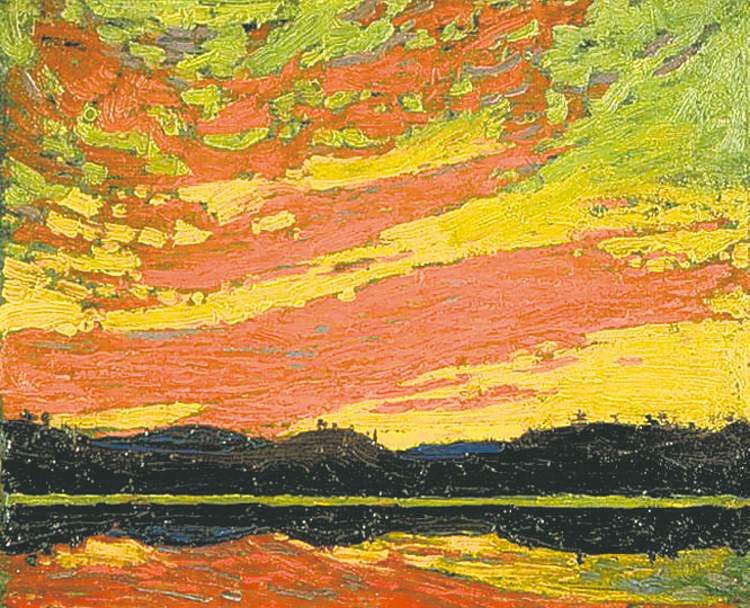
THE documentary West Wind suggests that artist Tom Thomson was Canada’s Van Gogh and its Mozart, a genius who absorbed the country’s natural splendour and reflected it back to us with his sublime paintings.
But did he possess Mozart’s abrasive self-assurance or Van Gogh’s madness?
No, by all accounts, he was a shy, retiring fellow, affable, generous to his friends, more at ease camping in the wilderness than haunting Toronto’s fleshpots and watering holes.
In short, he was a very Canadian genius.
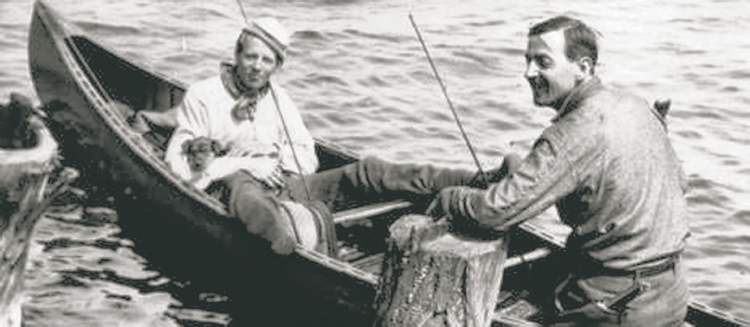
Co-directors Peter Raymont and Michèle Hozer have tackled the subject of a Canadian visionary before in the excellent documentary Genius Within: The Inner Life of Glenn Gould. But here they are working with the disadvantage in that there is no real film footage of Thomson and one can only go so far with the use of still photographs and loving, lingering shots of Thomson’s paintings.
But the filmmakers actually do succeed in making the doc feel fresh with a few journalistic coups, not the least of which is uncovering what may have been Thomson’s first painting, a labour of love given to a girlfriend in Seattle years before he well and truly found his muse in Ontario, at Canoe Lake in Algonquin Park.
The filmmakers also revive the mystery of Thomson’s suspicious death: he was found dead floating in his beloved Canoe Lake with a suspicious bruise on his head, suggesting he had been whacked with the handle of a paddle. A subsequent mystery suggests that while his family presumably exhumed his body for transport back to the family cemetery in Leith, Ont., a skull was found in the Canoe Lake cemetery which was likely Thomson’s.
That aspect of Thomson’s story is, in a slightly lurid way, interesting enough, if inconclusive. The bulk of the film is devoted to making the case for Thomson’s stature as a great Canadian artist, the inspiration behind Canada’s celebrated Group of Seven. Another coup: One of their interview subjects is the notoriously media shy Winnipeg Jets co-owner David Thomson (no relation), a Thomson collector and scholarly enthusiast who faces the camera to extol the artist’s contribution to early Canadian culture at its most luminous.
The 7 p.m. Friday evening screening of West Wind will be introduced by Manitoba’s own artist provocateur Diana Thorneycroft as well as co-director Peter Raymont and researcher Nancy Lang.
Our newsroom depends on a growing audience of readers to power our journalism. If you are not a paid reader, please consider becoming a subscriber.
Our newsroom depends on its audience of readers to power our journalism. Thank you for your support.
Movie Review
West Wind: The Vision of Tom Thomson
Directed by Michèle Hozer and Peter Raymont
Cinematheque
G
95 minutes
3 1/2 stars out of five
Our newsroom depends on a growing audience of readers to power our journalism. If you are not a paid reader, please consider becoming a subscriber.
Our newsroom depends on its audience of readers to power our journalism. Thank you for your support.
Advertisement Advertise With Us