Artistic vision likely to try viewers’ patience
Advertisement
Read this article for free:
or
Already have an account? Log in here »
To continue reading, please subscribe:

Digital Subscription
One year of digital access for only $205*
- Enjoy unlimited reading on winnipegfreepress.com
- Read the E-Edition, our digital replica newspaper
- Access News Break, our award-winning app
- Play interactive puzzles
*First annual payment billed as $205.00 + GST for one year. This annual subscription will automatically renew at $233.00 + GST every 52 weeks (10% off the regular annual price of $259.35). Offer available to new and qualified returning subscribers only. Cancel any time.
To continue reading, please subscribe:
Add Free Press access to your Brandon Sun subscription for only an additional
$1 for the first 4 weeks*
- Enjoy unlimited reading on winnipegfreepress.com
- Read the E-Edition, our digital replica newspaper
- Access News Break, our award-winning app
- Play interactive puzzles
*Your next Brandon Sun subscription payment will increase by $1.00 and you will be charged $17.95 plus GST for four weeks. After four weeks, your payment will increase to $24.95 plus GST every four weeks.
Read unlimited articles for free today:
or
Already have an account? Log in here »
Hey there, time traveller!
This article was published 14/03/2014 (4587 days ago), so information in it may no longer be current.
It’s playing in theatres and charging admission, but Visitors is not what it seems. It’s an art piece masquerading as a movie, and whether you think that’s a good thing will determine your reaction to what’s on the screen.
Visitors is also the latest collaboration between director Godfrey Reggio and composer Philip Glass, who’ve previously combined to produce celebrated trance-inducing documentaries like Koyaanisqatsi and Powaqqatsi.
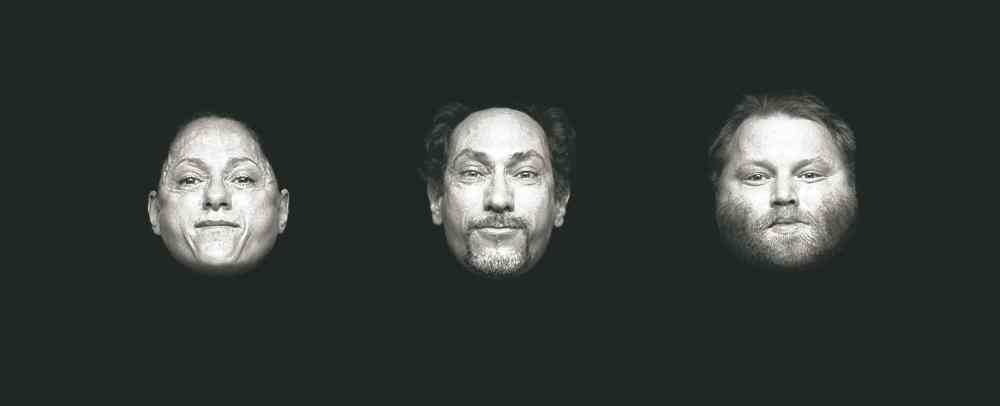
This time, part of the focus is somewhat different. Instead of concentrating on landscape, Visitors concerns itself with the human face. Presented to the public in black-and-white digital 4K projection, the film lets us look directly into the huge faces of 80 people, some appearing by themselves, some in groups.
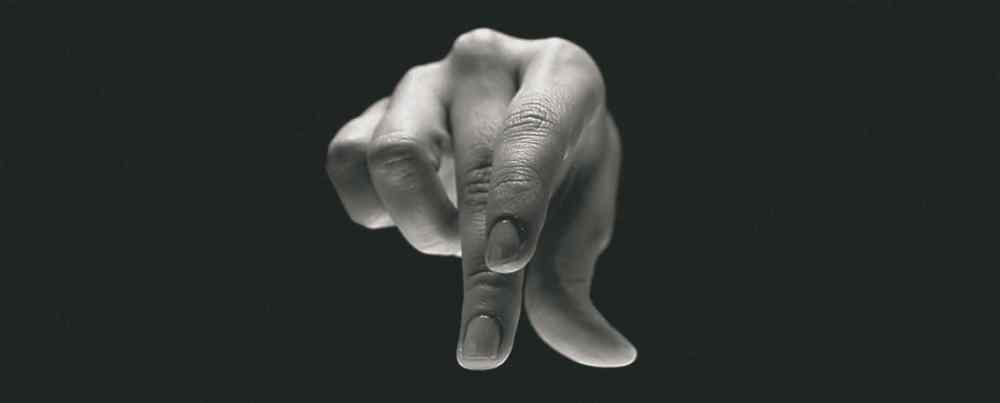
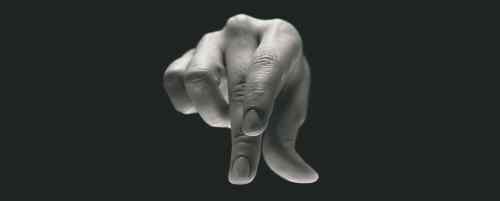
Though the film itself reveals nothing about anyone, extensive press notes disclose that the older members of the group were shot in a New Orleans retirement home; the younger folks were photographed watching television or video games. Seen as well, for no discernible motive, are sequences of disembodied hands.
We also get to spend time, for reasons we’re left to surmise, at various odd corners of the physical world. There are shots of the moon, footage of abandoned amusement parks, time-lapse images of clouds scuttling past huge buildings, even infrared pictures of rather startling trees in Louisiana’s Atchafalaya Basin near where Reggio grew up. Not to mention pictures taken in a massive New Jersey garbage dump and images of the Unisphere, the symbol of the 1964 New York World’s Fair.
Reggio insists with great conviction in those extensive press notes that his films “are not aimed at the head or the cerebellum. They’re not aimed at making sense. They’re aimed at your solar plexus. They are a visceral form of cinema.”
It all sounds quite convincing in theory, but in practice, this melange of imagery is aimed more at the inside of Reggio’s head than anywhere else.
Unless you are able to get on his quasi-experimental wavelength, a dicey proposition at best, Visitors will miss your solar plexus entirely and instead put you right to sleep. With one exception.
The most memorable shot in Visitors, so unnerving that Reggio starts and ends the film with it, has a female lowland gorilla named Triska staring at the camera from the comfort and safety of “her controlled environment in The Bronx Zoo, New York.”
More disturbing and involving than everything else in the film put together, Triska’s unwavering gaze haunts us still. We don’t know what it means or where it comes from, but we can’t get it out of our minds. Too bad it’s the exception in Visitors, not the rule.
— Los Angeles Times
Movie review
Visitors
Directed by Godfrey Reggio
Cinematheque
G
87 minutes
2-1/2 stars out of five
Other voices
Reggio has talked about his movies as attempts to bypass the intellect, a “visceral form of cinema” that’s “aimed at your solar plexus.” But you may experience Visitors as more of a sedative than a punch in the guts.
— Walter V. Addiego, San Francisco Chronicle
As it glides along from one pretty picture to the next, Visitors starts to feel less like a singular artistic gesture than a compendium of quasi-experimental film clichés.
— Adam Nayman, Globe and Mail
This is a dialogue-free documentary composed of beautiful black-and-white photography set to an atmospheric Philip Glass score, and it’s a patience-straining exercise in narrative asceticism.
— Barbara VanDenburgh, Arizona Republic
Related Articles
Fast and ludicrous
Advertisement Advertise With Us