The plot thickens
Guy Maddin's latest movie features an elaborate story and an even more complicated shooting process

Advertisement
Read this article for free:
or
Already have an account? Log in here »
To continue reading, please subscribe:

Digital Subscription
One year of digital access for only $205*
- Enjoy unlimited reading on winnipegfreepress.com
- Read the E-Edition, our digital replica newspaper
- Access News Break, our award-winning app
- Play interactive puzzles
*First annual payment billed as $205.00 + GST for one year. This annual subscription will automatically renew at $233.00 + GST every 52 weeks (10% off the regular annual price of $259.35). Offer available to new and qualified returning subscribers only. Cancel any time.
To continue reading, please subscribe:
Add Free Press access to your Brandon Sun subscription for only an additional
$1 for the first 4 weeks*
- Enjoy unlimited reading on winnipegfreepress.com
- Read the E-Edition, our digital replica newspaper
- Access News Break, our award-winning app
- Play interactive puzzles
*Your next Brandon Sun subscription payment will increase by $1.00 and you will be charged $17.95 plus GST for four weeks. After four weeks, your payment will increase to $24.95 plus GST every four weeks.
Read unlimited articles for free today:
or
Already have an account? Log in here »
Hey there, time traveller!
This article was published 24/01/2015 (4200 days ago), so information in it may no longer be current.
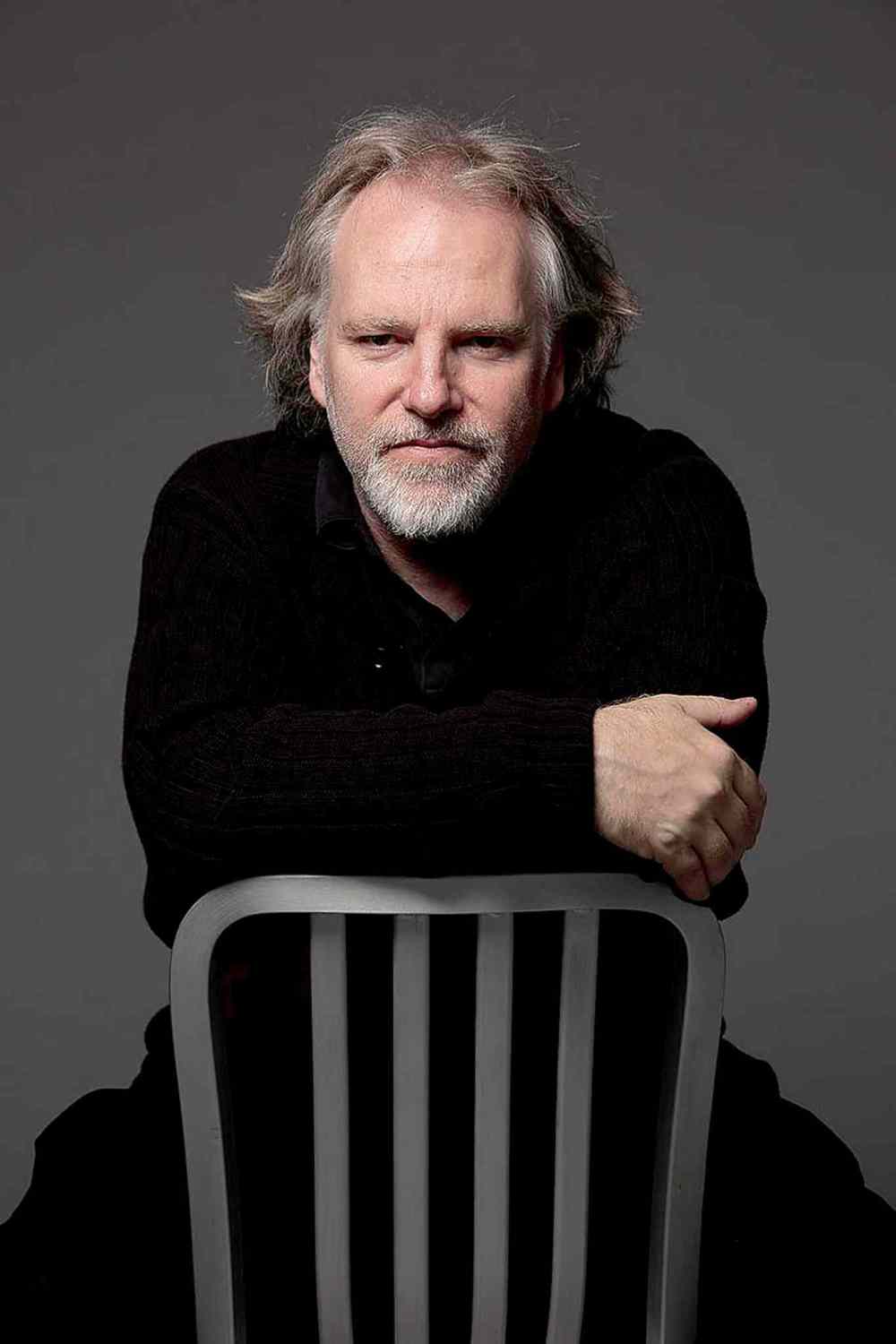
Since local filmmaker Guy Maddin’s newest feature film includes a subplot set on a submarine, it is apt to say this is a movie that has, for Winnipeggers, come in under the radar.
Getting its world première at the Sundance Film Festival on Monday, The Forbidden Room is, according to its press release, a “Russian nesting doll of a film” encompassing a “crew of a doomed submarine chewing flapjacks,” and “a fearsome clan of cave dwellers.” It spins “tales of amnesia, captivity, deception and murder, skeleton women and vampire bananas.”
If that sounds like a throwback to Maddin’s more eccentric films while at the Winnipeg Film Group, the film’s cast is internationally impressive, including Mathieu Amalric, Udo Kier, Charlotte Rampling, Geraldine Chaplin, Roy Dupuis, Clara Furey, Louis Negin, Maria de Medeiros, Jacques Nolot and Elina Lwensohn.
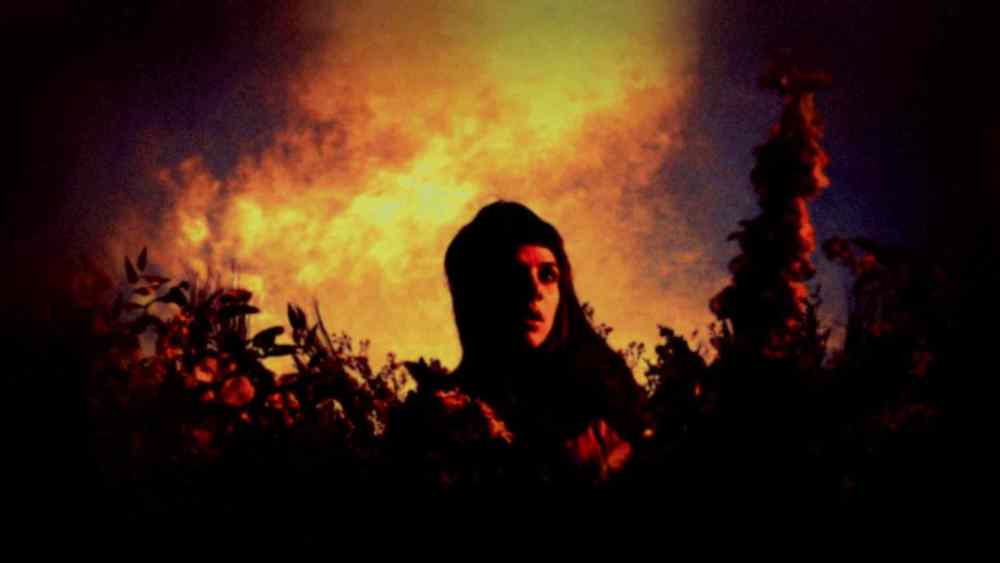
Other departures from the Maddin norm (if such a thing could be said to exist) are on the behind-the-camera credits. Maddin is the film’s director, but Winnipegger Evan Johnson is credited as “co-director.” Instead of an expected writing credit for Maddin’s usual collaborator, University of Manitoba film professor George Toles, the listed writers include Maddin, Johnson and Robert Kotyk, with additional credits to poet John Ashbery and film writer Kim Morgan, Maddin’s wife.
Strangest of all are the circumstances behind the making of the film. The Forbidden Room was shot mostly in Paris and Montreal at, respectively, the Pompidou Centre and the Phi Centre, and in public in front of the museums’ visitors. Moreover, the film was shot concurrently with a series of interactive short films for the National Film Board, titled Seances, continuing a theme of exploring great directors’ “lost films” begun in Maddin’s art installation Hauntings.
In a phone interview, Maddin describes the complex shooting process as “really complicated and over-ambitious and underfunded.
“The interactive project was so much more massive in ambition and scope and quixotic stupidity and hopefulness, so Forbidden Room didn’t get talked about as much,” he says. “But we’ve really been working hard on it for the last year, simultaneously with Seances.
“I wasn’t even sure we’d be able to pull it off and make something watchable out of this ºber-narrative, but I’m cautiously optimistic that people will like it,” he says, before clarifying: “Some people will like it.”
Indeed, a Guy Maddin film remains a challenging prospect for mainstream movie-goers. Maddin remains revered in critical circles. His 2007 film My Winnipeg was deemed one of the 10 best films of the decade by no less a critic than the late Roger Ebert. But if his films remain steadfastly outside the loop of popularity, Maddin takes it in stride.
“Once again, I’ve made something that’s not for everyone,” he says. “But I think this one is at least more ferociously itself than anything I’ve ever made and might stand a chance of being respected for a long time.
“Those are my vague hopes.”
Maddin on whether the Sundance Festival is a good fit for his films:
“I can never tell. I had the time of my life in the first and only time I played at the New York Film Festival, because it felt so prestigious and there were only 18 films selected, and it was New York.
“And yet, I was told later that it was absolutely useless going there because it’s an older crowd and there are no sales made in New York. So I had a good time but then I found out later it wasn’t a good fit.
“But for me, it’s all about making a connection with an audience, which isn’t always easy. I had a good time in Sundance as I recall (in 2004 with The Saddest Music in the World). I don’t have any uncomfortable memories about it and I usually do. I remember Mark McKinney coming back with about 400 Krispy Kreme doughnuts, which were all the rage back then, and I got a pretty good swag bag from the festival. I recall these things.”
On the film’s story:
“It’s a bunch of narratives all circling around a male perception of women. All of them (are) set in different genres and nested within each other, Russian doll-style and set in a basic three-act structure, so it’s a big narrative sprawl, starring many different actors from many different places.
“But I feel good about it because its narrative structure is so big and complex. Evan and Bob Kotyk and I made a resolution to make each subplot as crystal-clear as possible, something I’ve never been famous for.
“So when they fit together, people have a chance of following it. And unlike Keyhole, my last picture, which had a big ‘Do Not Enter’ sign on the front door, I think this one does draw people in.
“We all read our Robert McKee screenwriters book and made a point of welcoming people into stories and trying to keep them engaged while still being ferociously… us.”
On his co-director:
“Evan Johnson is a former student of mine, my best student ever. With Seances, I asked him, because he was a friend as well as an assistant, if he could be a researcher for me, looking up lost films. But pretty soon, he was coming up with ideas that far surpassed mine and really helped the project conceptually coalesce, and within short order, in the writing room, he was a full-blown partner.
“And while he wasn’t literally giving actors direction, like I was, we just worked like conjoined twins on the project and he was constantly reminding me of things that I was forgetting.
“The term ‘director’ is really so pliant and stretchy, and I felt it would be wrong not to credit Evan with co-directing. We settled on me as the director and him as the co-director but I liked working with him a lot. On our next project, we’ll both just be called ‘director.'”
On not working with frequent collaborator George Toles:
“The genesis of the project was in the interactive (Seances) first, and I was working with Evan and then Evan’s friend Robert Kotyk came on as well. I asked George, but he declined, because he’d rather work alone or on features. And then when the feature evolved out of this, he therefore wasn’t on it.
“I fear it hurt his feelings and I’ve acknowledged that publicly, and we remain friends.
“I regret how these things work out sometimes. I’ve discovered, in losing many friends over the years, there’s an inferred monogamy in collaborations that often hurts people’s feelings a lot when a betrayal just pops up in the matter of making things with other people. It’s regrettable, but it’s a never-ending process of smoothing over feelings. And I’m lousy at that.
“Making a film is already like controlling a bag of ball bearings that’s just been dropped on the floor. Often, I forget the little things that keep people your friends.”
On when the film might play in Winnipeg:
“I don’t know. I guess it all depends on the distributor.
“I’m always eager to share my work with Winnipeg, but I frequently find Winnipeg isn’t as eager to watch, so it’s become a low priority with me. Even cast and crew don’t give a shit in most cases, and they won’t show up. I think they’ve had enough of me once shooting is over.”
The Forbidden Room screens Monday at the Sundance Film Festival and in February at the Berlin International Film Festival.
randall.king@freepress.mb.ca
Our newsroom depends on a growing audience of readers to power our journalism. If you are not a paid reader, please consider becoming a subscriber.
Our newsroom depends on its audience of readers to power our journalism. Thank you for your support.
Our newsroom depends on a growing audience of readers to power our journalism. If you are not a paid reader, please consider becoming a subscriber.
Our newsroom depends on its audience of readers to power our journalism. Thank you for your support.
Advertisement Advertise With Us
Advertisement Advertise With Us