Brief Encounter lingers on
CowardFest brings bon vivant's British weeper back to the spotlight it deserves

Advertisement
Read this article for free:
or
Already have an account? Log in here »
To continue reading, please subscribe:

Digital Subscription
One year of digital access for only $205*
- Enjoy unlimited reading on winnipegfreepress.com
- Read the E-Edition, our digital replica newspaper
- Access News Break, our award-winning app
- Play interactive puzzles
*First annual payment billed as $205.00 + GST for one year. This annual subscription will automatically renew at $233.00 + GST every 52 weeks (10% off the regular annual price of $259.35). Offer available to new and qualified returning subscribers only. Cancel any time.
To continue reading, please subscribe:
Add Free Press access to your Brandon Sun subscription for only an additional
$1 for the first 4 weeks*
- Enjoy unlimited reading on winnipegfreepress.com
- Read the E-Edition, our digital replica newspaper
- Access News Break, our award-winning app
- Play interactive puzzles
*Your next Brandon Sun subscription payment will increase by $1.00 and you will be charged $17.95 plus GST for four weeks. After four weeks, your payment will increase to $24.95 plus GST every four weeks.
Read unlimited articles for free today:
or
Already have an account? Log in here »
Hey there, time traveller!
This article was published 31/01/2015 (4248 days ago), so information in it may no longer be current.
Noël Coward, the playwright, actor, songwriter, singer and star of Winnipeg’s own CowardFest 2015, is the epitome of Jazz Age chic. Mere mention of his name calls up champagne cocktails and smoking jackets, dry wit and “Darling, how marvellous” dialogue.
Trust me to be drawn instead to the sad Coward, the drab Coward, the wartime Coward. My favourite Coward work is Brief Encounter, a resolutely middle-aged, middle-class story where everybody drinks cups of weak tea on the way to muted suburban sorrow.
It’s not glamorous, but there it is.
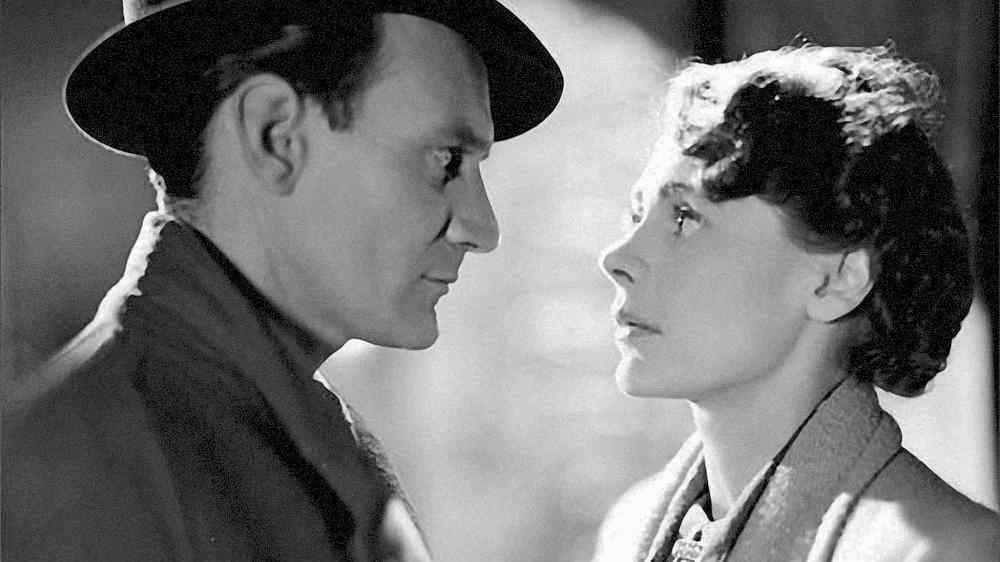
Brief Encounter is a 1945 film, adapted by Coward from his 1936 one-act play Still Life. Directed by David Lean, this impossibly restrained romance opened just months after the end of the Second World War. (As part of CowardFest, there will be a free screening of Brief Encounter on Feb. 4, hosted by Theatre Incarnate and Snakeskin Jacket, and introduced by University of Manitoba film prof George Toles.)
The story centres on provincial housewife Laura Jesson (Celia Johnson), who by chance meets married doctor Alec Harvey (Trevor Howard) in a railway station tea room. Over the course of several Thursday afternoons, the two experience an intense but unconsummated emotional affair. From hesitant first declaration to dutiful final renunciation, their love is characterized by a peculiarly English form of passionate reserve.
Though it was released at a time when notions of sacrifice, soldiering on and “doing the decent thing” were still in the air, Brief Encounter seems like an unlikely success. “I doubt very much if it will be generally popular,” wrote the reviewer for the Observer in 1945. But audiences adored the film, often returning for weepy repeat viewings.
These days, aspects of the film can seem hopelessly out-of-date, from the characters’ clipped, cut-glass accents to Laura’s ridiculous little hat. But even as the film’s “do let’s be sensible” storyline has become increasingly unfashionable, even unthinkable, Brief Encounter has managed to hold up. This “small and pathetic” love story, as another critic called it, frequently features in polls of all-time favourite pictures. In 2013, it was named the most romantic film ever made by a panel of 101 movie people. (Titanic comes in 40th, just to give a sense of how things went.)
So, how to explain the enduring cinematic affection for such a bracingly ordinary story?
First off, Brief Encounter is just beautifully made. It’s a woman’s picture shot like a brooding film noir, all steam and smoke and rain-slicked streets and angled light and shadow. The music is Rachmaninov’s Piano Concerto No. 2, its lush, swooning romanticism forming an ironic counterpoint to scenes where Laura sits doing the mending or staring out a train window.
The film’s structure is simple, carefully considered, stringently economical. The story opens with what seems like a polite social encounter in a nondescript tea room and then comes back to this scene at the end of the film with new — and now absolutely shattering — knowledge. No wonder critic James Agee called Brief Encounter “a vanity-sized Anna Karenina.”
The film is sometimes dismissed as prissy, prim, sexless. (Detractors in the 1960s joked that the film’s message was “make tea, not love.”) And Brief Encounter is uptight, all right — at times almost comically so — but the emotion is there. Under thick, woolly layers of middle-class decorum, Laura and Alec practically tremble with feeling, and the final effect is somehow tremendously moving. If the characters are constrained, the viewers are not. This is an absolute sobber of a film.
The utter lack of sex is also interesting, especially these days. I mean, if you want sex in 2015, there’s always Internet porn. Brief Encounter offers something else, the frisson of deeply felt, barely expressed desire, a thrill that now feels exotic, erotic and oddly fresh.

Viewers also respond to the film’s quiet realism. Laura is a self-described “ordinary woman,” who runs errands and frets about her budget, her romantic agony and ecstasy only fleetingly glimpsed in her large, luminous eyes. Coward’s close observation and emotional empathy extend not just to the lovers but to Laura’s kindly, stolid husband, who has his own rather extraordinary moment. There’s an unforced honesty to Brief Encounter that resists our 21st-century tendency to irony.
There is also, amid the mannered gentility and endless cups of tea, the unexpected flash of a starkly modern attitude, as with Laura’s desperate declaration of her loss: “This can’t last. This misery can’t last… Nothing lasts, really. Neither happiness nor despair. Not even life lasts very long.”
There’s modernity, too, in the film’s subtexts, which might be tied to Coward’s experience as a gay man at a time when homosexuality was illegal. Recent film writers suggest that Coward’s autobiography finds coded expression in Brief Encounter, in its fine examination of carefully controlled public behaviours, in its tragic sense of the emotional cost of enforced deceit.
Finally, Brief Encounter’s astonishing hold has a lot to do with the old-fashioned pleasure of cinematic sadness. Forget the Hollywood ending, there’s nothing like a good cry. Coward knew laughter, and that’s what will make CowardFest 2015 such a treat, but the man also understood tears.
alison.gillmor@freepress.mb.ca
Studying at the University of Winnipeg and later Toronto’s York University, Alison Gillmor planned to become an art historian. She ended up catching the journalism bug when she started as visual arts reviewer at the Winnipeg Free Press in 1992.
Our newsroom depends on a growing audience of readers to power our journalism. If you are not a paid reader, please consider becoming a subscriber.
Our newsroom depends on its audience of readers to power our journalism. Thank you for your support.
Event Preview
Brief Encounter
Studio 320, 320-70 Albert St.
Wednesday, Feb. 4, 7 p.m.
Studying at the University of Winnipeg and later Toronto’s York University, Alison Gillmor planned to become an art historian. She ended up catching the journalism bug when she started as visual arts reviewer at the Winnipeg Free Press in 1992.
Our newsroom depends on a growing audience of readers to power our journalism. If you are not a paid reader, please consider becoming a subscriber.
Our newsroom depends on its audience of readers to power our journalism. Thank you for your support.
Advertisement Advertise With Us
Advertisement Advertise With Us