A cut above
Local film collective's latest a funny, gory, gorgeous parody of surreal Italian horror films

Advertisement
Read this article for free:
or
Already have an account? Log in here »
To continue reading, please subscribe:

Digital Subscription
One year of digital access for only $205*
- Enjoy unlimited reading on winnipegfreepress.com
- Read the E-Edition, our digital replica newspaper
- Access News Break, our award-winning app
- Play interactive puzzles
*First annual payment billed as $205.00 + GST for one year. This annual subscription will automatically renew at $233.00 + GST every 52 weeks (10% off the regular annual price of $259.35). Offer available to new and qualified returning subscribers only. Cancel any time.
To continue reading, please subscribe:
Add Free Press access to your Brandon Sun subscription for only an additional
$1 for the first 4 weeks*
- Enjoy unlimited reading on winnipegfreepress.com
- Read the E-Edition, our digital replica newspaper
- Access News Break, our award-winning app
- Play interactive puzzles
*Your next Brandon Sun subscription payment will increase by $1.00 and you will be charged $17.95 plus GST for four weeks. After four weeks, your payment will increase to $24.95 plus GST every four weeks.
Read unlimited articles for free today:
or
Already have an account? Log in here »
Hey there, time traveller!
This article was published 20/08/2015 (4031 days ago), so information in it may no longer be current.
Sex and violence are the coins of the realm in pop cinema around the world.
But nowhere else is the sex so lurid and the violence so baroque as it is in Italy’s giallo genre.
The word translates as “yellow,” taking its name from the yellow covers of cheap pulp mystery novels popular in postwar Italy. But the films created under the giallo banner represent a whole spectrum of quality, from the high art of Dario Argento (Deep Red) and Mario Bava (Black Sabbath) to the vicious exploitation films of Lucio Fulci (The New York Ripper) and, alas, later Dario Argento (Giallo, Mother of Tears).
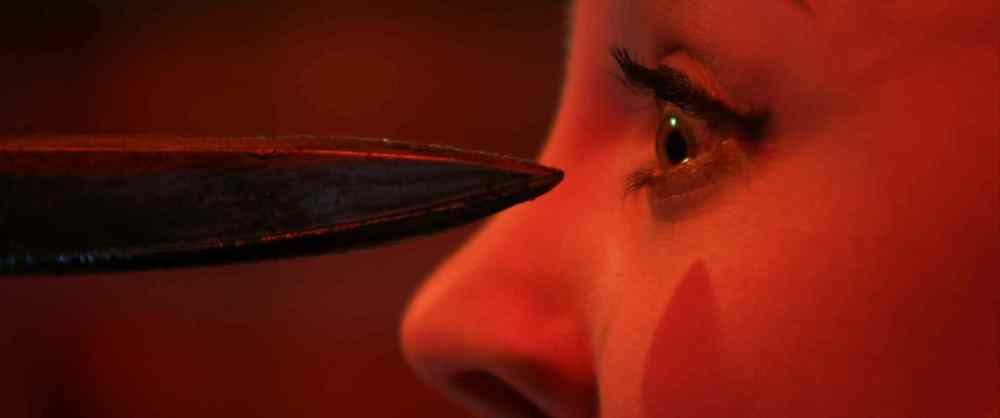
It takes some kind of obsessive personality to want to revive the giallo film, which peaked in popularity in the 1970s and ’80s. Fortunately, there are five such individuals in the Winnipeg-based film collective Astron-6, who launch their scathingly funny giallo pastiche The Editor at Cinematheque Aug. 20. The film was co-directed by Adam Brooks and Matthew Kennedy, written by Brooks, Kennedy and Conor Sweeney (all three of whom also star in the film) with additional contributions in music and special effects by Astron’s Jeremy Gillespie and Steven Kostanski.
Brooks plays Rey Ciso, a much-abused film editor trapped on the bottom rung of the Italian exploitation film industry. When the studio is the scene of a series of grisly murders, Rey is the prime suspect in the eyes of hostile police detective Porfiry (Kennedy), who clearly has some screws loose himself. The hapless editor’s efforts to prove his innocence only mires him deeper in violence rendered, in true giallo tradition, in a hyper-elaborate fashion that flirts with surrealism.
Coming on the heels of a pair of Astron’s exploitation parodies, Father’s Day and Manborg, The Editor emerges as their most accomplished feature. It looks great, and it uncannily replicates the bizarre, dream-like quality of the classics in the genre. The fact that it comes off as well as it does on a meagre budget is a testament to Astron’s creativity, low-budget ingenuity and tireless work ethic. (It took a whole year to make.)
— — —
The Editor even boasts a few notable exploitation stars in the cast, including Udo Kier (Suspiria), Laurence R. Harvey (The Human Centipede 2) and Paz de la Huerta (Nurse 3D).
“This film had more than 10 times the budget of our last film, Father’s Day, which cost $10,000,” says Brooks. “So we could afford a couple of name actors this time around.”
As with their previous features, the inspiration for the film came from, collectively, youth misspent in the genre boondocks of neighbourhood video stores and online marketplaces.
“When I was in art school, my girlfriend’s little brother was a big Italian genre-film fanatic,” says Brooks. “He lent me the first Fulci and Argento movies I’d ever seen.”
“The first giallo I watched was (Mario Bava’s) Bay of Blood, a.k.a. Twitch of the Death Nerve,” says Kennedy. “I ordered it on Amazon strictly because I was told that Friday the 13th Part 2 stole murder sequences from it, and indeed it did. After that, Conor introduced me to Suspiria and I fell in love with it.”
Strictly speaking, Dario Argento’s 1977 classic Suspiria is more of a supernatural horror film than a proper giallo. But because genre master Argento brought his stylistic A-game to a story of a young woman battling a coven of witches, it earns honorary giallo status, and its influence can’t be overstated. Sweeney says the film was his “gateway drug” to the genre.
“At that point, I didn’t know that there was an entire genre of these movies, so it felt like I’d found a bizarre, totally unique little alien thing,” Sweeney says.
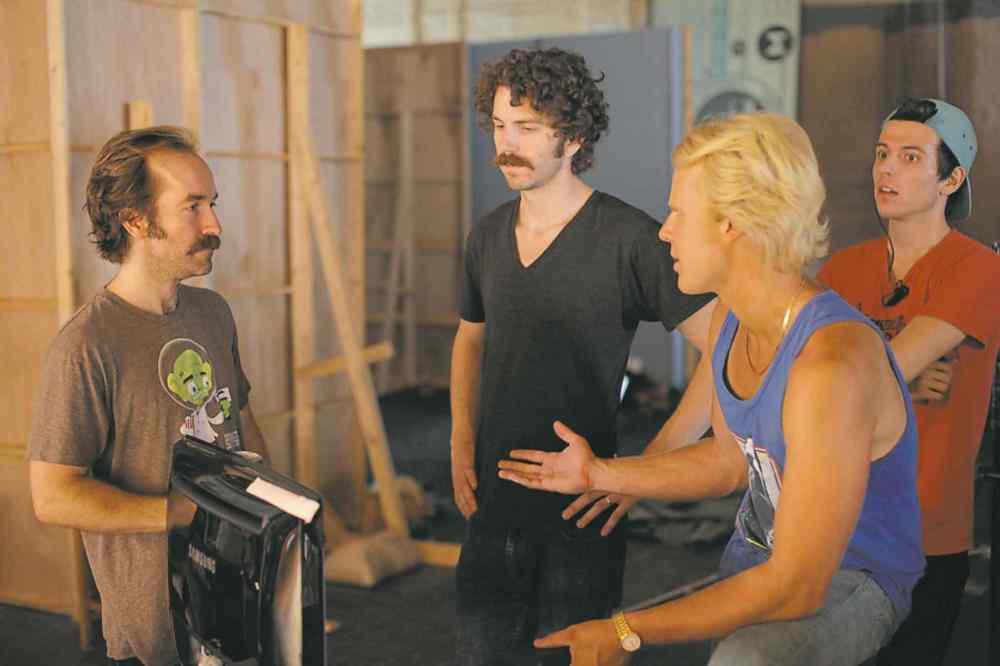
Once the filmmakers were more steeped in the genre, they saw possibilities in a project that could simultaneously celebrate the giallo film while mercilessly sending it up.
“We’ve taken heat from a couple of giallo purists for mocking the genre,” Sweeney says. “But it’s so naive to say that the genre is without its share of huge faults and insulting, idiotic moments.
“That’s part of what make gialli so odd and interesting,” he says. “They’re consistently convoluted, unintentionally funny, misogynistic and boring for long stretches, while also being beautiful, scary, surreal and engrossing.”
Brooks cops to a love-hate relationship with the films.
“I love the style-as-substance philosophy, the surreal lighting, zooms, mysterious POV (point-of-view) shots, fetishistic murders and constant dream logic,” he says. “But many of them are filled with huge stretches of incredibly boring exposition.”

Since the genre tends to wallow in scenes of elaborate, sadistic violence against women, the misogyny attached to the genre made it especially deserving of a satiric assault, Kennedy says.
“I don’t think I’ve ever seen a non-misogynist giallo film to date,” Kennedy says. “While we don’t share that sensibility, we did feel that it needed to be acknowledged, and mocked.
“The way the women are treated in those films is so foreign to today’s audiences that it’s easily translated to comedy.”
randall.king@freepress.mb.ca
Our newsroom depends on a growing audience of readers to power our journalism. If you are not a paid reader, please consider becoming a subscriber.
Our newsroom depends on its audience of readers to power our journalism. Thank you for your support.
MOVIE REVIEW
The Editor
- Directed by Adam Brooks and Matthew Kennedy
- Cinematheque
- 94 minutes
- 18A
- 3 1/2 stars out of five
Giallo: A few essential films
Black Sabbath (1961)
Determining the first ever giallo film is a challenge for critics. Chris Gallant, author of Dario Argento: Master of Horror, makes a good case for the non-Italian, Michael Powell-directed thriller Peeping Tom as the granddaddy of all gialli.
But in the interests of keeping it Italian, let’s point to Mario Bava’s horror portmanteau Black Sabbath, particularly the chapter The Telephone, in which Michèle Mercier finds herself terrorized by an anonymous telephone caller she assumes is a brutal escaped convict from her past. A neat little exercise in suspense, it has all the stuff that would define the genre, including creepy point-of-view shots, heavy sexual atmosphere, a significant red herring and a crazed plot twist.
Deep Red (Profondo rosso) (1975)
Dario Argento’s best film is certainly the supernatural horror film Suspiria (1977), but his best, purest giallo is Deep Red, starring David Hemmings as a musician investigating the murder of a psychic. (In gialli, it’s not at all unusual for non-professionals to seek out dangerous psychopaths.) Featuring a demonic animatronic dummy among other baroque flourishes, Deep Red saw Argento at the peak of his powers, not only as a visual stylist but as a serious storyteller, a far cry from his later, more incomprehensible films.
The Black Belly of the Tarantula (1971)
This thriller by Paolo Cavara isn’t necessarily a great film but it’s very much a competent giallo about a detective (the great Giancarlo Giannini) seeking a killer who models his murders after how tarantulas are killed by black wasps. It is included here because its title is so typical of gialli (see also: Seven Deaths of the Cat’s Eye, Strip Nude for Your Killer, Your Vice Is a Locked Room and Only I Have the Key, and Don’t Torture a Duckling) and because the opening scene of The Editor pays direct homage to it.
Our newsroom depends on a growing audience of readers to power our journalism. If you are not a paid reader, please consider becoming a subscriber.
Our newsroom depends on its audience of readers to power our journalism. Thank you for your support.
Advertisement Advertise With Us
Advertisement Advertise With Us
History
Updated on Thursday, August 20, 2015 8:53 AM CDT: Replaces photo
Updated on Thursday, August 20, 2015 1:38 PM CDT: Corrects typo