If you didn’t laugh, you’d cry
Menashe tries hard for its audience, and largely succeeds

Advertisement
Read this article for free:
or
Already have an account? Log in here »
To continue reading, please subscribe:

Digital Subscription
One year of digital access for only $205*
- Enjoy unlimited reading on winnipegfreepress.com
- Read the E-Edition, our digital replica newspaper
- Access News Break, our award-winning app
- Play interactive puzzles
*First annual payment billed as $205.00 + GST for one year. This annual subscription will automatically renew at $233.00 + GST every 52 weeks (10% off the regular annual price of $259.35). Offer available to new and qualified returning subscribers only. Cancel any time.
To continue reading, please subscribe:
Add Free Press access to your Brandon Sun subscription for only an additional
$1 for the first 4 weeks*
- Enjoy unlimited reading on winnipegfreepress.com
- Read the E-Edition, our digital replica newspaper
- Access News Break, our award-winning app
- Play interactive puzzles
*Your next Brandon Sun subscription payment will increase by $1.00 and you will be charged $17.95 plus GST for four weeks. After four weeks, your payment will increase to $24.95 plus GST every four weeks.
Read unlimited articles for free today:
or
Already have an account? Log in here »
Hey there, time traveller!
This article was published 18/08/2017 (3340 days ago), so information in it may no longer be current.
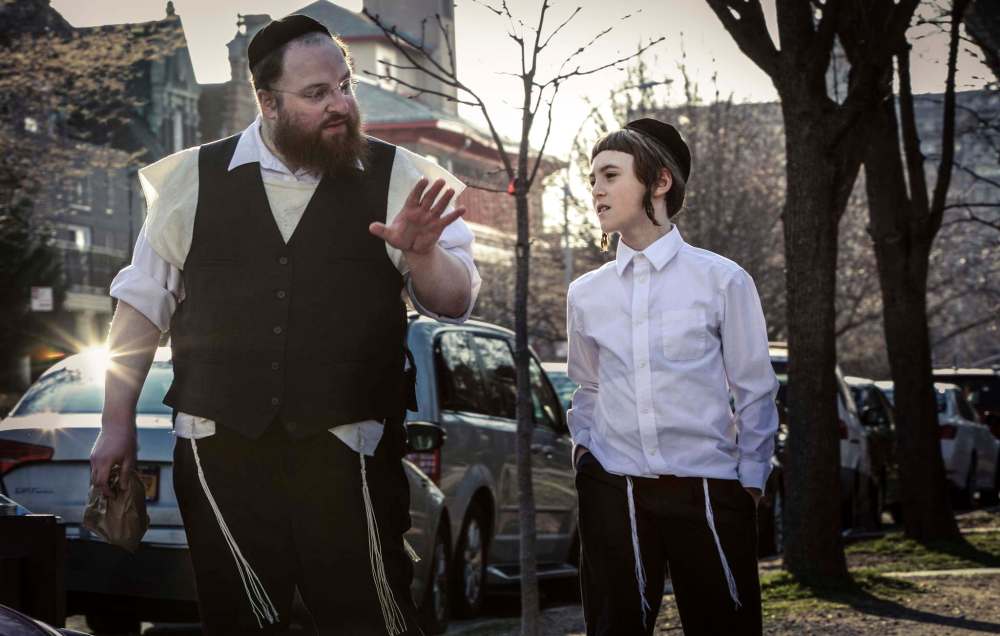
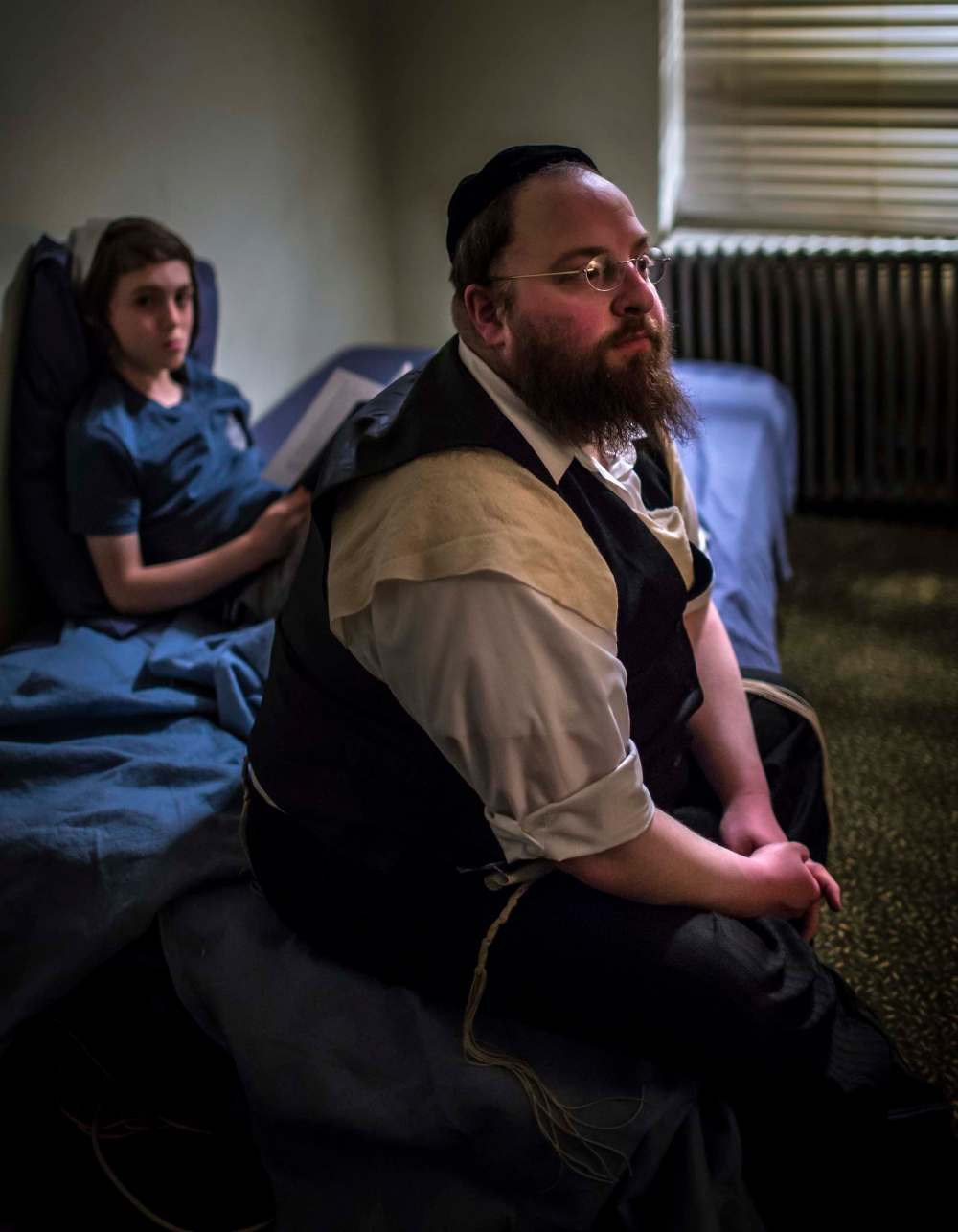
Menashe (Menashe Lustig), the hapless but appealing grocery clerk at the centre of this truly unusual indie film, could be called a shlemiel, a shlimazel, a shlub.
In fact, he often is called these things, because his story is performed almost entirely in Yiddish (with English subtitles). Taking us right into the middle of an ultra-Orthodox Hasidic community in Borough Park, Brooklyn, filmmaker Joshua Z Weinstein has crafted a humane and delicate drama, one combining a fascinatingly specific setting with a universal emotional effect.
Menashe is a widower with a young son. Ten-year-old Rieven (Ruben Niborski) currently lives with the family of Menashe’s late wife, headed by the prosperous, respectable and rigid Eizik (Yoel Weisshaus).
Tradition dictates Rieven cannot live with Menashe until he remarries and while this fond father longs to be reunited with his son, he remains stubbornly resistant to finding a new wife.
After an appeal to the rabbi (Meyer Schwartz), Menashe is allowed to bring Rieven to his aptly termed bachelor apartment in the week leading up to the one-year memorial of his wife’s death. Menashe tries to prove he can raise a child, a project undermined by his contrary character, his straitened circumstances and by plain bad luck.
The film works mostly as a complex character study. Menashe is a devout Jew, but also a bit of an oddball, often puzzled by the rules of his community.
His tricky position is seen during an arranged meeting with a recent widow. Menashe, clearly not ready to move on from the loss of his wife, tells her she’s not really his type.
“Your type!?” this eminently practical woman says incredulously. “You think you’re all I want in a husband?”
Weinstein constructs his story from small moments like this, with scenes that vibrate gently between drama and comedy. “Should I laugh or cry here?” a character asks at one point, a very Jewish question that hangs rather poignantly over most of the film.
Weinstein, one feels, comes to Borough Park not to judge but to quietly observe.

He adopts a neo-realist approach, drawing on his experience as a documentarian, shooting in a low-key naturalistic style and using Hasidic non-actors in most of the minor parts.
The story is also based partly on the real-life experience of Lustig, whose connection to the material and sad-clown charisma give Menashe’s scenes with his son a feeling authenticity.
Weinstein, a secular Jew who doesn’t speak Yiddish, used a translator on set. But he understands the larger language of parents and children, men and women. Looking squarely at both the demands and rewards of living in a faith-based community, he has crafted a film that is sweet but not sentimental, tender but truthful.
“I try so hard to make things right,” Menashe says at one point. And in this lovely and generous film, just trying counts for a lot.
alison.gillmor@freepress.mb.ca
Studying at the University of Winnipeg and later Toronto’s York University, Alison Gillmor planned to become an art historian. She ended up catching the journalism bug when she started as visual arts reviewer at the Winnipeg Free Press in 1992.
Our newsroom depends on a growing audience of readers to power our journalism. If you are not a paid reader, please consider becoming a subscriber.
Our newsroom depends on its audience of readers to power our journalism. Thank you for your support.
Movie review
Menashe
Starring Menashe Lustig
● Grant Park
● Subject to classification ● 82 minutes
★★★★ out of five
Other voices
Some of the narrative developments and conversational tangents feel contrived, but “Menashe” has a rhythm (brisk, but unforced) that speaks well of Weinstein’s future in narrative storytelling.
— Michael Phillips, Chicago Tribune
The film ends up getting stuck in a no man’s land between fiction and documentary, never quite coming together as a complete narrative.
— Oliver Jones, New York Observer
At times sweet, but never patronizing, Menashe examines a world that might seem foreign or oppressive without ever turning its inhabitants into caricatures or figures of fun.
— David Sims, The Atlantic
It’s a gentle, melancholy father-and-son story that’s as notable for an evocation of its self-contained world as it is for its drama.
— Kenneth Turan, Los Angeles Times
The film has an unpolished intimacy, peeling back the surface exoticism of a cloistered faith to reveal the poignantly ordinary struggle of being an imperfect person in the world.
— Leah Greenblatt, Entertainment Weekly
This is not a melodramatic movie — there’s not so much as a fistfight and the ending will be too quiet for some — yet at times its sadness is almost overwhelming.
— Stephen Whitty, Newark Star-Ledger
Studying at the University of Winnipeg and later Toronto’s York University, Alison Gillmor planned to become an art historian. She ended up catching the journalism bug when she started as visual arts reviewer at the Winnipeg Free Press in 1992.
Our newsroom depends on a growing audience of readers to power our journalism. If you are not a paid reader, please consider becoming a subscriber.
Our newsroom depends on its audience of readers to power our journalism. Thank you for your support.
Advertisement Advertise With Us
Advertisement Advertise With Us