Spielberg’s aliens arrived with Unidentified Family Oppression

Advertisement

Advertise with us

Close Encounters of the Third Kind, Steven Spielberg’s 1977 UFO blockbuster, is often described as dramatically thrilling and spectacularly beautiful.

Read this article for free:


or

Already have an account? Log in here »

To continue reading, please subscribe:

Subscribe and receive a limited-edition Free Press branded hat or tote.

Digital Subscription

One year of digital access for only $205*

  • Enjoy unlimited reading on winnipegfreepress.com
  • Read the E-Edition, our digital replica newspaper
  • Access News Break, our award-winning app
  • Play interactive puzzles

*First annual payment billed as $205.00 + GST for one year. This annual subscription will automatically renew at $233.00 + GST every 52 weeks (10% off the regular annual price of $259.35). Offer available to new and qualified returning subscribers only. Cancel any time.

To continue reading, please subscribe:

Add Free Press access to your Brandon Sun subscription for only an additional

$1 for the first 4 weeks*

  • Enjoy unlimited reading on winnipegfreepress.com
  • Read the E-Edition, our digital replica newspaper
  • Access News Break, our award-winning app
  • Play interactive puzzles
Start now

*Your next Brandon Sun subscription payment will increase by $1.00 and you will be charged $17.95 plus GST for four weeks. After four weeks, your payment will increase to $24.95 plus GST every four weeks.

Opinion

Hey there, time traveller!
This article was published 02/09/2017 (3321 days ago), so information in it may no longer be current.

Close Encounters of the Third Kind, Steven Spielberg’s 1977 UFO blockbuster, is often described as dramatically thrilling and spectacularly beautiful.

It’s also a little aggravating. And I mean that in a good way.

Re-released in theatres in a 4K restoration this week — and this week only — to mark its 40th anniversary, the work is oddly structured and tonally wobbly, an unlikely mix of terror and wonder, suburban angst and the sci-fi sublime.

Richard Dreyfuss as Roy Neary in one of the more memorable scenes from Close Encounters of the Third Kind, Steven Spielberg’s 1977 UFO blockbuster, which turns 40 this year.

In Spielberg’s take on the alien contact story, some ordinary Midwesterners — power lineman Roy Neary (Richard Dreyfuss) and single mom Jillian Guiler (Melinda Dillon) and her toddler son, Barry (miraculous three-year-old Cary Guffey) — have separate encounters with alien entities, first manifested by roiling skies, glowing lights and electrical disruptions.

Their experiences lead to a spiralling obsession with recurring shapes and repeated musical tones. Meanwhile, government forces are closing in on some kind of unprecedented event in the Wyoming wilderness. These subplots ultimately come together in a choreographed crescendo of visual effects.

The finale is quintessentially Spielbergian. All wide-eyed wonder and movie magic, it is also the cinematic epicentre of what some film writers call “the Spielberg face,” his distinctive shots of characters reacting — with awe and fear and delight — to something outside the frame.

Back in 1977, audiences were mostly mesmerized by that big finish, a meticulously constructed ufologist fantasy brought to the screen with gorgeous and — at the time — groundbreaking special effects.

But I’d like to make a case for that long, strange suburban prelude, with its emotionally loaded pileup of the messy and the mundane.

Close Encounters is ostensibly about the appearance of aliens, but it’s really about the disappearance of fathers. Spielberg’s daddy issues, which haunt much of his later work, get their most difficult and naked expression here.

When we think of Spielberg’s suburbs, we tend to call up gee-whiz, all-American images — plucky kids on bikes, roaming the streets at dusk before their mothers call them in for supper.

That’s not what we get in Close Encounters. Roy’s tract house is all clutter and chaos and small children running around and screaming. Dreyfuss is jumped-up and nervy, seemingly nearing a blowing point from everyday family pressures even before his fateful encounter with outer space.

And afterwards, well, now Roy is fired from his job, sculpting mountains from his mashed potatoes, moping around in his bathrobe or sitting in the shower fully clothed. We weren’t sure what to call his condition back in ‘77, but it now seems clear that Roy is suffering from post-traumatic stress disorder.

Spielberg demonstrates the devastating effects of this breakdown on Roy and his family. In one scene, the older son sees his dad crying at the dinner table and starts crying himself, undone by his father’s vulnerability. A later sequence, which sees Roy manically throwing dirt through the kitchen window, is played almost as slapstick, as if it would be too painful to confront as straight-up drama.

The importance of these sequences for Spielberg is evidenced by his director’s cut. Amid some jostling with the studio, he tinkered twice with the original theatrical release, and his final version mostly amps up the scenes involving Roy’s family.

The big final alien love-in is impressive, of course, and worth watching on a big screen. Seeing it again, however, in all its prog-rock-arena-concert glory, I felt cool admiration rather than emotional connection.

What hit me with a renewed wallop this time round was the family story.

There are extraordinary shots in Close Encounters of small suburban houses huddling uneasily under vast and unknowable skies. What is fascinating and unexpected in this perfectly imperfect Spielberg movie is that the earthbound issue of human connection is even more enigmatic than the mystery of outer space.

alison.gillmor@freepress.mb.ca

Alison Gillmor

Alison Gillmor
Writer

Studying at the University of Winnipeg and later Toronto’s York University, Alison Gillmor planned to become an art historian. She ended up catching the journalism bug when she started as visual arts reviewer at the Winnipeg Free Press in 1992.

Our newsroom depends on a growing audience of readers to power our journalism. If you are not a paid reader, please consider becoming a subscriber.

Our newsroom depends on its audience of readers to power our journalism. Thank you for your support.

Report Error Submit a Tip

More Stories

‘Amazing honour’: Winnipeg distribution centre continues award-winning ways for McKesson Canada

Aaron Epp 5 minute read Preview

‘Amazing honour’: Winnipeg distribution centre continues award-winning ways for McKesson Canada

Aaron Epp 5 minute read Yesterday at 6:00 AM CDT

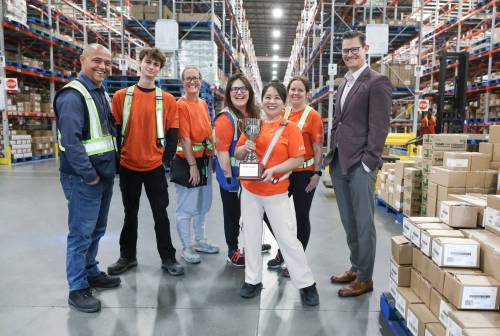
After a three-year absence, the trophy is back in Winnipeg.

Last week, McKesson Canada named its 120,000-square-foot pharmaceutical distribution centre in the northwest part of the Manitoba capital its Distribution Centre of the Year. The award recognizes the facility’s role in helping essential medications reach communities across the province and some of Canada’s remote regions.

This is the fourth time the Winnipeg facility has earned the company-wide award since it opened five years ago. McKesson previously honoured the centre in 2021, 2022 and 2023. The recognition comes with a trophy, as well as a banner that was hung from the rafters on Thursday.

More than 100 employees work across the centre’s day-and-night operations, processing between 80,000 and 100,000 medication units daily. Last year, the centre distributed more than 21 million medication units while maintaining more than 99 per cent accuracy.

Read
Yesterday at 6:00 AM CDT

Real journalists matter in an AI world

Paul Deegan 4 minute read Preview

Real journalists matter in an AI world

Paul Deegan 4 minute read 2:00 AM CDT

An algorithm can decide what you see, but it doesn’t report the news. Nunatsiaq News, an award-winning newspaper in Nunavut, recently reported that a so-called “news” website was posting AI-generated articles about the north by stealing real news stories produced by real journalists.

The articles were supposedly written by Nunavut correspondent Leah Qammaniq — a fake journalist, with a fake photo and a fake bio.

Governor General Louise Arbour warned us of fake news in her installation speech in June. She said, “We must continue to protect the public space in which our national debates take place: from schools and universities to the media, political parties, unions and civil society organizations …With instant access to vast amounts of information, it is very tempting to pay little attention to the reliability of sources. The lines between knowledge and belief, between truth and falsehood, between facts and assumptions, are increasingly blurred. AI could be threatening not only the way we live and work, but also the control we exercise over our own destiny.”

The Government of Canada has recognized the problem as well. Its recent discussion paper, Enhancing trust in artificial intelligence through increased transparency, stated, “Canadians encounter news reporting, product reviews, and audio-visual content across the internet, often without any indication of whether it was written by a person, generated by an AI system, or produced through some combination of both … A particular concern within this broader landscape is that generative AI greatly enables the creation and dissemination of deceptive or misleading content.”

Read
2:00 AM CDT

Band keeps plight of MMIWG close to heart on new track

Ben Waldman 6 minute read Preview

Band keeps plight of MMIWG close to heart on new track

Ben Waldman 6 minute read 2:00 AM CDT

Gabrielle Fontaine won’t stop talking about them and neither will her bandmates.

As a teenager, the Winnipeg songwriter — whose late father Vince was the passionate leader of musical projects including Eagle & Hawk — would volunteer at Wiping Away the Tears, an annual gathering hosted by Ka Ni Kanichihk that offers space for healing, ceremony and support for relatives of missing and murdered Indigenous women, girls and two-spirit people.

Though Indigenous people make up less than five per cent of the Canadian population, Indigenous women make up 16 per cent of all female homicide victims and 11 per cent of missing women, according to the Assembly of First Nations.

Seeking a way to help in the community, Fontaine regularly volunteered as a child-minder during memorial events, an experience she says shaped her outlook as a musical storyteller.

Read
2:00 AM CDT

Seven Wilsons, one regional spirit

Hersh Seth 5 minute read Preview

Seven Wilsons, one regional spirit

Hersh Seth 5 minute read 2:00 AM CDT

In Dryden, Ont., a 34-metre suspension bridge crosses the Wabigoon River rapids. It is named after a man who paid for a quarter of the bridge himself. A plaque recognizes Roy Wilson’s “many contributions to City Revitalization” and mentions his 40 years in the Rotary Club, whose motto is “service above self”.

My father sold business machines from the 1970s through the ’90s, during the shift from carbon copy machines and typewriters to photocopiers, fax machines, and early office computers and printers. His sales territory — which he covered mostly by car but also by propeller plane — was Saskatchewan, the Northwest Territories, Manitoba, and northwestern Ontario, though much of it really belonged to the Wilsons.

In business machines, selling the machine was only half the job — the other half was ensuring a technician would fix it in January. Wilson’s set the standard for dealers across most of my dad’s regions. My father worked with Roy’s son Greg (who would later go on to become mayor of Dryden) but really respected Roy for teaching Greg to run the company with the towns they served as the priority.

Wilson’s service routes went beyond where roads stopped. Even if customers lived north of the highway system, Wilson’s still found a way to help, using three company planes based at the Dryden airport. As a result, a stationery shop from a paper mill town served all of northwestern Ontario and later northern Manitoba. Imagine a photocopier strapped into a small plane, a technician beside it, and a gravel runway waiting at the other end.

Read
2:00 AM CDT

The election of our discontent: City at a crumbling crossroads, grumbling residents say in poll

Matthew Frank 7 minute read Preview

The election of our discontent: City at a crumbling crossroads, grumbling residents say in poll

Matthew Frank 7 minute read Updated: Yesterday at 3:16 PM CDT

There’s an undercurrent of unhappiness running through the Winnipeg electorate as the municipal election day approaches.

One-half of Winnipeggers believe the city is heading in the wrong direction, according to a new Abacus Data poll, with nearly one-third unsure if Winnipeg is regressing or progressing.

Only 21 per cent of residents believe the city is on the right track, the Free Press-commissioned poll found.

That discontentment extends to how the city spends its tax dollars, with four in 10 Winnipeggers believing they receive poor value for what they pay in property taxes.

Read
Updated: Yesterday at 3:16 PM CDT

Stevenson set for first Jets start against Penguins

Ken Wiebe 5 minute read Preview

Stevenson set for first Jets start against Penguins

Ken Wiebe 5 minute read Sunday, Oct. 4, 2026

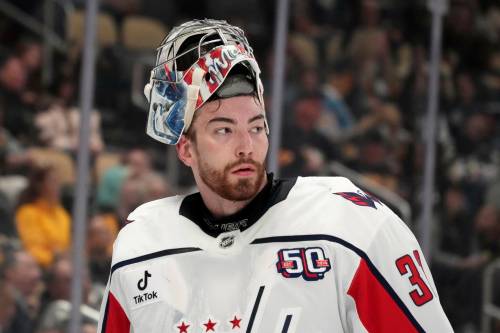
DETROIT — Clay Stevenson, the stage is yours.

As the Winnipeg Jets wrap up a two-game road trip on Monday against the Pittsburgh Penguins, the newest member of the team will be between the pipes after Stuart Skinner got the call in the first two outings of the campaign.

There will be an element of familiarity for Stevenson, as PPG Paints Arena is where he made his first NHL appearance with the Washington Capitals on April 17, 2025.

“There is some comfortability in that building,” said Stevenson, who made 33 saves in a 5-2 loss to the Penguins in that NHL debut. “It’s always a great challenge to play against (Sidney) Crosby and (Evgeni) Malkin and those guys. It’s an honour to get into the crease anytime.”

Read
Sunday, Oct. 4, 2026