Actress more than just a pretty face

Advertisement
Read this article for free:
or
Already have an account? Log in here »
To continue reading, please subscribe:

Digital Subscription
One year of digital access for only $205*
- Enjoy unlimited reading on winnipegfreepress.com
- Read the E-Edition, our digital replica newspaper
- Access News Break, our award-winning app
- Play interactive puzzles
*First annual payment billed as $205.00 + GST for one year. This annual subscription will automatically renew at $233.00 + GST every 52 weeks (10% off the regular annual price of $259.35). Offer available to new and qualified returning subscribers only. Cancel any time.
To continue reading, please subscribe:
Add Free Press access to your Brandon Sun subscription for only an additional
$1 for the first 4 weeks*
- Enjoy unlimited reading on winnipegfreepress.com
- Read the E-Edition, our digital replica newspaper
- Access News Break, our award-winning app
- Play interactive puzzles
*Your next Brandon Sun subscription payment will increase by $1.00 and you will be charged $17.95 plus GST for four weeks. After four weeks, your payment will increase to $24.95 plus GST every four weeks.
Read unlimited articles for free today:
or
Already have an account? Log in here »
Hey there, time traveller!
This article was published 10/01/2018 (3194 days ago), so information in it may no longer be current.
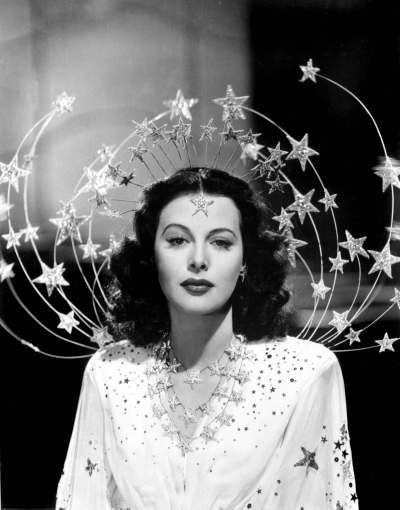
“Any girl can be glamorous,” Hollywood screen siren Hedy Lamarr once declared. “All you have to do is stand still and look stupid.”
With waves of raven hair, immaculately arched eyebrows and perfectly symmetrical features, Lamarr was billed as “the most beautiful woman in the world” in the 1930s. She was naturally glamorous, but she had a very hard time standing still and looking stupid.
Born in Vienna to a cultured, highly assimilated Jewish family and married as a teen to a munitions manufacturer, she fled Austria — and her increasingly unhappy marriage — in 1937. Later, working in Hollywood as the newest discovery of Louis B. Mayer, she watched helplessly as Europe descended into war and German U-boats brought down ships bringing desperate refugees across the Atlantic.
Labouring at the MGM studios during the day, she spent her nights designing a secure communications system for radio-controlled torpedoes, hoping to assist the Allied war effort. With American avant-garde composer George Antheil — who, believe it or not, was inspired by his work with player pianos — she developed a frequency-hopping transmission technique, basically foreseeing the technology that would enable the development of Wi-Fi, Bluetooth and GPS systems.
Lamarr’s double life would sound like the kind of entertaining but preposterous Hollywood adventure she often starred in — if it weren’t actually true.
In Bombshell, filmmaker Alexandra Dean pays passionate tribute to the complicated life of a complex woman. A documentary producer making her directorial debut, Dean uses a fluid — if occasionally conventional and stretched-out — blend of film footage, archival material and animation, along with interviews with historians, journalists, friends and family members.
Dean also relies heavily on former Forbes reporter Fleming Meeks, who taped hours of telephone interviews with the actress when she was in her 70s and living as a near recluse. It is Lamarr’s voice, removed from the burden of her physical beauty, that conveys the clearest sense of her character.
We hear the frustrations of a strong-willed woman who, at the zenith of her fame, was seen by everyone but never seen for herself. At age five, Lamarr had taken apart and then reassembled her mechanical toys. This talent for tinkering and experimenting never went away, but her work was mostly discounted because she was a woman, and an impossibly beautiful woman at that.
Lamarr ran through six husbands. After the war, she became increasingly erratic, possibly the result of amphetamine addiction, a frequent legacy of a studio system in which stars were given one set of pills to wake up and another set to go to sleep.
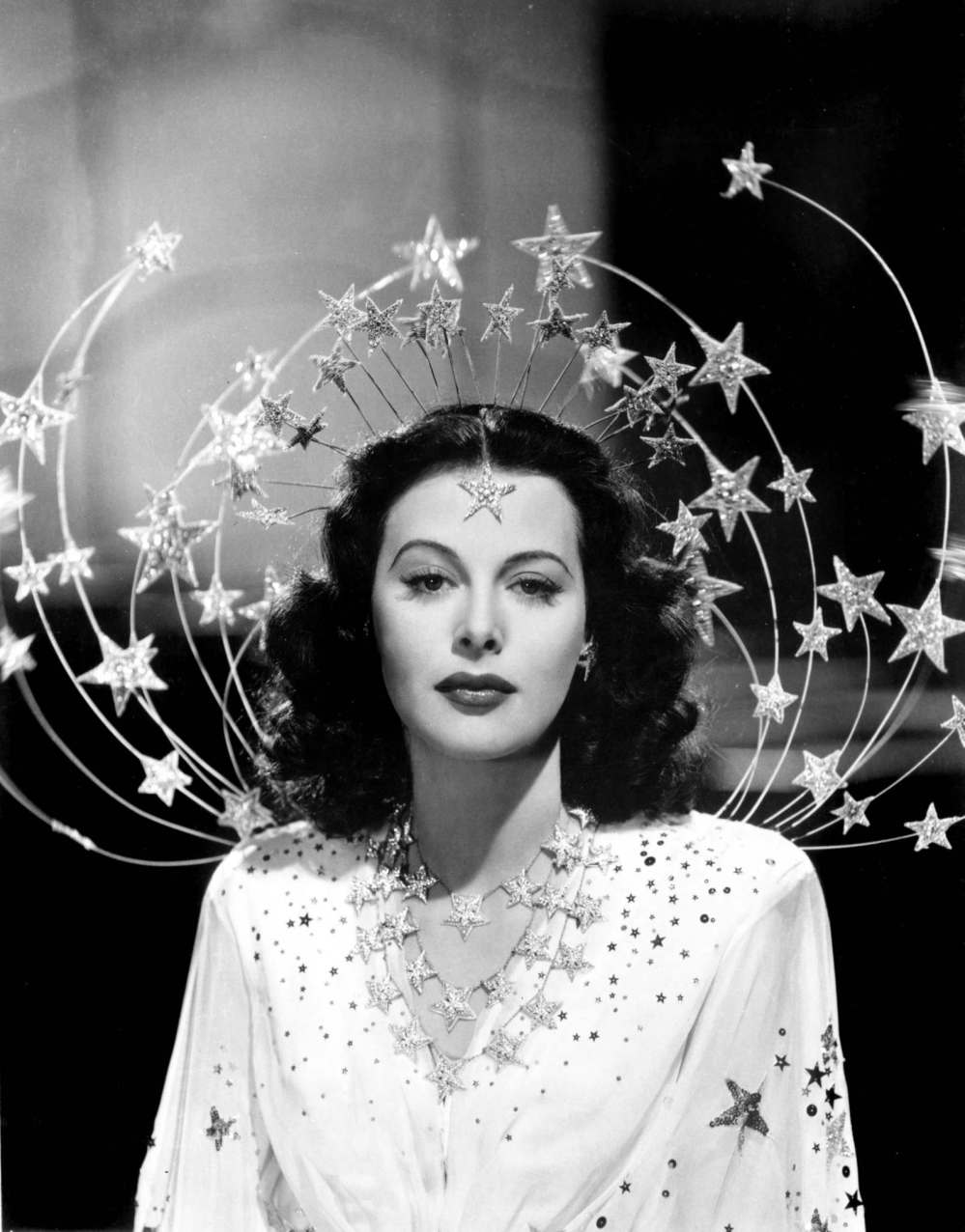
Although she was a compelling screen presence, able to play femmes fatales with a slightly ironical and arch flair, Lamarr was stuck in typecast and limited roles. Later, she became a celebrity guest on TV talk shows, often treated cruelly as a sort of parody of Golden Age glamour. As she aged, Lamarr pursued increasingly unwise plastic surgeries — though, characteristically, she was full of advice for her surgeons about where and how to cut to minimize visible scarring.
Two narrative trajectories run through the bittersweet Bombshell. One is the idiosyncratic, often unlikely tale of a restless, rebellious and highly individual woman who “created her own reality,” as fellow actress and superfan Diane Kruger suggests. The other is the story of a woman in Hollywood valued solely for her beauty when young and then scorned as she grows old, which is — unfortunately — all too believable and all too common.
alison.gillmor@freepress.mb.ca
Studying at the University of Winnipeg and later Toronto’s York University, Alison Gillmor planned to become an art historian. She ended up catching the journalism bug when she started as visual arts reviewer at the Winnipeg Free Press in 1992.
Our newsroom depends on a growing audience of readers to power our journalism. If you are not a paid reader, please consider becoming a subscriber.
Our newsroom depends on its audience of readers to power our journalism. Thank you for your support.
MOVIE REVIEW
Bombshell: The Hedy Lamarr Story
Directed by Alexandra Dean
Cinematheque
PG
90 minutes
Three and a half stars out of five
Other voices
What makes “Bombshell” intriguing is not just Lamarr’s gift for invention, it’s also what a fiery individualist she was, someone who had no regrets about her eventful life (“You learn from everything”), not even its racy, tabloid elements.
— Kenneth Turan, Los Angeles Times
Studying at the University of Winnipeg and later Toronto’s York University, Alison Gillmor planned to become an art historian. She ended up catching the journalism bug when she started as visual arts reviewer at the Winnipeg Free Press in 1992.
Our newsroom depends on a growing audience of readers to power our journalism. If you are not a paid reader, please consider becoming a subscriber.
Our newsroom depends on its audience of readers to power our journalism. Thank you for your support.
Advertisement Advertise With Us
Advertisement Advertise With Us