Show, don’t tell
Beautiful environmental documentary opts for powerful visuals over facts and figures

Advertisement
Read this article for free:
or
Already have an account? Log in here »
To continue reading, please subscribe:

Digital Subscription
One year of digital access for only $205*
- Enjoy unlimited reading on winnipegfreepress.com
- Read the E-Edition, our digital replica newspaper
- Access News Break, our award-winning app
- Play interactive puzzles
*First annual payment billed as $205.00 + GST for one year. This annual subscription will automatically renew at $233.00 + GST every 52 weeks (10% off the regular annual price of $259.35). Offer available to new and qualified returning subscribers only. Cancel any time.
To continue reading, please subscribe:
Add Free Press access to your Brandon Sun subscription for only an additional
$1 for the first 4 weeks*
- Enjoy unlimited reading on winnipegfreepress.com
- Read the E-Edition, our digital replica newspaper
- Access News Break, our award-winning app
- Play interactive puzzles
*Your next Brandon Sun subscription payment will increase by $1.00 and you will be charged $17.95 plus GST for four weeks. After four weeks, your payment will increase to $24.95 plus GST every four weeks.
Read unlimited articles for free today:
or
Already have an account? Log in here »
Hey there, time traveller!
This article was published 05/01/2019 (2826 days ago), so information in it may no longer be current.
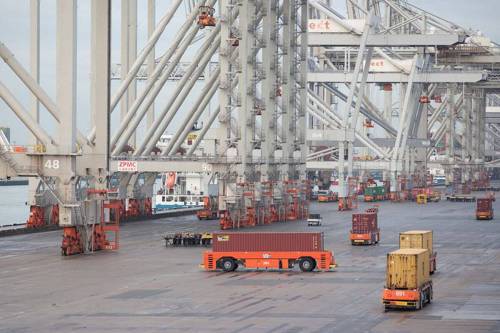
The saturated colours, the rhythmic patterns, the sublime scale: Seen through the estheticizing lens of Canadian photographer Edward Burtynsky, open-pit mines, mineral evaporation ponds and oil refineries take on a strange dystopian beauty.
It’s disturbing that environmental devastation should be so stunning, but that’s the controversial paradox at the centre of the documentary collaborations between Burtynsky and filmmaker Jennifer Baichwal.
Building on the thematic concerns and technical achievements of Manufactured Landscapes (2006) and Watermark (2013), the final entry in their environmentalist trilogy (with contributing cinematographer and producer Nicholas de Pencier) gives extraordinary visual expression to the growing scientific consensus that we are living in the Anthropocene epoch, in which human activity is transforming the Earth’s geology and ecosystems more rapidly and radically than all natural processes combined.
Anthropocene is an advocacy doc that plays like an arthouse doc. Alicia Vikander (Tomb Raider) has been brought in as the celebrity narrator, but her words are sparse. While the filmmakers use some Al Gore-style facts and stats, their argument is conveyed primarily through visual means.
This show-don’t-tell approach is highly cinematic, with long contemplative sequences punctuated by sudden moments of shock or sorrow or even strange, surreal humour.
We watch the choreographed mechanical ballet of industrial processes. We see aerial footage of scarred extraction sites that resemble abstract paintings. We even take a trippy Op Art journey through the longest traffic tunnel in the world, blasted through the base of the Swiss Alps.
Following the filmmakers’ multi-year global odyssey, we travel from overflowing landfills in Nigeria to failing coral reefs in Indonesia to vast lithium-extraction operations in Chile’s Atacama Desert. The film brings environmental issues close to home for Canadian viewers with a brief scene set in the old-growth forests of British Columbia.
There is also oblique comment on how these vast industrial projects affect human life. We meet some of the fatalistic residents of the most polluted city in Russia, an isolated smelting company town that celebrates a summer holiday — “Happy Metallurgy Day!” — with peppy songs and grinning mascots.
In Germany, we watch as family farms, historical buildings and rooted communities are torn down so the country’s largest open-pit mine can become even larger. At this metastasizing site, the biggest excavating equipment in the world gouges out earth, the machinery so unimaginably massive it looks like a bad CGI effect — an imaginary contraption from some preposterous steampunk sci-fi flick.
These sequences are loosely grouped under several section headers, as the film explores issues such as terraforming, climate change and extinction rates.
Detractors of Burtynsky, Baichwal and de Pencier’s approach might wish for more detailed quantitative data — though, as we’ve seen in this “post-truth” era, facts and figures often don’t do much to change people’s minds. Anthropocene’s arguments enter instead through the senses, giving a concrete picture of what is at stake, for a powerful cumulative effect.
Unsettling and urgent, the film ends with some muted hope for the Anthropocenic future, putting forward the notion that if we can recognize our species’ dominance and its disastrous effect on the Earth, we might finally turn those characteristically human qualities of “tenacity and ingenuity” to the cause of preservation rather than destruction.
alison.gillmor@freepress.mb.ca
Studying at the University of Winnipeg and later Toronto’s York University, Alison Gillmor planned to become an art historian. She ended up catching the journalism bug when she started as visual arts reviewer at the Winnipeg Free Press in 1992.
Our newsroom depends on a growing audience of readers to power our journalism. If you are not a paid reader, please consider becoming a subscriber.
Our newsroom depends on its audience of readers to power our journalism. Thank you for your support.
Movie review
Anthropocene: The Human Epoch
Directed by Jennifer Baichwal, Edward Burtynsky and Nicholas de Pencier
Cinematheque
PG
87 minutes
four stars
To say that there are no easy answers to planetary woes is to state the obvious. But the film seeks to reveal rather than lecture, in the hope that our eyes will convince our brains to act before it’s too late.
— Peter Howell, Toronto Star
These globe-trotting Canadians with their backgrounds in filmmaking, large-scale photography, and cinematography are not so agenda-driven that they can’t see the raw majesty of these impacts.
— Ken Eisner, Georgia Straight
As it stands, though, Anthropocene mostly proves the points of Burtynsky’s critics.
— Daniel Clarkson Fisher, PopMatters
While the film’s urgency comes across, its beautiful and bizarre moments also push the doc toward abstraction.
— Kevin Ritchie, NOW Toronto
Studying at the University of Winnipeg and later Toronto’s York University, Alison Gillmor planned to become an art historian. She ended up catching the journalism bug when she started as visual arts reviewer at the Winnipeg Free Press in 1992.
Our newsroom depends on a growing audience of readers to power our journalism. If you are not a paid reader, please consider becoming a subscriber.
Our newsroom depends on its audience of readers to power our journalism. Thank you for your support.
Advertisement Advertise With Us