A family falling apart
Novel adaptation offers powerful, personal performances

Advertisement
Read this article for free:
or
Already have an account? Log in here »
To continue reading, please subscribe:

Digital Subscription
One year of digital access for only $205*
- Enjoy unlimited reading on winnipegfreepress.com
- Read the E-Edition, our digital replica newspaper
- Access News Break, our award-winning app
- Play interactive puzzles
*First annual payment billed as $205.00 + GST for one year. This annual subscription will automatically renew at $233.00 + GST every 52 weeks (10% off the regular annual price of $259.35). Offer available to new and qualified returning subscribers only. Cancel any time.
To continue reading, please subscribe:
Add Free Press access to your Brandon Sun subscription for only an additional
$1 for the first 4 weeks*
- Enjoy unlimited reading on winnipegfreepress.com
- Read the E-Edition, our digital replica newspaper
- Access News Break, our award-winning app
- Play interactive puzzles
*Your next Brandon Sun subscription payment will increase by $1.00 and you will be charged $17.95 plus GST for four weeks. After four weeks, your payment will increase to $24.95 plus GST every four weeks.
Read unlimited articles for free today:
or
Already have an account? Log in here »
Hey there, time traveller!
This article was published 09/02/2019 (2798 days ago), so information in it may no longer be current.
Carey Mulligan has been getting attention for her work in this Eisenhower-era piece, and for good reason. Even more remarkable is young Ed Oxenbould (The Visit), and not just for his wary, feeling performance.
Oxenbould is playing a 14-year-old who looks a bit like an anxious middle-aged man. Even his hairline seems to be receding with worry. That’s just about perfect for a drama in which the adults act like children and the children, left to themselves, must act like adults.
The story of a family in quiet crisis, this steadily assured directorial debut from actor Paul Dano (Love & Mercy, There Will Be Blood) is adapted from a laconic 1990 novel by American writer Richard Ford.
The Brinson family — husband Jerry (Jake Gyllenhaal), wife Jeanette (Mulligan) and their teenaged son Joe (Oxenbould) — has recently moved to Montana, hoping for a new start. These hopes seem threatened by an actual — and madly metaphorical — wildfire burning out of control near the Canadian border.
The family’s precarious economic position is jeopardized when Jerry loses not just his latest golf-pro gig, but his previously undented belief that the next job — whatever and wherever it might be — will give his family a better life. Questioning his manhood, his ability to provide and his optimistic faith in American opportunity, Jerry heads off with a work gang to fight the fire. He’ll be doing “whatever they need men for,” he tells Joe.
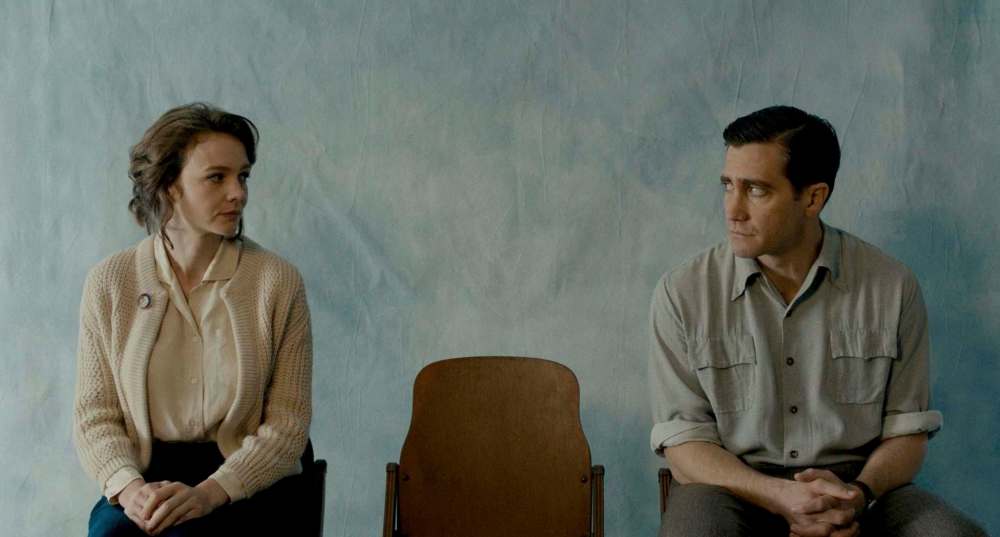
Jerry’s temporary absence is enough to tip the balance of the marriage. There’s a reckless suddenness to the way Jeanette jettisons conventional expectations about her roles as a wife and mother, but also a retroactive sense that her rage, confusion and frustration have been building a long time.
Jeanette hunts for a job of her own and starts off a flirtation with the much older Warren Miller (The Night Of’s Bill Camp), a small-town big shot. Miller’s wealth gives him a complacent confidence that’s repellent, but also refreshingly honest.
As he says to Jeanette, “Money begets money, based on almost no other principle.”
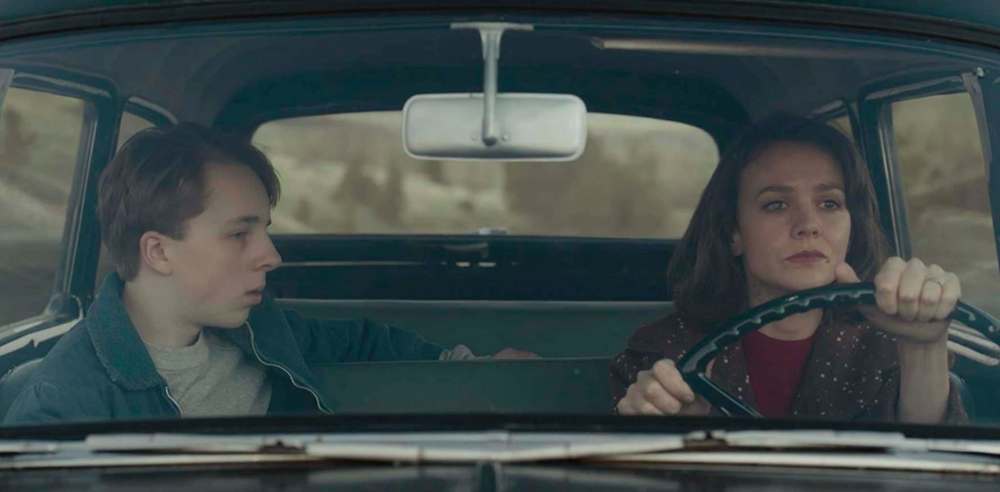
Jeanette’s pursuit of Warren is both calculated — she puts on what she calls her “desperation dress,” a revealing chiffon confection — and impulsive, almost adolescent, especially in the way she drags in Joe as an unwilling witness.
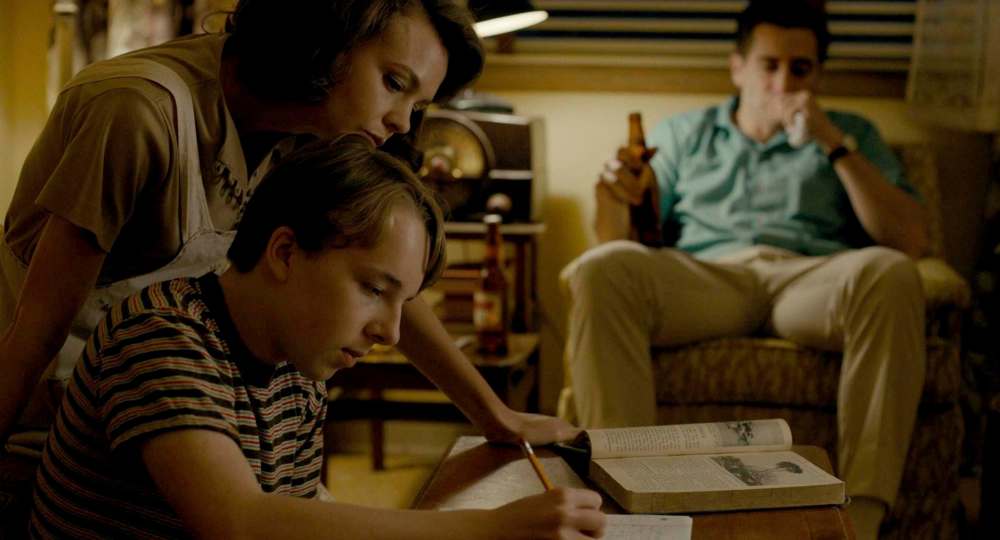
The crises of the adults may drive the plot, but they are always refracted through the eyes of Joe, the sensitive only child who watches from a distance, trying to understand the mysteries of his parents’ marriage, the vulnerability of his father and the dissatisfaction of his mother.
Dano and co-scripter Zoe Kazan have deftly adapted their source material. Some of the dialogue is taken verbatim from the book, but Ford’s simplicity is also translated cinematically into a poetic use of silence and space. With cinematographer Diego Garcia, Dano contrasts the big sky of Montana with the claustrophobia of the Brinsons’ small rental home. Views through doorways and around corners convey Joe’s lonely vigil, as he watches his family’s disintegration.
Dano, like many actors who turn to directing, gives his cast unhurried time and room to work. Mulligan, who made her name as an ingenue in films like An Education, leans into Jeanette’s vivacious, brittle unhappiness. With a courageous lack of concern about whether Jeannette is “likeable,” Mulligan works instead to make her understandable.
Gyllenhaal’s performance is less showy, but also packs some layers. Jerry is first seen playing football on the lawn with his son in what seems like an all-American 1950s tableau, but his innocence and pep are about to take a hit. Joe is not the only one coming of age in Wildlife.
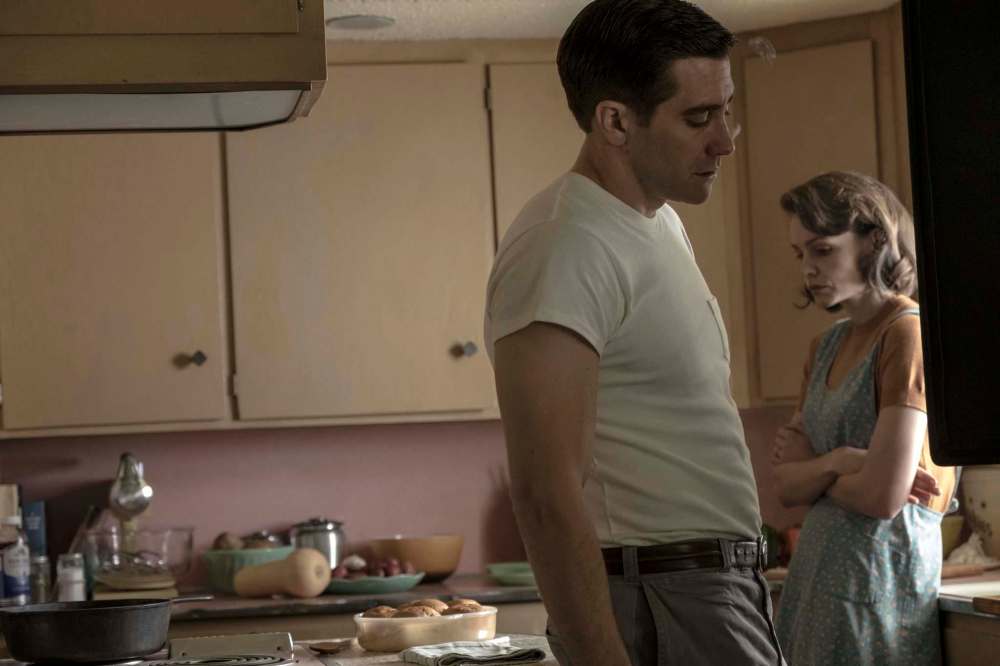
Gyllenhaal and Mulligan are good, but in the end, it’s Oxenbould’s outstanding work — and his poignant gaze — that holds the film together.
alison.gillmor@freepress.mb.ca
Studying at the University of Winnipeg and later Toronto’s York University, Alison Gillmor planned to become an art historian. She ended up catching the journalism bug when she started as visual arts reviewer at the Winnipeg Free Press in 1992.
Our newsroom depends on a growing audience of readers to power our journalism. If you are not a paid reader, please consider becoming a subscriber.
Our newsroom depends on its audience of readers to power our journalism. Thank you for your support.
MOVIE REVIEW
WILDLIFE
Starring Carey Mulligan, Jake Gyllenhaal and Ed Oxenbould
● Cinematheque
● Rating subject to classification ● 105 minutes
★★★★ out of five
Studying at the University of Winnipeg and later Toronto’s York University, Alison Gillmor planned to become an art historian. She ended up catching the journalism bug when she started as visual arts reviewer at the Winnipeg Free Press in 1992.
Our newsroom depends on a growing audience of readers to power our journalism. If you are not a paid reader, please consider becoming a subscriber.
Our newsroom depends on its audience of readers to power our journalism. Thank you for your support.
Advertisement Advertise With Us
Advertisement Advertise With Us