Doc puts personal face on horror of Holocaust

Advertisement
Read this article for free:
or
Already have an account? Log in here »
To continue reading, please subscribe:

Digital Subscription
One year of digital access for only $205*
- Enjoy unlimited reading on winnipegfreepress.com
- Read the E-Edition, our digital replica newspaper
- Access News Break, our award-winning app
- Play interactive puzzles
*First annual payment billed as $205.00 + GST for one year. This annual subscription will automatically renew at $233.00 + GST every 52 weeks (10% off the regular annual price of $259.35). Offer available to new and qualified returning subscribers only. Cancel any time.
To continue reading, please subscribe:
Add Free Press access to your Brandon Sun subscription for only an additional
$1 for the first 4 weeks*
- Enjoy unlimited reading on winnipegfreepress.com
- Read the E-Edition, our digital replica newspaper
- Access News Break, our award-winning app
- Play interactive puzzles
*Your next Brandon Sun subscription payment will increase by $1.00 and you will be charged $17.95 plus GST for four weeks. After four weeks, your payment will increase to $24.95 plus GST every four weeks.
Read unlimited articles for free today:
or
Already have an account? Log in here »
Hey there, time traveller!
This article was published 27/01/2021 (2082 days ago), so information in it may no longer be current.
Timed for release on International Holocaust Awareness Day today, the National Film Board documentary short Martha brings a light touch to a horrific subject.
Apparently, writer-director Daniel Schubert’s objective was to reach a younger audience with limited understanding of how Adolf Hitler’s Nazi party facilitated the genocide of six million European Jews during the years of the Second World War.
In the past few decades, feature films often broached the subject, most notably Steven Spielberg’s Schindler’s List (1993), Roman Polanski’s The Pianist (2003) and the especially harrowing Hungarian drama Son of Saul (2015) by László Nemes.
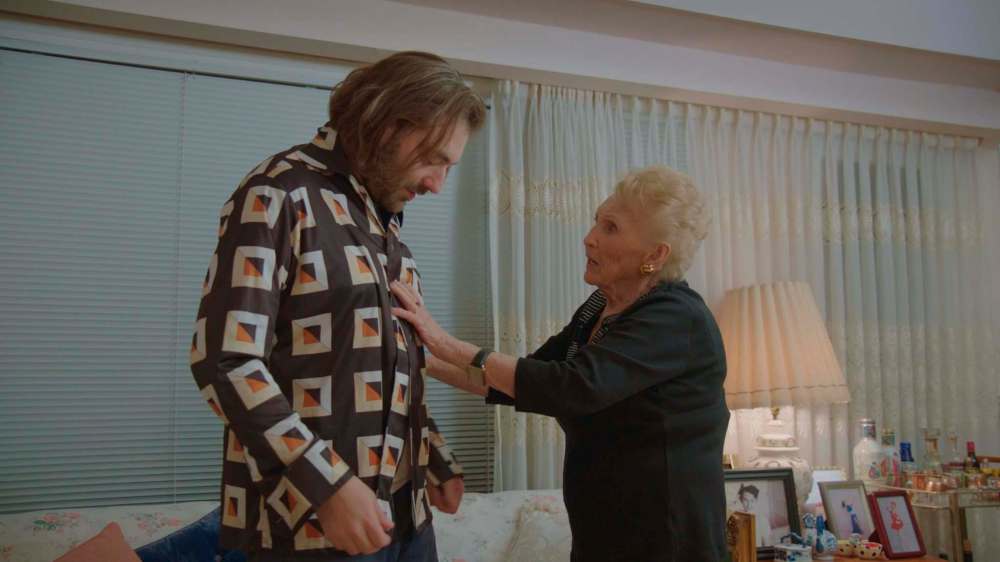
All those films boast considerable artistry, but they’re also tough to watch. Schubert tries for a stealthier approach, employing as his main character Martha Katz, the filmmaker’s own 90-year-old grandmother.
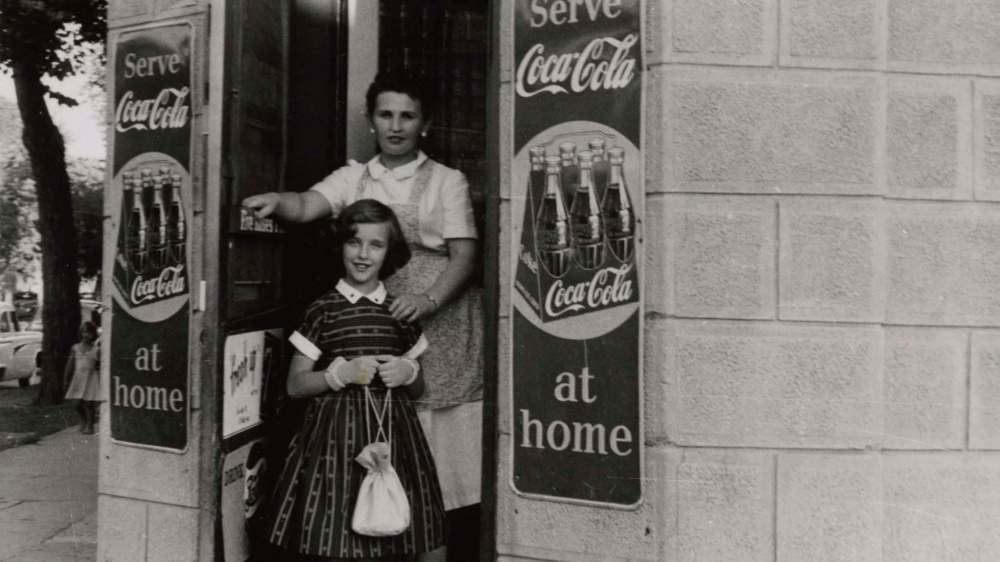
Martha should be of interest to Winnipeggers in particular. She moved to the city in the years following her family’s internment in Auschwitz, where her mother and two younger siblings were murdered by the Nazis. She eventually opened her own grocery store on Burrows Avenue, and later headed to Los Angeles.
It is here, in the Beverlywood neighbourhood, where we find Daniel at a deli picking up food for himself, his mother and grandmother.
Long hesitant to tell her story, Martha relents, sitting down for an interview and later accompanying Schubert on a visit to the Museum of Tolerance, a museum that aims to help visitors understand the Holocaust in both historic and contemporary contexts, located just north of Beverlywood.
Here, Martha can offer her own testimony to each exhibit, including a glass case filled with the medical tools of Dr. Josef Mengele, the “Angel of Death” who oversaw horrific experiments in the camp. Martha herself encountered Mengele, one of a few scenes in which Schubert resorts to dramatic re-enactments, which are used sparingly.
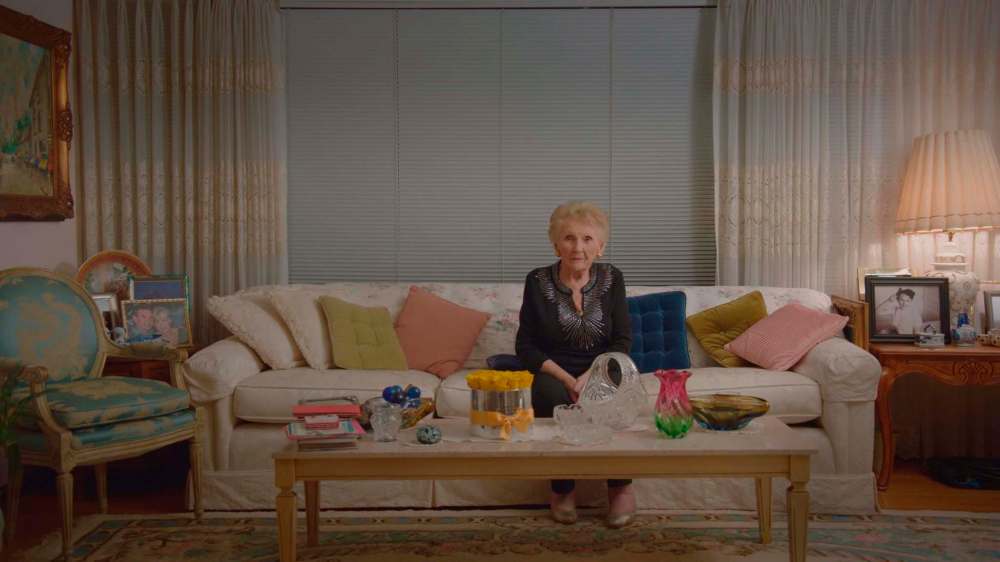

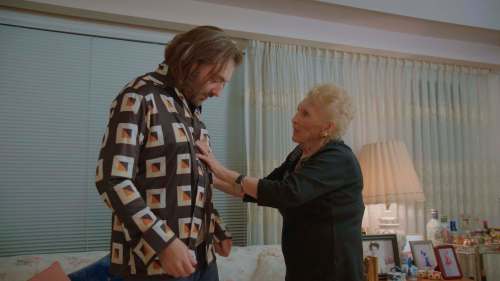
It’s an effective approach in its way, running counter to the usual strategy of clobbering the viewer with one horror after another — a perfectly understandable effective narrative strategy, but one that can be numbing after a while. Instead, Schubert takes pains to introduce the viewer to Martha, as we watch her in her home, preparing cabbage rolls with her daughter and gently scolding her grandson for his too-casual attire.
With some gentle prodding from Schubert, we learn more about her story through terrible details, such as when she recalls searching for the body of her dead mother in a pile of bodies “a storey high,” or learns in the museum that her mother’s death in the gas chambers may have taken as long as 45 minutes to accomplish, a devastating realization for this frail, old woman.
The film makes one imagine how it might have felt to pick up a carton of milk at Martha’s Grocery and notice the serial number tattooed on the proprietor’s left arm. Schubert’s film has that quality: unthinkable horror revealed amid the intimately familiar.
randall.king@freepress.mb.ca
Twitter: @FreepKing
Our newsroom depends on a growing audience of readers to power our journalism. If you are not a paid reader, please consider becoming a subscriber.
Our newsroom depends on its audience of readers to power our journalism. Thank you for your support.
MOVIE REVIEW
Martha
Directed by Daniel Schubert
● 21 minutes
● Available for viewing online at nfb.ca/film/martha/
★★★½ out of five
Our newsroom depends on a growing audience of readers to power our journalism. If you are not a paid reader, please consider becoming a subscriber.
Our newsroom depends on its audience of readers to power our journalism. Thank you for your support.
Advertisement Advertise With Us
Advertisement Advertise With Us