Beautiful Boy grapples with tales of addiction
Telling two stories in one movie a tough chore

Advertisement
Read this article for free:
or
Already have an account? Log in here »
To continue reading, please subscribe:

Digital Subscription
One year of digital access for only $205*
- Enjoy unlimited reading on winnipegfreepress.com
- Read the E-Edition, our digital replica newspaper
- Access News Break, our award-winning app
- Play interactive puzzles
*First annual payment billed as $205.00 + GST for one year. This annual subscription will automatically renew at $233.00 + GST every 52 weeks (10% off the regular annual price of $259.35). Offer available to new and qualified returning subscribers only. Cancel any time.
To continue reading, please subscribe:
Add Free Press access to your Brandon Sun subscription for only an additional
$1 for the first 4 weeks*
- Enjoy unlimited reading on winnipegfreepress.com
- Read the E-Edition, our digital replica newspaper
- Access News Break, our award-winning app
- Play interactive puzzles
*Your next Brandon Sun subscription payment will increase by $1.00 and you will be charged $17.95 plus GST for four weeks. After four weeks, your payment will increase to $24.95 plus GST every four weeks.
Read unlimited articles for free today:
or
Already have an account? Log in here »
Hey there, time traveller!
This article was published 26/10/2018 (2898 days ago), so information in it may no longer be current.
Like the tragic figure at its centre, director Felix Van Groeningen’s film Beautiful Boy is filled with potential, being an adaptation of two different books describing the same crisis in one American family.
The crisis is drug addiction. The screenplay was adapted from the Nic Sheff’s book Tweak, about his own struggles with a major, multi-faceted drug habit, most notably meth. But the screenplay also encompasses the book Beautiful Boy by David Sheff, Nic’s father, relating the strains of Nic’s addiction from his perspective and that of his family.
It can be a hard watch, simply because the addict’s story is typically a roller-coaster of recovery and relapse. Sometimes, it feels like the film is imitating the beats of a horror movie: just when you think the hero has escaped from the creature, it rises from the swamp yet again.
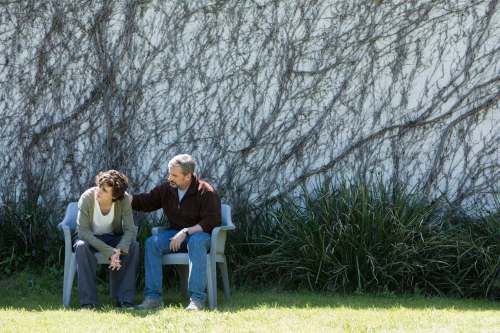
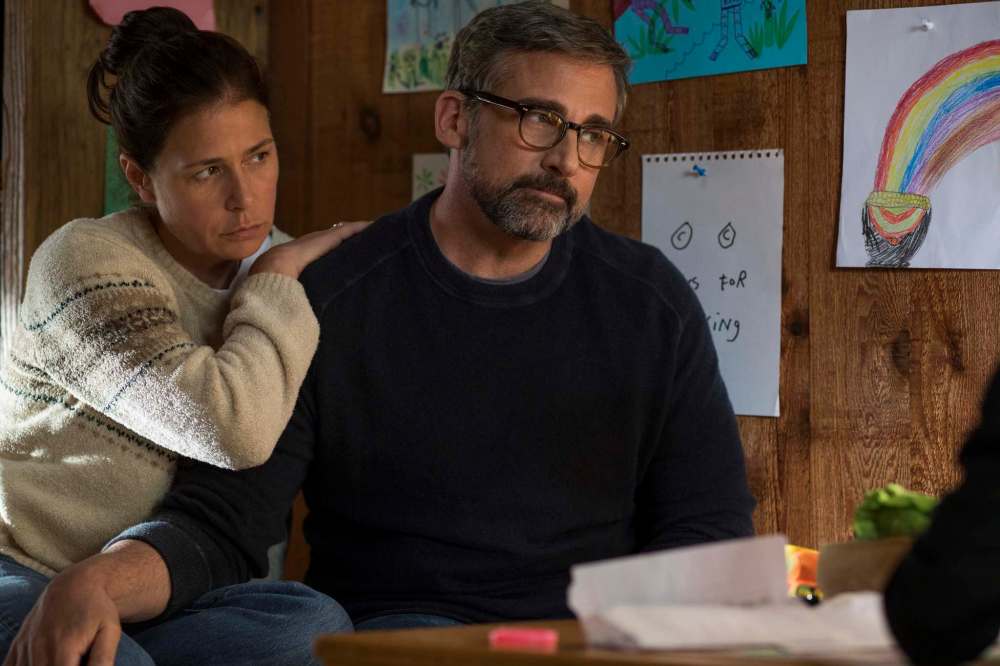
But, of course, the film studiously avoids setting that kind of hysterical pitch to the proceedings. The film’s milieu is very much set in an upper-middle class not-so-safe space. David Sheff (a sombre Steve Carell) is a successful freelance writer. Divorced from his first wife (Amy Ryan), he has custody of their son Nic (Timothée Chalamet of Call Me By Your Name) and is also raising two younger kids with his second wife Karen (Maura Tierney).
As he prepares to enter college, Nic is a lithe, handsome package of aspiration — a high-achieving student ready to conquer the world.
But Nic is himself conquered by substances. He can’t say no to pot or alcohol. And when the opportunity for the partaking of harder drugs arises, he embraces them with unfiltered recklessness. When the drugs start to take over his life, as addictive drugs must, his loving, well-intended father struggles to understand how his beloved boy could so wholly relinquish his life to dope.
Made in the shadow of an opioid addiction epidemic, the film necessarily plays out scenes that will ring familiar to many, as when Nic tried to con his father out of money to feed his habit, or ends up near death in an emergency room following an overdose.
It is the film’s quirkier moments that occasionally help the film transcend the addiction melodrama. David, ever the reporter, decides to try meth himself in an attempt to understand the drug’s grip on his son. He also guiltily recalls sharing a joint with his son in a moment that takes on the weight of culpability as Nic’s addictions spin ever more out of control.
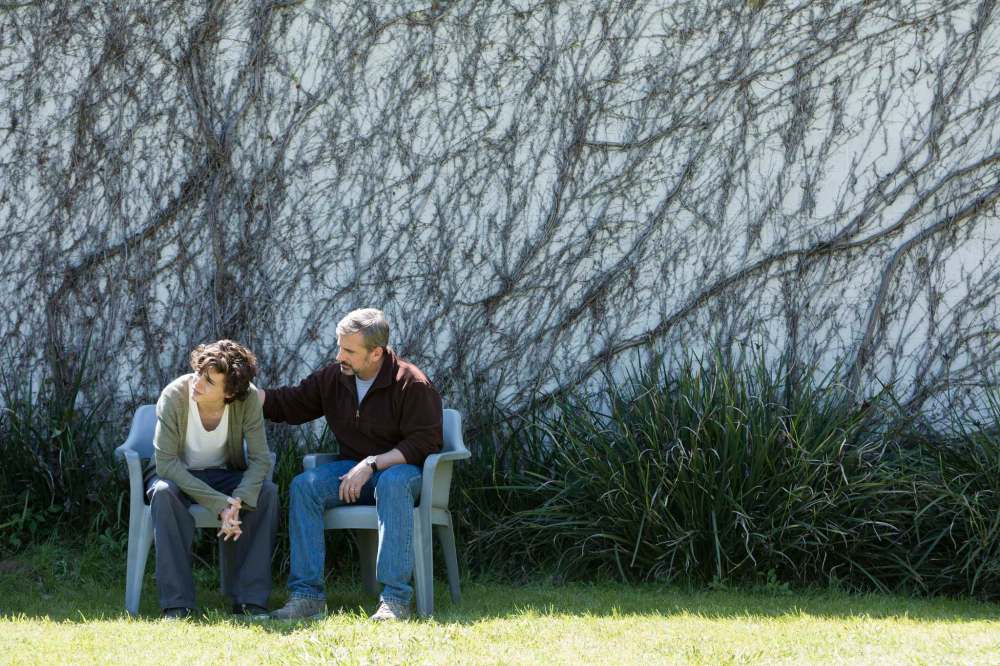
Chalamet is a very appealing young actor, and he admirably tests the limits of that appeal with a role that acknowledges the addict at his most dishonest and manipulative.
Carell, his zany comedy past growing ever more distant, throws himself into the role of a man who must come to terms with the fact that, even if his son survives, the child he once knew is forever lost.
Even so, the film fails to achieve the balance it must have sought in adapting father-and-son memoirs in the first place. Van Groeningen seems hesitant to explore how Nic was so completely enticed in the first place. Sure, the filmmaker doesn’t want to be party to a film that might encourage the use of hard drugs. But there are films — 1996’s Trainspotting comes to mind — which portray the appeal of the addict’s dream world while still acknowledging the habit will only exacerbate the nightmare.
randall.king@freepress.mb.caTwitter: @FreepKing
Our newsroom depends on a growing audience of readers to power our journalism. If you are not a paid reader, please consider becoming a subscriber.
Our newsroom depends on its audience of readers to power our journalism. Thank you for your support.
Movie Review
Beautiful Boy
Starring Steve Carell and Timothée Chalamet
Grant Park
14A
121 minutes
★★★ out of five
Other voices
Chalamet is asked to hit some big notes in this performance, but we never see him acting. That’s true greatness in the making.
— Richard Roeper, Chicago Sun-Times
Considering that Beautiful Boy is based on a true story, the final results feel like a slap across the face of anyone trying to cope with similarly delicate and fraught feelings.
— Andrew Parker, The Gate
We begin to understand David’s feelings of constant frustration at these dreary cycles of addiction, and while that might be exactly what the film (admirably) intends, there’s no denying it makes for a vexing viewing experience.
— Inkoo Kang, Slate
Chalamet’s charismatic, maddening Nic is spectacular, and the film’s stubbornly unresolved view of loving an addict — its perception of the experience as a gruelling, endless walk beside someone — is brutal but feels honest.
— Linda Holmes, NPR
For all its cinematic artfulness, the drama never strays from a well-honed formula. Put it this way: when an addict swears to be clean only an hour in a movie, an ugly relapse is inevitable.
— Mara Reinstein, Us Weekly
Our newsroom depends on a growing audience of readers to power our journalism. If you are not a paid reader, please consider becoming a subscriber.
Our newsroom depends on its audience of readers to power our journalism. Thank you for your support.
Advertisement Advertise With Us
Advertisement Advertise With Us