Dutch documentary is best in show
Buddy showcases remarkable service dogs and their owners

Advertisement
Read this article for free:
or
Already have an account? Log in here »
To continue reading, please subscribe:

Digital Subscription
One year of digital access for only $205*
- Enjoy unlimited reading on winnipegfreepress.com
- Read the E-Edition, our digital replica newspaper
- Access News Break, our award-winning app
- Play interactive puzzles
*First annual payment billed as $205.00 + GST for one year. This annual subscription will automatically renew at $233.00 + GST every 52 weeks (10% off the regular annual price of $259.35). Offer available to new and qualified returning subscribers only. Cancel any time.
To continue reading, please subscribe:
Add Free Press access to your Brandon Sun subscription for only an additional
$1 for the first 4 weeks*
- Enjoy unlimited reading on winnipegfreepress.com
- Read the E-Edition, our digital replica newspaper
- Access News Break, our award-winning app
- Play interactive puzzles
*Your next Brandon Sun subscription payment will increase by $1.00 and you will be charged $17.95 plus GST for four weeks. After four weeks, your payment will increase to $24.95 plus GST every four weeks.
Read unlimited articles for free today:
or
Already have an account? Log in here »
Hey there, time traveller!
This article was published 19/10/2019 (2483 days ago), so information in it may no longer be current.
Full disclosure: As I write this review, my 14-year-old mixed-breed rescue dog is curled up near my feet.
That might give some indication of the way I’m bound to react to this tender, thoughtful documentary about service dogs and the people who rely on them.
Did the film make me cry? Heck, the poster for the film made me cry.
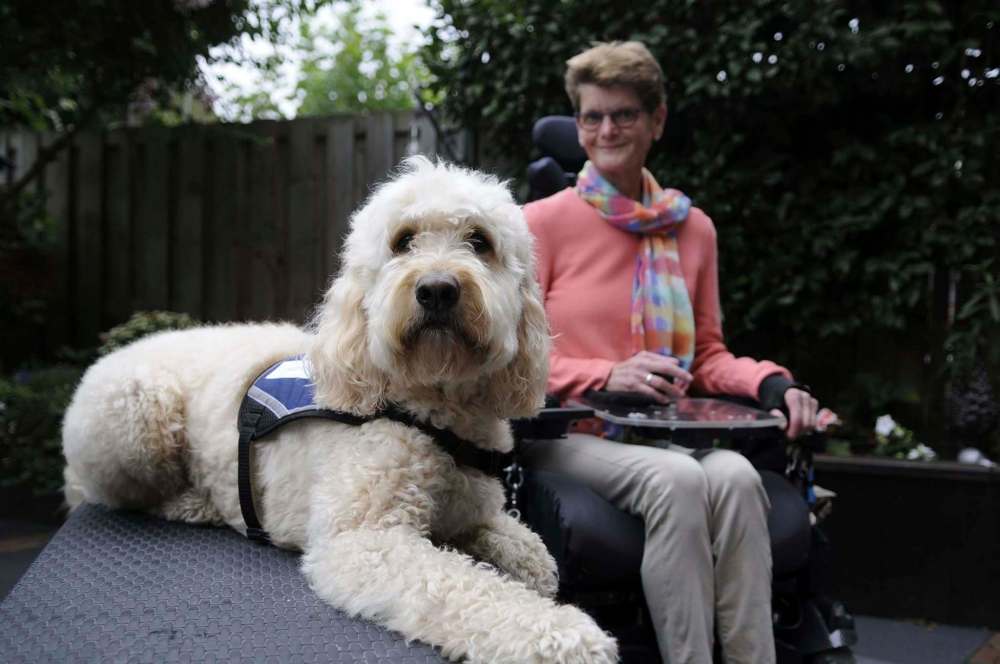
In Buddy (in Dutch, with subtitles), prolific documentarian Heddy Honigmann follows six people and their remarkable dogs, crafting a deeply empathetic examination of the human-canine bond.
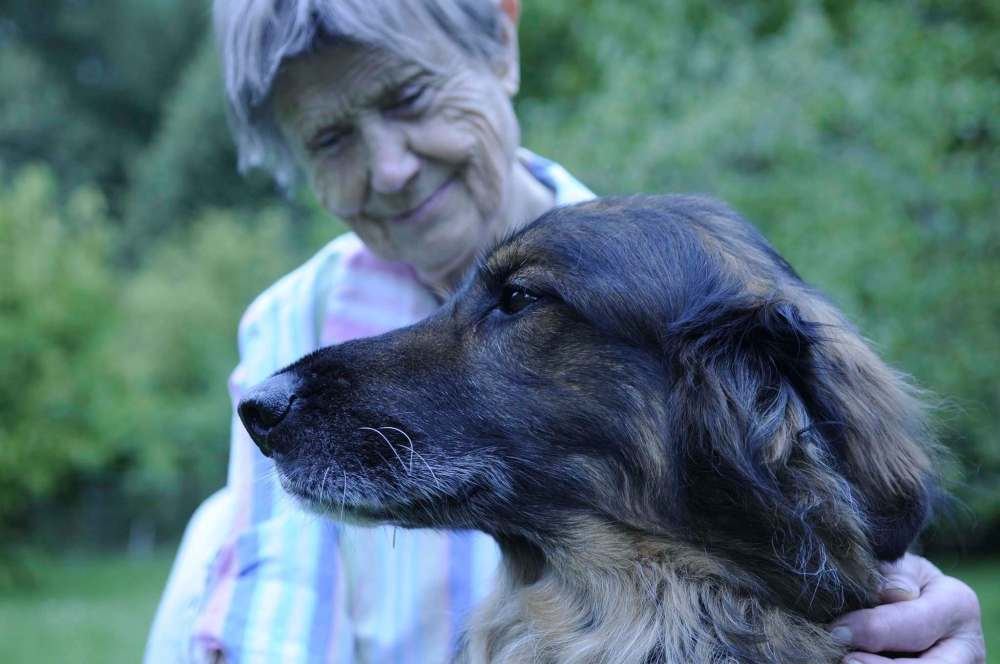
Honigmann’s human subjects include the 89-year-old Edith. Blinded by a German bomb when she was a young girl — at least her injury got her out of peeling potatoes, she jokes — Edith is direct and resolute and still jogs through the nearby woods with Makker, the appealingly sweet and shaggy beast who keeps her on track. Edith has measured out her years in the many dogs who have lived with her. She even commissions commemorative portraits of these animals though she herself will never see them.
Trevor, a veteran of the war in Afghanistan who suffers from physical wounds as well as debilitating PTSD, was unable to leave his house until Mister arrived. This calm and collected woolly brown dog keeps a watchful eye on Trevor, sensing when his flashbacks and nightmares are coming.
Scenes of dogs gazing intently at their humans, trying to gauge what they might be feeling, are seen again and again in Buddy.
All six dogs have extraordinary emotional intelligence, but Kaiko is an all-round smartypants who responds to a multitude of extremely specific commands to help Erna, who has reduced mobility and limited strength in her hands. Kaiko helps Erna conserve her energy by picking up groceries and placing them in a basket, taking documents out of the computer printer, helping her undress at night and even pulling up the duvet to tuck her in. Using a specialized series of pulls, Kaiko can open and shut kitchen drawers.
The film offers a vision of both vulnerability and strength as we meet people living with disabilities and watch them navigate a world that is not designed for them. Buddy works as a low-key but effective bit of disability advocacy, but in a larger sense, Honigmann is looking at what any human being needs to thrive, including companionship, acceptance and affection.
As recent movies like A Dog’s Journey and A Dog’s Purpose suggest, the canine genre can easily skew sentimental, and Buddy has been a “best in show” fan favourite at film festivals. But Honigmann also balances all those irresistibly furry faces with some crisp Dutch rationalism.
Hans, a visually impaired psychologist, speaks feelingly about the “super-dogs” he’s lived and worked with.
The bond between humans and dogs is made even more powerful, he suggests, by the fact that we are so different.

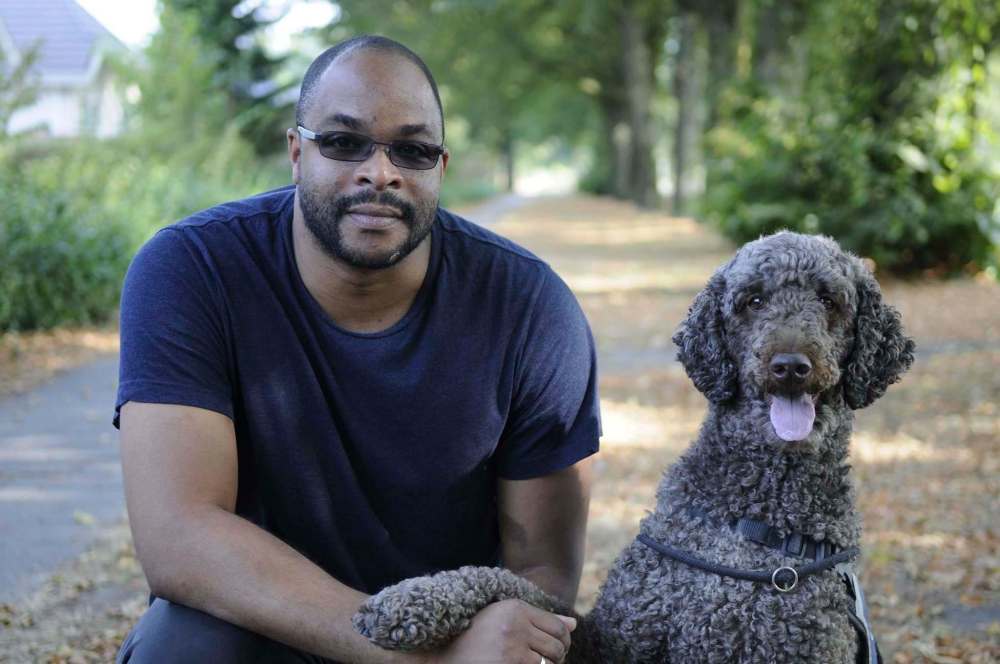
He acknowledges that difference, while maintaining the connection between us is best described as love. He loves his current guide dog Missy, an unflappable black Lab, even though “she’s a dog, and I’m only a human,” he says with a wry smile.
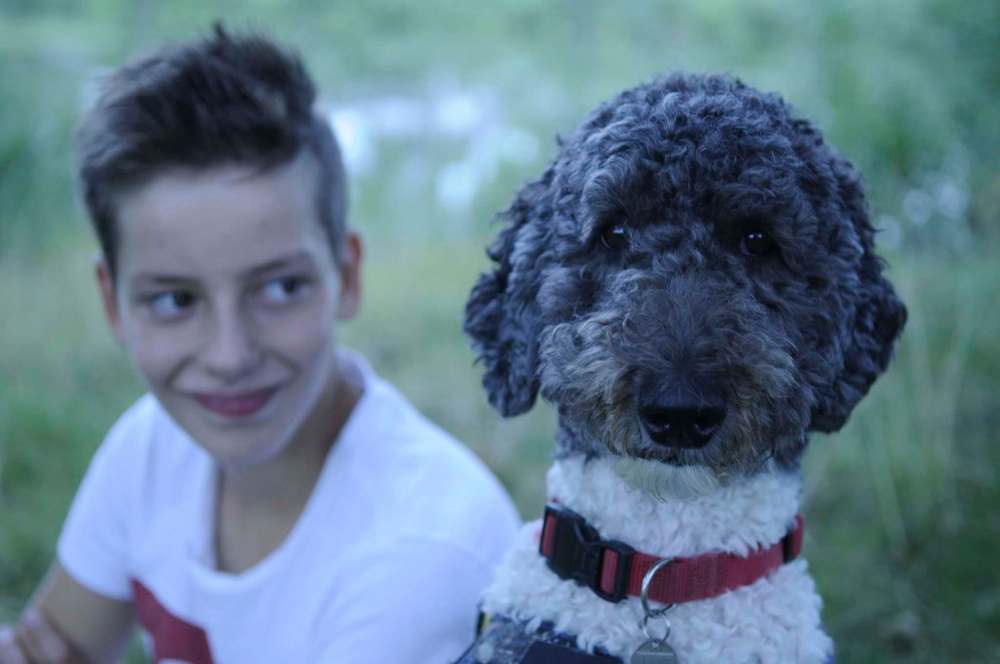
The other contrapuntal theme is mortality. There is a hushed but ever-present sense of loss in this film, since our dear dog friends don’t live as long as we do. Some of the older subjects have loved and lost several dogs, and even Zeb, a young autistic boy, is already troubled by thoughts of death. He hopes that he and Utah, his stoic service dog, will be together “in the hereafter.”
Honigmann is a rigorously non-intrusive filmmaker. She doesn’t make obvious statements. She doesn’t even give us much background information on her subjects, human or animal.
Instead, the film’s interconnecting stories come out organically through gentle questioning and patient observation. Buddy is slow, quiet and never showy. It gives us specific insight into six households, but it also builds toward larger ideas. Honigmann looks at the ways people have shaped dogs, but she also suggests that dogs have shaped us, making us better, kinder and more humane.
alison.gillmor@freepress.mb.ca
Studying at the University of Winnipeg and later Toronto’s York University, Alison Gillmor planned to become an art historian. She ended up catching the journalism bug when she started as visual arts reviewer at the Winnipeg Free Press in 1992.
Our newsroom depends on a growing audience of readers to power our journalism. If you are not a paid reader, please consider becoming a subscriber.
Our newsroom depends on its audience of readers to power our journalism. Thank you for your support.
Movie review
Buddy
Directed by Heddy Honigmann
- Cinematheque
- Subject to classification
- 86 minutes
★★★1/2 out of five
Other voices
After seeing Buddy, viewers who have dogs at home probably will want to hug them a little tighter, while those who don’t might wish they had.
— Cary Darling, Houston Chronicle
Buddy doesn’t need to be as delicate and intelligent as it is to work, but its thoughtful, unsentimental gaze makes an already guaranteed awww-fest into something more substantially affecting.
— Guy Lodge, Variety
The movie is warm, observant, mildly philosophical and deeply curious about the daily and inner lives of both the people and their four-legged assistants.
— Wesley Morris, New York Times
Studying at the University of Winnipeg and later Toronto’s York University, Alison Gillmor planned to become an art historian. She ended up catching the journalism bug when she started as visual arts reviewer at the Winnipeg Free Press in 1992.
Our newsroom depends on a growing audience of readers to power our journalism. If you are not a paid reader, please consider becoming a subscriber.
Our newsroom depends on its audience of readers to power our journalism. Thank you for your support.
Advertisement Advertise With Us
Advertisement Advertise With Us