Film delves into Canada’s Ukrainian internment
With no survivors of First World War camps left, crew sought out family members

Advertisement
Read this article for free:
or
Already have an account? Log in here »
To continue reading, please subscribe:

Digital Subscription
One year of digital access for only $205*
- Enjoy unlimited reading on winnipegfreepress.com
- Read the E-Edition, our digital replica newspaper
- Access News Break, our award-winning app
- Play interactive puzzles
*First annual payment billed as $205.00 + GST for one year. This annual subscription will automatically renew at $233.00 + GST every 52 weeks (10% off the regular annual price of $259.35). Offer available to new and qualified returning subscribers only. Cancel any time.
To continue reading, please subscribe:
Add Free Press access to your Brandon Sun subscription for only an additional
$1 for the first 4 weeks*
- Enjoy unlimited reading on winnipegfreepress.com
- Read the E-Edition, our digital replica newspaper
- Access News Break, our award-winning app
- Play interactive puzzles
*Your next Brandon Sun subscription payment will increase by $1.00 and you will be charged $17.95 plus GST for four weeks. After four weeks, your payment will increase to $24.95 plus GST every four weeks.
Read unlimited articles for free today:
or
Already have an account? Log in here »
Hey there, time traveller!
This article was published 10/11/2018 (2880 days ago), so information in it may no longer be current.
A film reminder of an often forgotten period of Canadian history gets its Manitoba debut at the Canadian Museum for Human Rights on Sunday.
That Never Happened: Canada’s First National Internment Operations, a documentary by Winnipeg-born and Saskatoon-raised director Ryan Boyko, revisits the internment of Ukrainian immigrants from 1914 to 1920. More than 8,500 people were wrongfully imprisoned and 88,000 more were forced to register with the federal government solely because they came from the former Austro-Hungarian Empire, which ruled over large parts of Eastern Europe, including Ukraine, during the First World War.
Austria-Hungary was allied with Germany and against France and Great Britain during the First World War. Canadian troops fought alongside the British and French.
Boyko and his film crew had many big obstacles in their way to telling their story. No survivors of the internment camps remain alive all these years later, and documents relating to the Ukrainian internment were destroyed by the federal government in 1954.
“It would not be possible to for us to do a first-hand experience,” Boyko says in a telephone interview. “Whatever footage there is of survivors talking about it was not stuff we could necessarily get our hands on. We had to use an oral history… to try tell a complete story of what the internment operations were and why it matters today.”
While Boyko and his crew did meet sons and daughters of internees, getting information about the camps was still no simple matter, he says.
“It was very difficult to find people, even today, to talk about it,” he says. “There are people who made promises on their parents’ deathbed that they wouldn’t talk about it.
“They were afraid to talk about it. It was a secret in the family… We got a lot of pushback from certain community members… ‘Let’s just let sleeping dogs lie.’”
Boyko also faced Canada’s lack of knowledge of the internment camps, which got him inspired about the subject years ago.
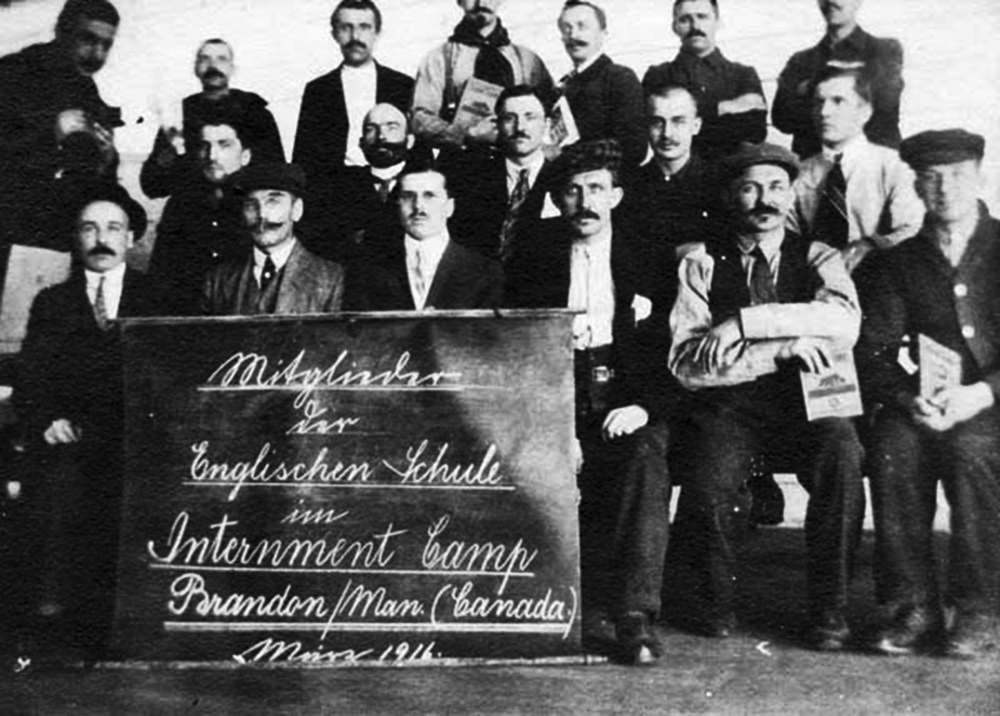
“My connection really started when I was in high school. I saw a little documentary on it, and I asked my Grade 10 high school teacher if he could tell me about the Ukrainian internment in the First World War. He said, ‘You mean the Japanese internment in the Second World War?’ and I said, ‘No, the Ukrainian internment in the First World War.’
“And he looked at me and said, ‘That never happened.’ That’s really where the seed was planted.”
Boyko received co-operation from the federal government, however. The Conservative party was in power while he and his crew were filming, and allowed them to shoot at sites within Canada’s national parks — one of the major internment camps was in Banff National Park in Alberta — and at military installations across the country.
Then the present Liberal government gave That Never Happened its world première at the United Nations session of the Human Rights Council in Geneva, Switzerland, in September.

“It was received better than we could have expected,” Boyko recalls. “When we do these screenings we do a question-and-answer afterwards. We did that in Geneva, but we later found out it is very rare for delegates in Geneva to actually ask questions because every question they ask and every answer given is on the record.
“For us to find out that engagement is very rare on the global level at that level of the nations, it was pretty cool.”
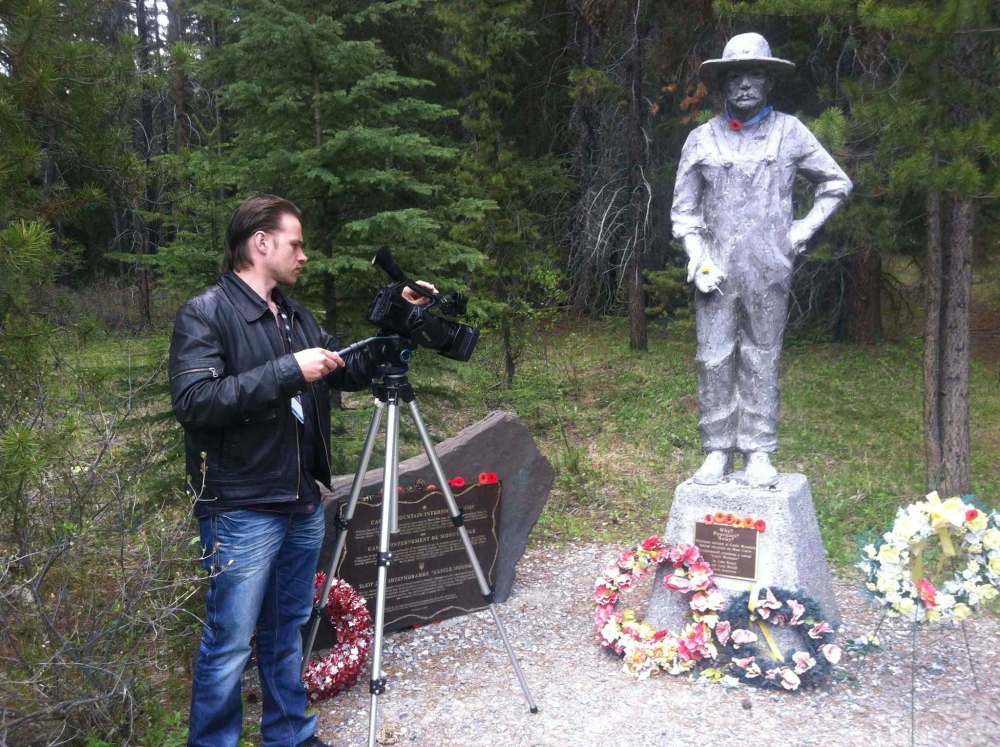
The Ukrainians were interned because of provisions in Canada’s War Measures Act, which was enacted shortly after Canada joined the war effort in 1914. Similar laws were passed in the Second World War that led to the much wider internment of Japanese-Canadians, for which the federal government officially apologized in 1988.
“It’s essentially still on the books,” Boyko says of the Emergencies Act, which replaced the War Measures Act in 1988. “It’s still something politicians need to be wary of. It is possible that legislation could be used again, so it’s important we’re telling these stories and that Canadians can understand through the lens of (the First World War), but (also) through the lens of today.”
alan.small@freepress.mb.ca Twitter:@AlanDSmall
Alan Small
Reporter
Alan Small was a journalist at the Free Press for more than 22 years in a variety of roles, the last being a reporter in the Arts and Life section.
Our newsroom depends on a growing audience of readers to power our journalism. If you are not a paid reader, please consider becoming a subscriber.
Our newsroom depends on its audience of readers to power our journalism. Thank you for your support.
Movie preview
That Never Happened: Canada’s First National Internment Operations
Directed by Ryan Boyko
Canadian Museum for Human Rights
Sunday, 1 p.m.
78 minutes
Alan Small
Reporter
Alan Small was a journalist at the Free Press for more than 22 years in a variety of roles, the last being a reporter in the Arts and Life section.
Our newsroom depends on a growing audience of readers to power our journalism. If you are not a paid reader, please consider becoming a subscriber.
Our newsroom depends on its audience of readers to power our journalism. Thank you for your support.
Advertisement Advertise With Us
Advertisement Advertise With Us