Interesting look back at a pivotal film

Advertisement
Read this article for free:
or
Already have an account? Log in here »
To continue reading, please subscribe:

Digital Subscription
One year of digital access for only $205*
- Enjoy unlimited reading on winnipegfreepress.com
- Read the E-Edition, our digital replica newspaper
- Access News Break, our award-winning app
- Play interactive puzzles
*First annual payment billed as $205.00 + GST for one year. This annual subscription will automatically renew at $233.00 + GST every 52 weeks (10% off the regular annual price of $259.35). Offer available to new and qualified returning subscribers only. Cancel any time.
To continue reading, please subscribe:
Add Free Press access to your Brandon Sun subscription for only an additional
$1 for the first 4 weeks*
- Enjoy unlimited reading on winnipegfreepress.com
- Read the E-Edition, our digital replica newspaper
- Access News Break, our award-winning app
- Play interactive puzzles
*Your next Brandon Sun subscription payment will increase by $1.00 and you will be charged $17.95 plus GST for four weeks. After four weeks, your payment will increase to $24.95 plus GST every four weeks.
Read unlimited articles for free today:
or
Already have an account? Log in here »
Hey there, time traveller!
This article was published 05/01/2018 (3180 days ago), so information in it may no longer be current.
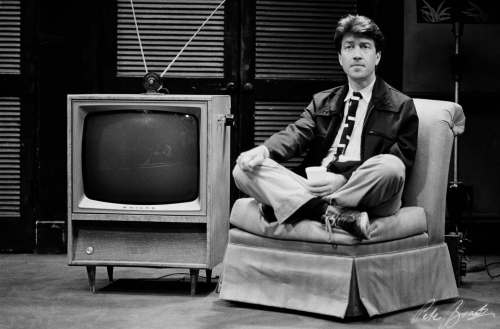
The documentary Blue Velvet Revisited, directed by German filmmaker Peter Braatz, is ostensibly an impressionistic journey through the creative process of David Lynch when the filmmaker, fresh from his box office bomb Dune, was joyfully toiling on his masterpiece Blue Velvet.
But the premise of the subtitle — “a meditation on a movie” — feels a bit disingenuous. The film is a cobbled-together mish-mash of images and snippets of interviews captured after Lynch generously allowed Braatz behind-the-scenes access to the making of the film in 1985.
Using a Super-8 camera, Braatz effectively shot home-movie footage of the process and sat with Lynch and other participants for some interviews. The fact that Braatz hasn’t done anything with his materials until now indicates he had poor raw material to begin with. It feels credible that it took Braatz 30 years to assemble the material together in a way that would reflect Lynch’s experimental sensibility.

But since Lynch himself has not always been especially available to film journalists since Blue Velvet, you take your value where you can get it.
In this case, there is a substantial interview snippet in which Lynch extols the use of computers to expand the horizons of what film can do. This was a prescient sensibility in 1986. Having recently watched the CG-heavy Got a Light? episode 8 of Lynch’s rebooted Twin Peaks series, the segment felt downright topical for me, reflecting Lynch’s willingness to utilize anything in pursuit of realizing his most outlandish fantasies.
And, indeed, even the filmed material on Blue Velvet feels fairly fresh in context. Here is Lynch making a movie traversing the light and dark hemispheres of Kyle MacLachlan’s character — and three decades later, he’s doing exactly the same thing with his Twin Peaks project.

You have to admit: Lynch is consistent.
randall.king@freepress.mb.ca Twitter: @FreepKing
Our newsroom depends on a growing audience of readers to power our journalism. If you are not a paid reader, please consider becoming a subscriber.
Our newsroom depends on its audience of readers to power our journalism. Thank you for your support.
MOVIE REVIEW
Blue Velvet Revisited
Directed by Peter Braatz
Cinematheque
86 minutes
Subject to classification
3 stars out of five
Our newsroom depends on a growing audience of readers to power our journalism. If you are not a paid reader, please consider becoming a subscriber.
Our newsroom depends on its audience of readers to power our journalism. Thank you for your support.
Advertisement Advertise With Us
Advertisement Advertise With Us