Country music goes to pot
Positive grass references popping up amid the grassroots twang
Advertisement
Read this article for free:
or
Already have an account? Log in here »
To continue reading, please subscribe:

Digital Subscription
One year of digital access for only $205*
- Enjoy unlimited reading on winnipegfreepress.com
- Read the E-Edition, our digital replica newspaper
- Access News Break, our award-winning app
- Play interactive puzzles
*First annual payment billed as $205.00 + GST for one year. This annual subscription will automatically renew at $233.00 + GST every 52 weeks (10% off the regular annual price of $259.35). Offer available to new and qualified returning subscribers only. Cancel any time.
To continue reading, please subscribe:
Add Free Press access to your Brandon Sun subscription for only an additional
$1 for the first 4 weeks*
- Enjoy unlimited reading on winnipegfreepress.com
- Read the E-Edition, our digital replica newspaper
- Access News Break, our award-winning app
- Play interactive puzzles
*Your next Brandon Sun subscription payment will increase by $1.00 and you will be charged $17.95 plus GST for four weeks. After four weeks, your payment will increase to $24.95 plus GST every four weeks.
Read unlimited articles for free today:
or
Already have an account? Log in here »
Hey there, time traveller!
This article was published 19/05/2013 (4885 days ago), so information in it may no longer be current.
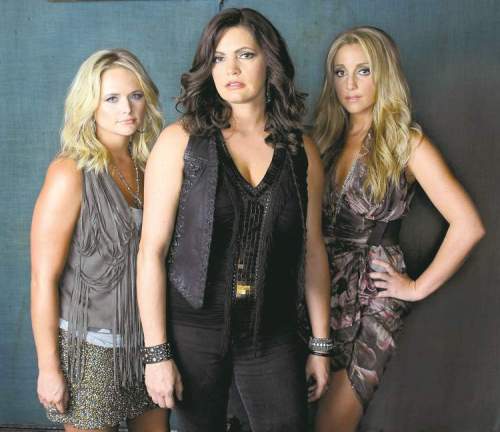
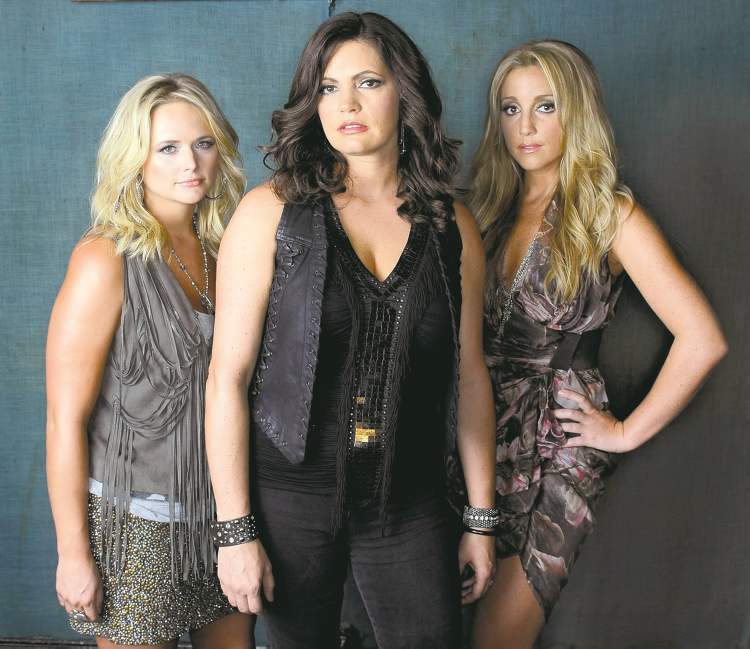
DECATUR, Ga. — If you hear a song called Hush Hush on country radio this spring, you might not catch every word, but you’ll likely get the drift. As the lead single from Annie Up, the new record from Nashville supergirl-group Pistol Annies, the track orbits a jaw-clenched family Christmas dinner where everyone’s trying to pretend like they don’t know the brother just got out of rehab for alcoholism — “the sugar-coated pretty little secret eating everybody alive.” The Annies — Miranda Lambert, Ashley Monroe and Angaleena Presley — trade off vocals, all singing as a had-it-up-to-here sister, but it’s on Monroe’s verse that stuff gets real:
So I snuck behind the red barn
And I took myself a toke
Since everybody here hates everybody here
Hell, I might as well be the joke
I’m gonna dance up on the table
Singing “This Little Light of Mine”
In part because of the drug reference, Hush Hush may not be a huge radio hit, but it’s in good — and growing — company. Over the past decade, there’s been a spike in the number of country songs mentioning weed — not admonishments or rehab laments, but casual, positive references. Tally up the tracks and the artists include the Zac Brown Band, Kenny Chesney, Eric Church, Dierks Bentley, Jamey Johnson — names recognizable even if you only follow country from afar. In January, Darius Rucker, late of Hootie & the Blowfish, released a cover of boozy string band Old Crow Medicine Show’s Wagon Wheel with the line about “a nice long toke” intact; the single, helped by a video featuring the erstwhile Pentecostal cast members of A&E’s Duck Dynasty, currently sits at No. 2 on Billboard’s Hot Country Songs chart.
But it’s not just big acts with cred to burn dropping the reefer references. So far, 2013 has seen three releases by still-rising stars that make mention of marijuana. If you were startled by the brazen weed-smoking on Hush Hush, then you probably haven’t heard Like a Rose, the second album by the Pistol Annies’ Ashley Monroe. It’s one of those records where every song feels like the best song until the next one comes on, but even then a track called Weed Instead of Roses can’t help but stand out. Over a springy electric guitar, Monroe-as-bored-housewife stages an intervention for her stagnant sex life:
“Give me weed instead of roses/ Bring me whiskey instead of wine/ Every puff, every shot, you’re looking better all the time.”
Here, pot is as safely risque as the leather and lace underwear she dons and the sexy Polaroids she urges her fella to snap. Accessible, too:
“Go call your no-good brother/ We both know what he’s been growing,” she sings, her begrudging eye roll audible through the speakers.
Then there’s Kacey Musgraves, whose Same Trailer, Different Park, came out in March. Musgraves has quickly become a darling among those usually scared off by country music’s presumed prudishness, helped by a New York Times Magazine profile that centred around the iffy radio-readiness of her song Follow Your Arrow:
“When the straight and narrow gets a little too straight/ Roll up a joint, or don’t/ Just follow your arrow wherever it points.”
Weed makes a more muted appearance on the small-town lament Merry Go Round; the couplet “Mama’s hooked on Mary Kay/ Brother’s hooked on Mary Jane,” bolsters the gut-punch of “we’re so bored until we’re buried” that comes a few bars later. But mostly, for Musgraves, weed seems to symbolize a certain kind of to-thine-ownself-be-truthiness. There are live videos from a few years back of her performing an early, shaky tune that’s nonetheless saved by its refrain: “I’m not good at being careful, I just say what’s on my mind/ My idea of heaven is to burn one with John Prine.”
Whether a distant observer or a dedicated country fan, you may be wondering how we got to this point. For all the permutations that have spun out of “country music” over the years, a few core elements remain, especially for the major-label-backed, airplay-oriented stuff: an emphasis on storytelling that orbits around family, domestic and romantic relationships, and typically more conservative and traditional cultural and political values. Though the actual demographics of country music’s audience reflect a more diverse reality, its narrative universe is primarily rural and implicitly Southern, and its lyrics are assumed to reflect some amount of down-home realness. A certain barbecue-sauce-smeared lens of “authenticity” prevails even when the folks singing about double-wides live in Bellemeade mansions. So when casual, positive mentions of a controlled substance more associated with the less wholesome worlds of rock and hip-hop start making their way into country’s conservative idyll, it’s worth stepping back to reassess what we know about the “real life” being reflected here.
Musgraves’ hero, John Prine, offered a prototype of the weed-friendly country (or country-inflected) song in 1971 with the still very great (and legislatively relevant) Illegal Smile. But to look at how mainstream country’s relationship with weed has evolved over the years, a better starting point is Merle Haggard’s Okie From Muskogee, released in 1969: “We don’t smoke marijuana in Muskogee/… We like livin’ right and bein’ free.” That also happens to be the first year the Pew Research Center began tracking American popular opinion on marijuana legalization, so we know that, as Haggard scoffed (or pretended to scoff) at spliff-passing hippies, the public agreed, with nationwide support of marijuana lingering around 12 per cent. And over the next five decades, weed’s treatment in country music has mirrored public opinion. When one spikes, or sinks, so does the other.

The trend really began to develop in the late 1970s. As Charlie Daniels, Hank Williams Jr., Waylon Jennings and Willie Nelson codified pot-smoking as the province of outlaw rebels, support for legalization was up slightly — around 24 per cent. In the 1980s and ’90s, mainstream country shifted more toward the big-haired, big-hatted mama’s boys and girls; a few lines in Garth Brooks’ Friends in Low Places could go either way, but mostly even the rebels stuck to beer and whiskey. Meanwhile, support for marijuana legalization fell off again, sinking to a low of 17 per cent but mostly hovering in the low 20s.
As we reached the turn of the millennium, support for legalization began to creep upward once more. Around 2004 or so, it began a steep rise and has continued to increase every year since. And it’s been in the wake of that spike weed references in country music have become especially prevalent.
Like sex toys and compromising snapshots, weed is a little secret pretty much everybody’s got stashed in a drawer somewhere, literally or figuratively, but that you might think twice about pulling out in front of guests. (Depends on the guests.) But the Hag doesn’t have a monopoly on livin’ right and bein’ free. So cancel that Teleflora order, follow your arrow back behind the red barn and let that little light shine. You may be on the wrong side of the law — for now, at least — but the company’ll be awful nice, and they’ll probably be down for ribs later.
— Washington Post-Bloomberg
Rachael Maddux is a writer and editor living in Decatur, Ga.