Sound and vision
Masterful documentary series explores watershed moments in modern music history
Advertisement
Read this article for free:
or
Already have an account? Log in here »
To continue reading, please subscribe:

Digital Subscription
One year of digital access for only $205*
- Enjoy unlimited reading on winnipegfreepress.com
- Read the E-Edition, our digital replica newspaper
- Access News Break, our award-winning app
- Play interactive puzzles
*First annual payment billed as $205.00 + GST for one year. This annual subscription will automatically renew at $233.00 + GST every 52 weeks (10% off the regular annual price of $259.35). Offer available to new and qualified returning subscribers only. Cancel any time.
To continue reading, please subscribe:
Add Free Press access to your Brandon Sun subscription for only an additional
$1 for the first 4 weeks*
- Enjoy unlimited reading on winnipegfreepress.com
- Read the E-Edition, our digital replica newspaper
- Access News Break, our award-winning app
- Play interactive puzzles
*Your next Brandon Sun subscription payment will increase by $1.00 and you will be charged $17.95 plus GST for four weeks. After four weeks, your payment will increase to $24.95 plus GST every four weeks.
Read unlimited articles for free today:
or
Already have an account? Log in here »
Hey there, time traveller!
This article was published 10/11/2016 (3572 days ago), so information in it may no longer be current.
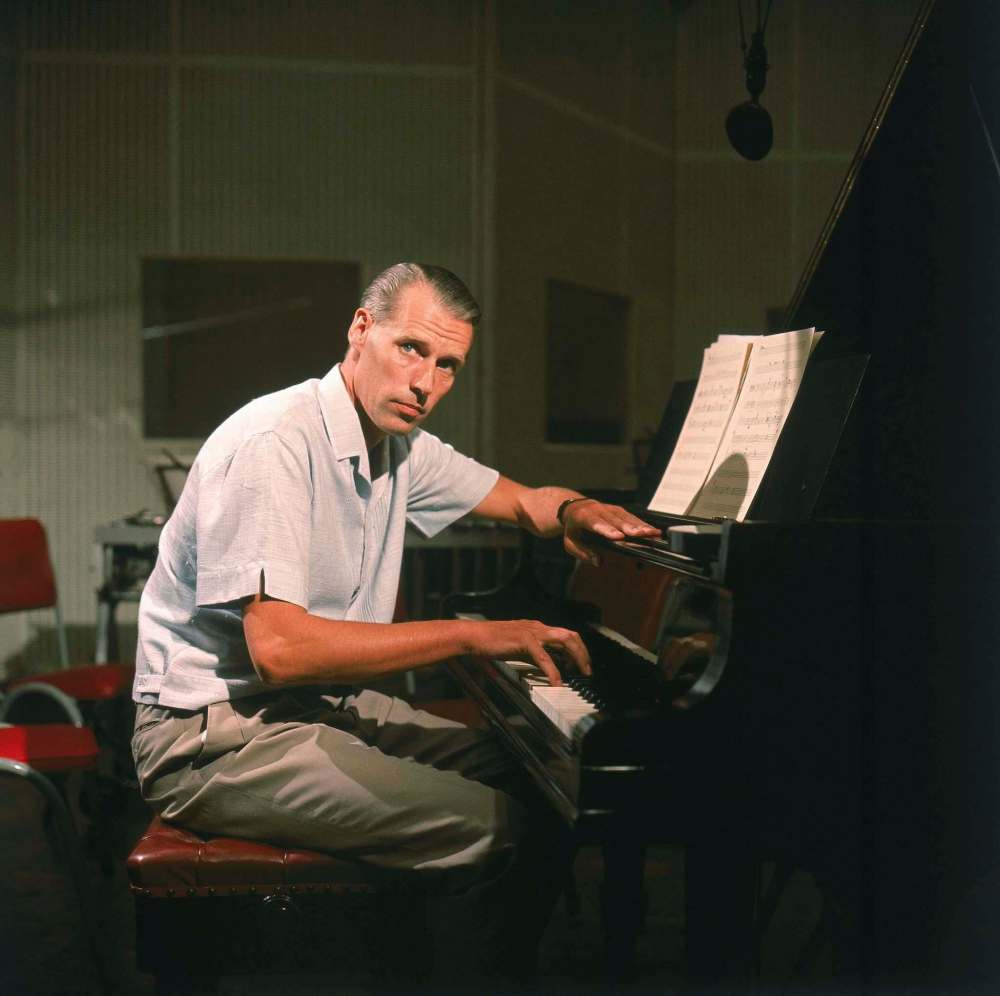
This much is beyond questioning: Sir George Martin was a visionary.
The record producer who took the Beatles under his wing and, in the process, transformed the way music is presented and consumed in popular culture had an understanding of art and technology that extended far beyond the recording studio.
It’s fitting, then, that the last project on which Martin was working before his death last March, at age 90, was an exhaustively researched documentary series that explores the evolution and influence of recorded music in contemporary society.
The eight-part PBS series, Soundbreaking: Stories from the Cutting Edge of Recorded Music, premières Monday, Nov. 14, at 9 p.m. and airs — not quite nightly, on something of an irregular schedule — until Wednesday, Nov. 23. And if you’re a music fan, or simply someone with a curiousity about pop-culture history, you’d be well advised to set your PVR on “series record” for this one.
It’s a stunningly good TV series.
According to various media reports, Soundbreaking was made because Martin believed the story of the recording industry is a tale worth telling. Martin died before the project was completed, but he figures prominently in it and his genius is cited as a fundamental inspiration by the dozens of record producers interviewed during its production.
In all, more than 150 prominent music-industry figures — artists, producers, writers and more — offer their perspectives in Soundbreaking, and the sum total of their experiences and knowledge creates a fascinating glimpse inside a part of the pop-culture landscape that has become infinitely more mysterious and complex as technology has evolved from analog to digital and from wax to vinyl to tape to disc to downloadable file.
“Music is the only common thread and universal language that binds us together regardless of race, nationality, age or income,” Martin said of this project before his passing. “And recorded music is how we experience it and what makes it accessible.”
The three things that make Soundbreaking a remarkable TV experience are its simplicity — it’s really just a matter of letting music-industry types tell first-hand stories about their careers and their art — its wealth of rare archival footage and audio, and its beyond-impressive roster of expert contributors and commentators.
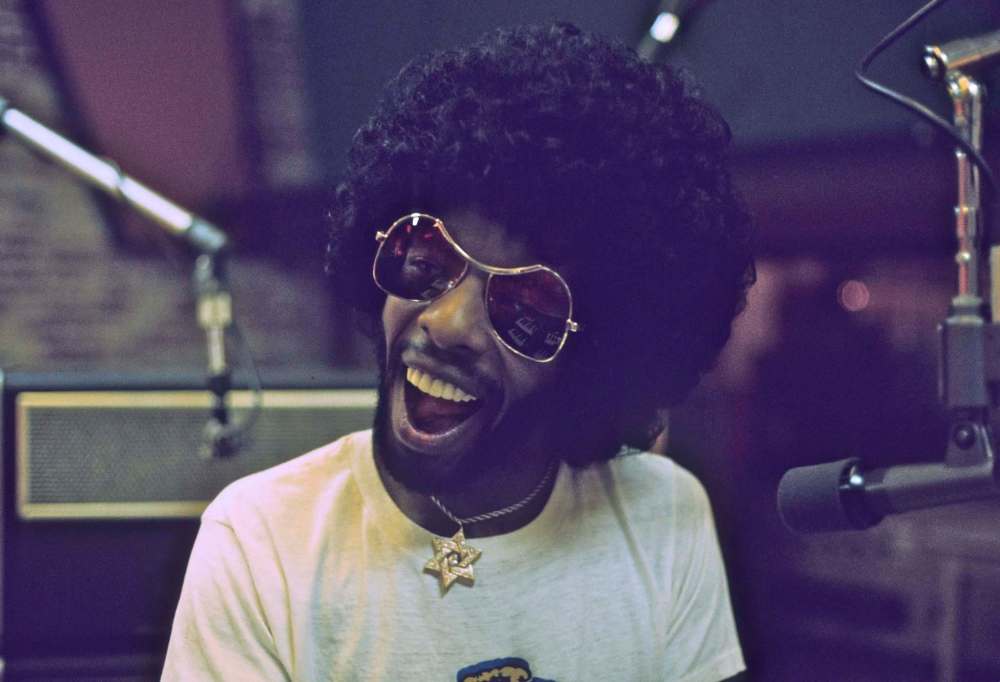
Think of a person who has been influential in the music industry during the last half-century, and it’s very likely that he/she will appear in Soundbreaking at some point. Some of their stories recall watershed moments in the advancement of studio technology and techniques, while others simply describe flashes of pure human inspiration that led to beautiful, unforgettable sounds.
As often as not, say such artists as Paul McCartney, Ringo Starr, Elton John, Joni Mitchell, Annie Lennox, Tom Petty, Lindsey Buckingham and Willie Nelson, it was the producer, rather than the performer, who was responsible for the creation of studio magic that has become the soundtrack of our lives.
“Ultimately, what being a producer is is having a point of view,” says American singer-songwriter St. Vincent. “It’s easy to make sound; really, anybody can make sound. But not everybody can make music.”
Soundbreaking examines the groundbreaking convergence of inspiration and intellect that was created when Martin and the Beatles began their long partnership, starting first with breakneck-paced session in which the group essentially recorded live-to-tape versions of their concert shows and eventually shifting to complex sound-creation experiments that produced songs that could never be performed live.
A long sequence in the second episode is devoted to the multi-layered, loop- and sampling-filled recording of Tomorrow Never Knows, a track from the Beatles’ 1966 album Revolver. “If you look at everything that’s happening in that song,” says music journalist Warren Zanes, “it’s like a prophecy of pop music in one song. With the sampling and the loops, there’s so much happening there that will be active for the next four or five decades.”
Adds veteran 21st-century producer Rick Rubin, “That song makes you rethink what music is. It’s that profound.”
It’s an amazing story, and there are dozens upon dozens of others in Soundbreaking that are equally inspired and enlightening. That’s why, for music fans, this series is the very embodiment of must-see TV.
brad.oswald@freepress.mb.caTwitter: @BradOswald
TV preview

Soundbreaking: Stories from the Cutting Edge of Recorded Music
● Narrated by Dermot Mulroney
● Monday, Nov. 14, at 9 p.m.
● PBS
★★★★1/2 stars out of 5
Advertisement Advertise With Us
Advertisement Advertise With Us