

Chronic blame game festers
Manitoba government touts health-care gains, but critics question impact on ER wait times

Advertisement
Read this article for free:
or
Already have an account? Log in here »
To continue reading, please subscribe:

Digital Subscription
One year of digital access for only $205*
- Enjoy unlimited reading on winnipegfreepress.com
- Read the E-Edition, our digital replica newspaper
- Access News Break, our award-winning app
- Play interactive puzzles
*First annual payment billed as $205.00 + GST for one year. This annual subscription will automatically renew at $233.00 + GST every 52 weeks (10% off the regular annual price of $259.35). Offer available to new and qualified returning subscribers only. Cancel any time.
To continue reading, please subscribe:
Add Free Press access to your Brandon Sun subscription for only an additional
$1 for the first 4 weeks*
- Enjoy unlimited reading on winnipegfreepress.com
- Read the E-Edition, our digital replica newspaper
- Access News Break, our award-winning app
- Play interactive puzzles
*Your next Brandon Sun subscription payment will increase by $1.00 and you will be charged $17.95 plus GST for four weeks. After four weeks, your payment will increase to $24.95 plus GST every four weeks.
Read unlimited articles for free today:
or
Already have an account? Log in here »
Health Minister Uzoma Asagwara doesn’t mince words when describing how bad things are in the province’s emergency departments and urgent-care centres.
“The wait times that we are seeing in Manitoba are unacceptable,” said Asagwara in an interview with the Free Press.
RUTH BONNEVILLE / FREE PRESS FILES Health Minister Uzoma Asagwara: ‘There’s no single fix.’
“We have yet to see the impact of those additional resources reflected in lower ER wait times.”
“I hear from families, I hear from providers, I hear from Manitobans who are concerned about the wait times that they’re seeing, that they’re experiencing, and those concerns are valid — I share those concerns.”
So what is the NDP, who promised voters nearly three years ago it had the answers to bring down wait times, doing about it?
A lot, according to Asagwara, who has been the province’s health minister since the NDP was sworn into office in October 2023.
For starters, the province has added a net 4,500 new health-care workers to the system, said Asagwara, who uses they/them pronouns.
There are more personal-care-home beds than there were in 2023 and the province has opened 145 transitional care unit beds to help transfer patients out of hospital into more appropriate care settings.
Home-care services have been enhanced (including lower staff vacancy rates and fewer cancellations of scheduled visits), hospitals now have seven-day-a-week discharge policies to help improve patient flow, and more social workers have been hired to help hospital patients access community supports, they said.
“That being said, we also know that these wait times in our emergency departments continue to be unacceptably long and affect real people every single day,” said Asagwara.
“I would certainly like to see progress much more quickly in terms of our emergency departments and urgent-care wait times.”
To do that, the province is doing everything it can to increase capacity in hospitals and in the community, Asagwara said.
“There’s no single fix,” they said. “We are tackling this challenge from every single angle possible.”
But when asked when Manitobans can expect to see wait times fall — or how many more personal-care-home beds, home-care services and other community-support services are needed — the minister didn’t directly answer, saying only that they will continue to build more capacity.
That should have been done years ago, said the minister, who continues to blame the previous Progressive Conservative government for making cuts to health care.
“The health-care system was on the brink of collapse under the previous government,” Asagwara said.
For some critics, that message is getting old, especially for a government that’s been in office nearly three years.
“I’m tired of the blame game,” said Manitoba Nurses Union president Darlene Jackson.
JOHN WOODS / FREE PRESS FILES Darlene Jackson, president of the Manitoba Nurses Union, says relations between the union and government are so bad, she no longer has a working relationship with the health minister.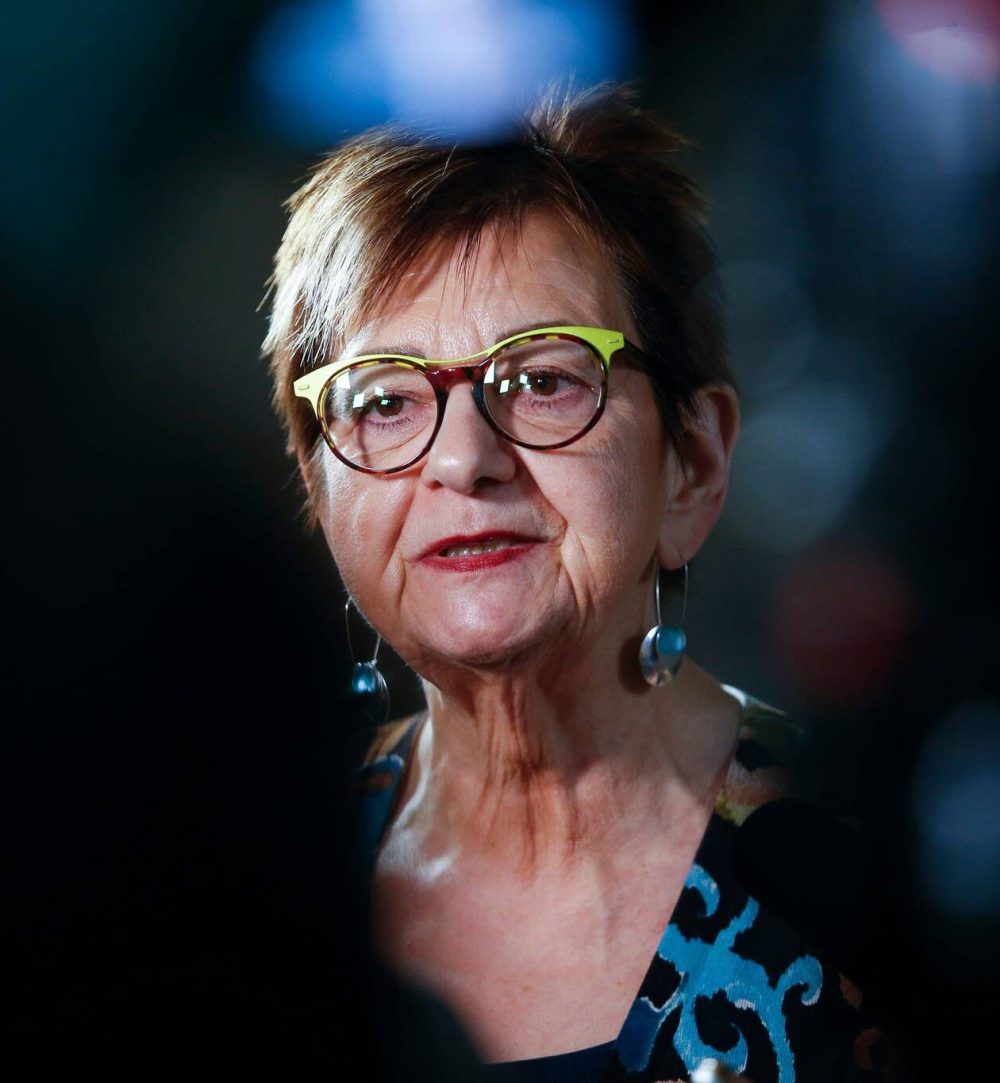
She says nurses on the front line are not seeing any meaningful changes under the NDP and continue to see patient care deteriorate.
“We’re seeing patients that are slipping through the cracks, that we’re missing things on,” said Jackson.
And despite claims by the NDP that government is listening to front-line staff, nurses say they’re not being heard, said Jackson.
“Nurses feel like they have just been abandoned by this government,” said Jackson, who says relations between the MNU and government are so bad, she no longer has a working relationship with the health minister.
“I am not going to be a cheerleader for a government that is falling down, that is not fulfilling their promises and is not doing what’s best for health care and best for our citizens in this province.”
Opposition Tory health critic Kathleen Cook said if the NDP were truly doing all the things they claim to be doing to bring down ER wait times, Manitobans would see tangible results.
“Why do ER wait times continue to climb?” she said. “Why are we seeing record high median ER wait times?”
MIKAELA MACKENZIE / FREE PRESS Health critic Kathleen Cook questions the number of health-care staff Asagwara claims have been added to the system.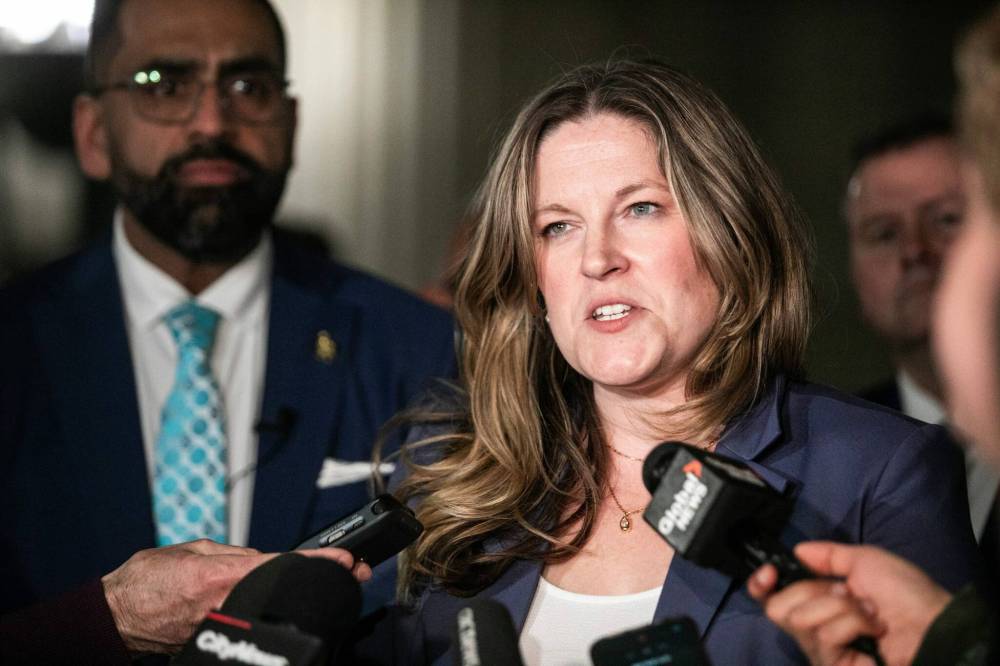
Both Cook and Jackson also question the number of health-care staff Asagwara claims have been added to the system.
“I don’t trust their numbers,” said Jackson.
Cook says the opposition has repeatedly asked the minster for a breakdown of where all the new staff are working but have not received a clear answer.
“We have yet to see the impact of those additional resources reflected in lower ER wait times,” said Cook.
“If they were making the right investments, I think if they were listening to front-line workers and making the changes that are required then we would start to see things moving in the right direction. But instead we’re seeing ER wait times continue to increase.”
Asagwara disputes claims by critics that government isn’t listening. One of the first things the NDP did when it came to power was embark on a “listening tour” to hear directly from front-line workers, the minister said.
Government continues to communicate with front-line staff and has teams of experts working to solve long wait times, they said.

“We’re a listening government,” said Asagwara, who is a psychiatric nurse. “We have shown up in ERs, in ICUs on the front lines. I make myself as a minister very accessible to listen to front-line providers.”
In fact, many of the changes and improvements made to the system were the result of consultations with front-line staff, they said.
“These are the folks who are actually guiding and informing the decisions that we make as a government and how we invest in health care,” said the minister.
“They continue to show up for Manitobans each and every day and we cannot thank them enough for the work that they do for Manitobans.”
tom.brodbeck@winnipegfreepress.com
Tom Brodbeck is an award-winning author and columnist with over 30 years experience in print media. He joined the Free Press in 2019. Born and raised in Montreal, Tom graduated from the University of Manitoba in 1993 with a Bachelor of Arts degree in economics and commerce. Read more about Tom.
Tom provides commentary and analysis on political and related issues at the municipal, provincial and federal level. His columns are built on research and coverage of local events. The Free Press’s editing team reviews Tom’s columns before they are posted online or published in print – part of the Free Press’s tradition, since 1872, of producing reliable independent journalism. Read more about Free Press’s history and mandate, and learn how our newsroom operates.
Our newsroom depends on a growing audience of readers to power our journalism. If you are not a paid reader, please consider becoming a subscriber.
Our newsroom depends on its audience of readers to power our journalism. Thank you for your support.
Tom Brodbeck is an award-winning author and columnist with over 30 years experience in print media. He joined the Free Press in 2019. Born and raised in Montreal, Tom graduated from the University of Manitoba in 1993 with a Bachelor of Arts degree in economics and commerce. Read more about Tom.
Tom provides commentary and analysis on political and related issues at the municipal, provincial and federal level. His columns are built on research and coverage of local events. The Free Press’s editing team reviews Tom’s columns before they are posted online or published in print – part of the Free Press’s tradition, since 1872, of producing reliable independent journalism. Read more about Free Press’s history and mandate, and learn how our newsroom operates.
Our newsroom depends on a growing audience of readers to power our journalism. If you are not a paid reader, please consider becoming a subscriber.
Our newsroom depends on its audience of readers to power our journalism. Thank you for your support.
Related Articles
Close to 5,000 net new health-care workers added since 2023 election, province says



Advertisement Advertise With Us
Advertisement Advertise With Us


