Touring is Sting’s ‘holiday from the mind’
Advertisement
Read this article for free:
or
Already have an account? Log in here »
To continue reading, please subscribe:

Digital Subscription
One year of digital access for only $205*
- Enjoy unlimited reading on winnipegfreepress.com
- Read the E-Edition, our digital replica newspaper
- Access News Break, our award-winning app
- Play interactive puzzles
*First annual payment billed as $205.00 + GST for one year. This annual subscription will automatically renew at $233.00 + GST every 52 weeks (10% off the regular annual price of $259.35). Offer available to new and qualified returning subscribers only. Cancel any time.
To continue reading, please subscribe:
Add Free Press access to your Brandon Sun subscription for only an additional
$1 for the first 4 weeks*
- Enjoy unlimited reading on winnipegfreepress.com
- Read the E-Edition, our digital replica newspaper
- Access News Break, our award-winning app
- Play interactive puzzles
*Your next Brandon Sun subscription payment will increase by $1.00 and you will be charged $17.95 plus GST for four weeks. After four weeks, your payment will increase to $24.95 plus GST every four weeks.
Read unlimited articles for free today:
or
Already have an account? Log in here »
Hey there, time traveller!
This article was published 16/11/2016 (3596 days ago), so information in it may no longer be current.
NEW YORK — At 65, Sting shows no signs of slowing down.
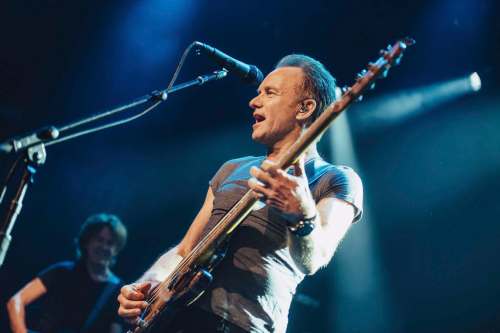
The prolific British megastar traversed North America this past summer on a joint tour with Peter Gabriel and reopened the Bataclan in Paris, France, over the weekend, one year after the terrorist mass shooting in the concert hall and around the city. Now, Sting’s back with his first pop/rock album in more than a decade, 57th & 9th, which he’ll support on a world tour launching Feb. 1 in Vancouver. The three-month trek includes North American, European and U.K. shows, with additional dates in Asia and South America to be announced.
“I’m a little deaf and I wear reading glasses, but you know, I’m wearing pretty well,” says Sting, looking trim in a wine-coloured sweater as he lounges in his plush Manhattan penthouse overlooking Central Park. Fresh off a morning swim, he brushes off any qualms about touring at his age because it’s actually “very regimented.”
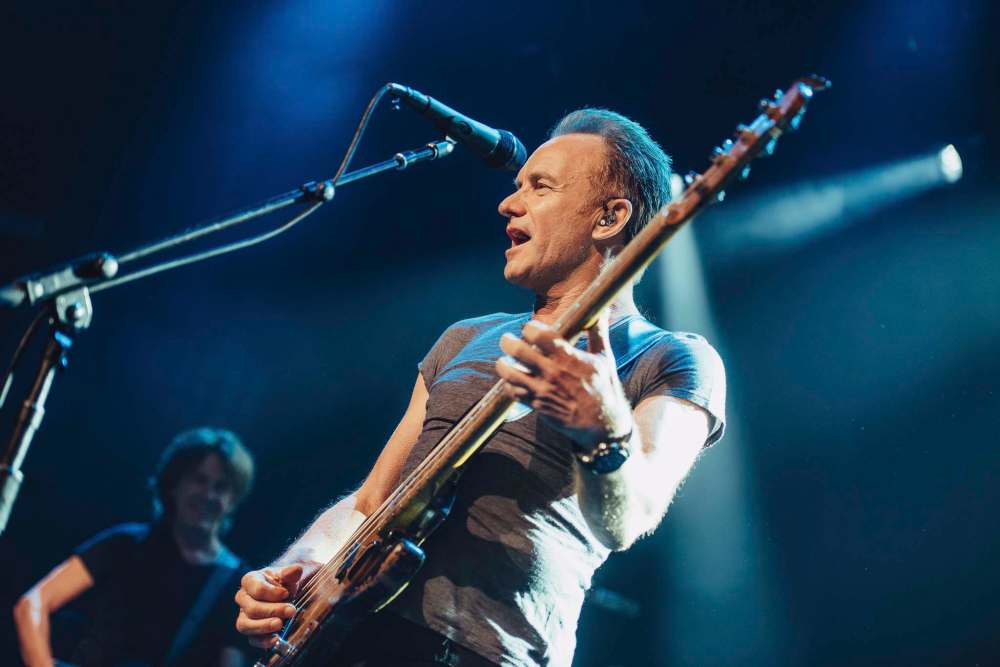
“One of the reasons I like it is because you don’t have to do much thinking; it’s kind of a holiday from the mind. Then when I finish touring, I have to face the blank page again.”
It’s a position the former Police frontman found himself in early this year as he started writing 57th & 9th, named for the Hell’s Kitchen street corner near where he recorded his 12th studio effort. “The idea was to make the album quickly and in one place,” says Sting, whose manager slapped a tight three-month deadline on the project. “Artificially reintroducing that pressure gave the album a kind of urgency it wouldn’t have had otherwise.”
After diversions into classical music (2006’s Songs From the Labyrinth), holiday songs (2009’s If on a Winter’s Night… ) and musical theatre (2013’s The Last Ship), 57th & 9th finds the singer/songwriter on the familiar avenue of rock ’n’ roll, recalling his blithe Police days with shrieking electric guitars (Petrol Head) and distorted vocals (I Can’t Stop Thinking About You). But the album hits its stride on weightier tracks such as One Fine Day, about climate change, and Inshallah, a version of which (included on the deluxe edition) he recorded with Syrian refugee musicians while in Berlin.
With Inshallah, “I’m not offering any political solution to the crisis; the crisis is not going away tomorrow,” he says. But “if there is a solution, it can only be rooted in empathy or acceptance. I don’t think building walls is in any way effective. It’d be ludicrous to do that.”

The most stirring of the record’s 10 tracks is 50,000, which he was inspired to write this spring after the successive deaths of legendary musicians including Prince, David Bowie, the Eagles’ Glenn Frey and Motorhead’s Lemmy Kilmister.
“There’s a child in all of us that looks at cultural icons and goes, ‘How could they die?’ Because we’ve invested this sort of godlike immortality to them,” Sting says.
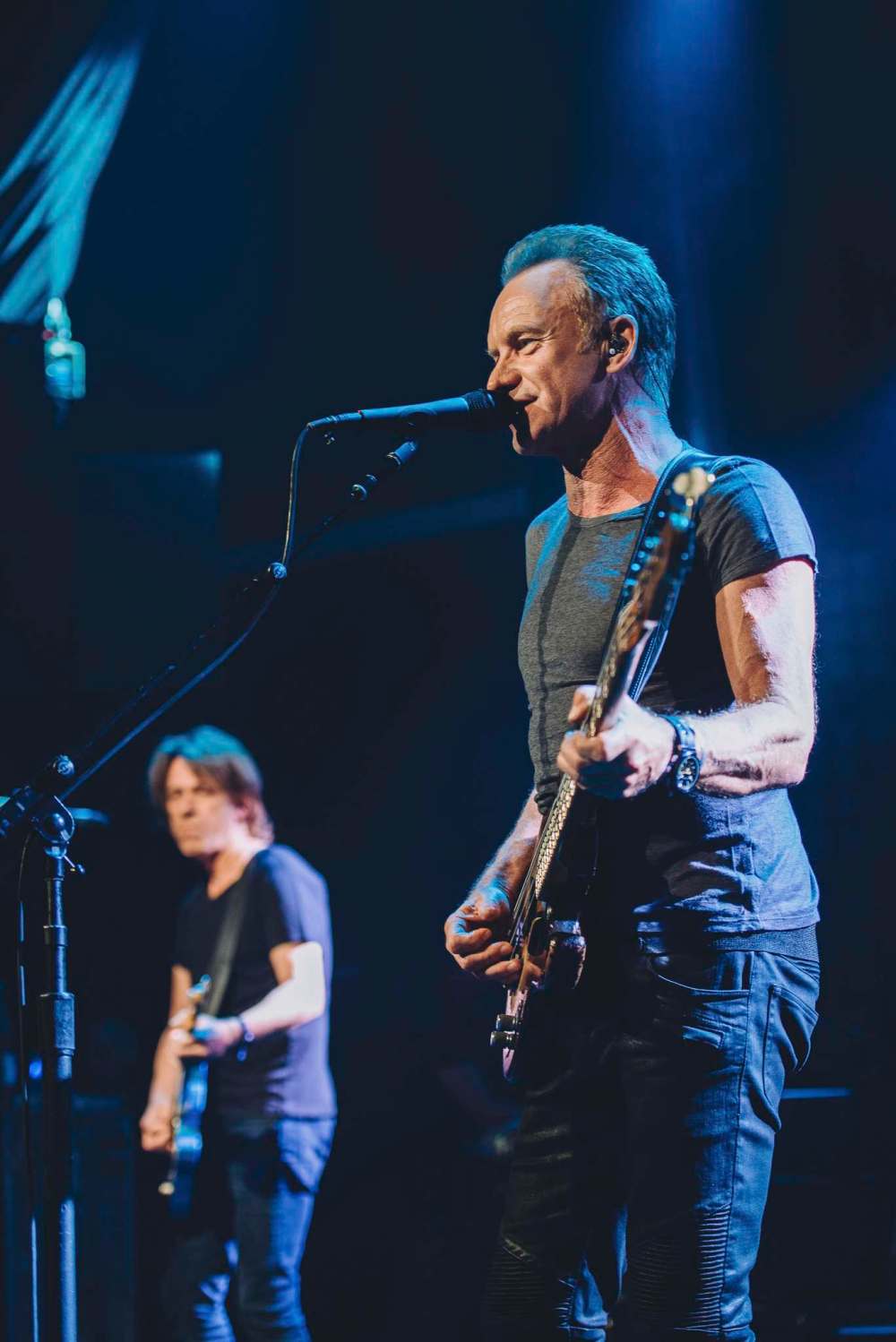
“50,000 is from the point of view of someone who’s been there watching his friends die and facing his mortality. Mortality is something that once accepted, it’s not morbid. If anything, it makes your life richer — at least, that’s the philosophy I’m developing as I speak to you.
“I’m not ready to die at all; I’ve still got work to do,” he continues. “But an acceptance of it for all of us is a useful thing, because that’s the reality.”
— USA Today