New music
Reviews of this week’s releases: Blur, Barbie the Album, Chuck Owen, and Marc-André Hamelin
Advertisement
Read this article for free:
or
Already have an account? Log in here »
To continue reading, please subscribe:

Digital Subscription
One year of digital access for only $205*
- Enjoy unlimited reading on winnipegfreepress.com
- Read the E-Edition, our digital replica newspaper
- Access News Break, our award-winning app
- Play interactive puzzles
*First annual payment billed as $205.00 + GST for one year. This annual subscription will automatically renew at $233.00 + GST every 52 weeks (10% off the regular annual price of $259.35). Offer available to new and qualified returning subscribers only. Cancel any time.
To continue reading, please subscribe:
Add Free Press access to your Brandon Sun subscription for only an additional
$1 for the first 4 weeks*
- Enjoy unlimited reading on winnipegfreepress.com
- Read the E-Edition, our digital replica newspaper
- Access News Break, our award-winning app
- Play interactive puzzles
*Your next Brandon Sun subscription payment will increase by $1.00 and you will be charged $17.95 plus GST for four weeks. After four weeks, your payment will increase to $24.95 plus GST every four weeks.
Read unlimited articles for free today:
or
Already have an account? Log in here »
Hey there, time traveller!
This article was published 28/07/2023 (1138 days ago), so information in it may no longer be current.
ROCK
Blur
The Ballad of Darren
(Parlophone / Warner)

It might be difficult for some, in 2023, to wrap their heads around a new Blur album. The English quartet was at the vanguard of ’90s Britpop with its Parklife and The Great Escape records of the mid-’90s. By 1997’s self-titled album, however, the group — and especially frontman Damon Albarn — had soured on the mania of Cool Britannia and turned inward, creating ironic, arch material inspired by the likes of British psychedelia, Berlin-era Bowie, early Kinks and various other esoterica, while also embracing elements of electronica and techno. The band’s biggest North American hit, Song 2, was meant to be a send-up of grunge — but its irony was lost while crossing the Atlantic.
Blur has made just four records since that record, and founding guitarist Graham Coxon walked out on the sessions for 2003’s Think Thank. Albarn has kept himself busy with Gorillaz and the Good, The Band and The Queen, while Coxon has pursued a fulfilling and successful solo career, drummer Dave Rowntree has involved himself in local politics and bassist Alex James runs a successful cheese farm.
All this means The Ballad of Darren is just the second full Blur album in 20 years and, like 2015’s The Magic Whip, it accompanies a live reunion. While those who packed Wembley Stadium for two nights a few weekends back were no doubt there to hear classics such as The Universal, Girls & Boys, Parklife or Country House they also heard two new songs. St. Charles Square, the second track from the record, is a raucous, roiling stomper — all angular Coxon guitars and Albarn sing/speak paranoia, painting a mad picture of romantic isolation and mental instability. The Narcissist mines the same territory, albeit on surer footing, and it’s the true centrepiece of the album, an insistent groover that rings with chiming guitars while its melancholy protagonist takes stock of himself, his behaviour and his regrets.
The other eight songs on The Ballad of Darren mine similar territory — quiet, shimmering, even baroque (on Far Away Island and Avalon, certainly) explorations of nostalgic regret which are also somehow affirmations that life will, indeed, go on, even if, as Albarn sings on Barbaric, “we have lost the feeling that we thought we’d never lose.” 4/5
STREAM THESE: St. Charles Square, Barbaric, The Narcissist
On YouTube: The Ballad of Darren playlist – wfp.to/NgJ
— John Kendle
POP
Various artists
Barbie the Album (Atlantic/Warner/Mattel)

The Barbie industrial complex has detonated, coating the planet in pink, sparkly fallout. For the blockbuster’s soundtrack, film director Greta Gerwig and music producer Mark Ronson corralled a set of huge artists at the top of their games and have come away with a raucous, joyous and, occasionally, touching compilation.
The soundtrack works because the contributors understood the assignment. Collectively, they deliver a dream house of songs that are each at least a little better than they have to be. The tracks succeed both as cinematic elements and as standalone songs. The result is a worthy, danceable bookend to the classic Saturday Night Fever soundtrack of a generation before.
Director Greta Gerwig has now delivered small, medium, large and stratospheric films with excellent soundtracks. Her commitment to quirky rock songs and contemporary classical spans, with this latest endeavor, a whole slew of disco, hip-hop, K-pop, and a half-dozen other genres meld together into an impressively coherent package.
Lizzo gets the dance party started with the soundtrack’s opener, Pink, a bouncy confection that might be the most conventional movie song on the album. The artist sells it with her characteristic smiling effervescence.
Dua Lipa’s Dance the Night throws her megahit Levitate in the blender with strings reminiscent of golden-era Bee Gees and comes out with a modern disco classic. Ronson’s production is razor-sharp and Lipa marches straight in with a casual self-assurance that deftly set the tone for the film in the early trailers.
The brand architects at Mattel must have suffered a few sleepless nights after tapping Nicki Minaj and Ice Spice for the reimagination of Aqua’s Barbie Girl. The song is (openly) a little profane and (slyly) a little raunchy, but the collaborators take the edge off with humour and a sense of fun.
Ken actor Ryan Gosling goes all in on I’m Just Ken with a hilariously earnest performance that somehow spans the arena rock of Journey and Broadway decadence of Andrew Lloyd Webber.
On What Was I Made For?, Billie Eilish delivers a soft and surprisingly touching piano, um, Barb-ballad. Eilish and brother/producer Finneas get the existential-crisis moment just right by going simple and raw. Eilish has never sounded better.
The album closes with a surprise cover of the Indigo Girls’ fan-favourite Closer to Fine. Brandi Carlile and her wife, Catherine, stay respectful of the source material, delivering a lighter and more open interpretation that complements the original.
There is plenty more good music within the 18 tracks. Sam Smith goes techno-glam on Man I Am. Charli XCX delivers an instant road-trip staple with the propulsive Speed Drive. Tame Impala provide a trippy dreampop interlude with Journey to the Real World. Dominic Fike warms it up with Malibu-infused sunshine on Hey Blondie. 4/5
— Jim Pollock, The Associated Press
JAZZ
Chuck Owen with The WDR Big Band
Renderings (MAMA Records)
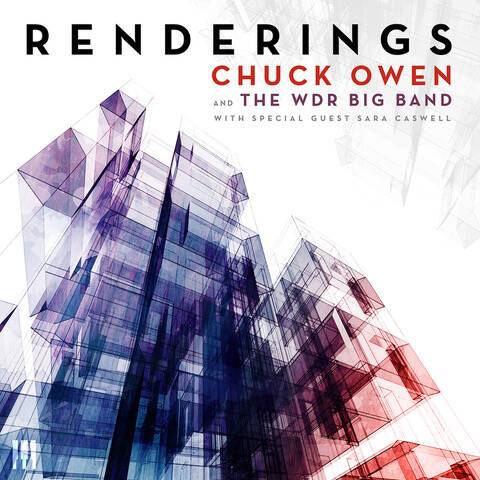
The big band has been an important part of the jazz world for generations. It even has an era named for it. While obviously still part of the jazz range, it now is usually made up of bands convened for specific gigs or albums rather than a dedicated travelling organization. The German based WDR Big Band is one of several terrific European bands, and for this release has brought in American composer/arranger Chuck Owen to oversee proceedings. Several tracks also include guest violinist Sara Caswell, who plays in Owen’s sextet ReSurgence.
The result is outstanding. The writing here is tight and fascinating with solos that are first class from musicians mostly unknown in North America. There is a wide range of moods and tempi that are always enjoyable. The opening track, Knife’s Edge, is an Owen composition that refers to a narrow and very scary hiking trail in Maine. It drives at full throttle with complex rhythmic changes and great sax and trumpet solos. Mystery & Beauty is a gentler track that starts with a lovely bass intro before taking a harder feel, and Caswell’s violin adds a nice touch. Here and throughout there is terrific writing for the brass chorus that provides the setting for soloists. While only heard on several tracks, Caswell is a neat addition to the more traditional big-band sound.
A cover of the standard This Love Of Mine has a fine piano intro and a sax solo and then a trumpet solo that are highlights of the album. The arrangement here is simply world class. Arabian Nights is another track that adds Caswell’s violin. Over 11 minutes the track develops beautifully with rhythmic variety reflecting the title. Again, the solos are stellar, with an electric guitar solo that chews the scenery, as they say.
Having listened to big bands for decades, I would suggest that there is a bit of a retro feel to some of the sound. This is not a criticism – simply a comment. If you have an affection for the full sound of a big band, you will absolutely love this album. 4.5/5
STREAM THESE: Knife’s Edge, Arabian Nights
— Keith Black
CLASSICAL
Marc-André Hamelin
Fauré: Nocturnes & Barcarolles
(Hyperion)
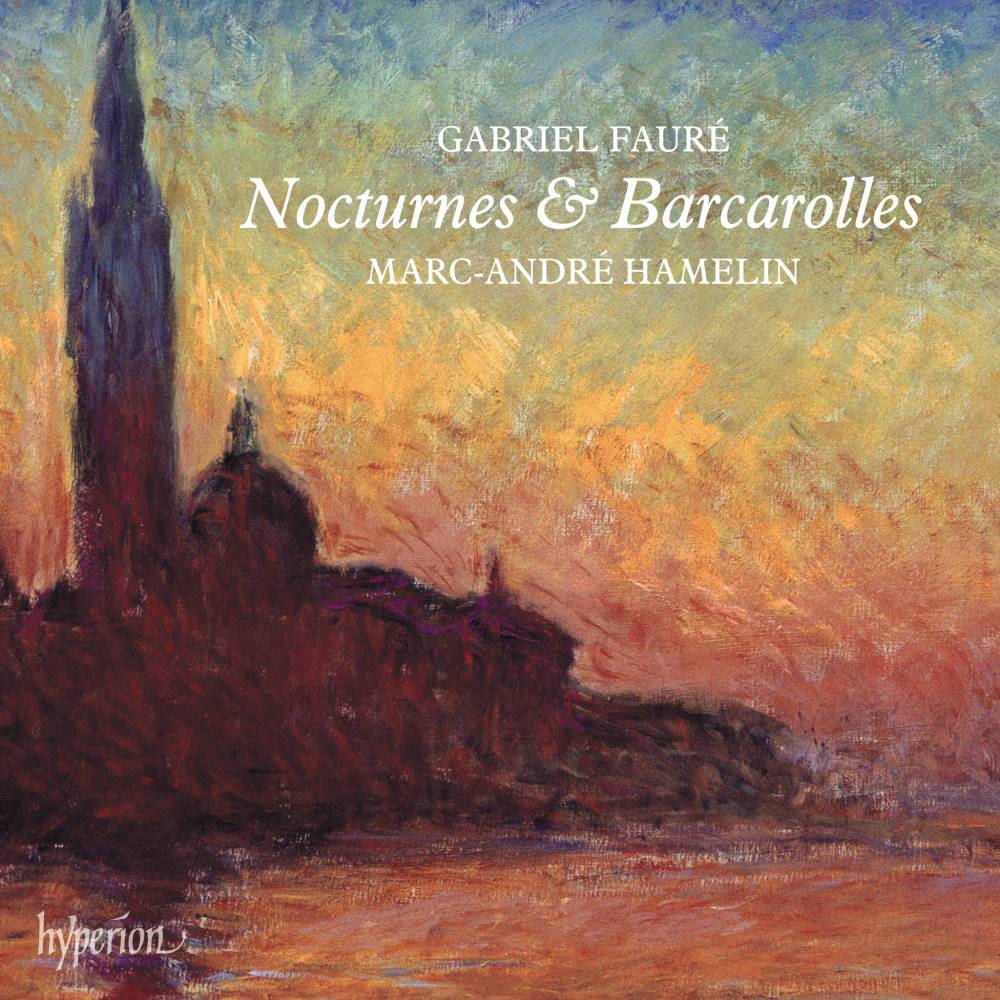
Award-winning Canadian pianist Marc-André Hamelin performs Faure’s Nocturnes and Barcarolles on this upcoming release on the Hyperion Label, perfectly in tune with the beloved musician’s elegant pianism.
Composed throughout Faure’s lifetime, the collection of 13 nocturnes offers a microcosm of his flourishing artistry, with Hamelin ushering listeners into each of their respective, individual sound worlds. Highlights include the unabashedly romantic Nocturne No. 1 in E flat minor, Op. 33, No. 1, evoking Chopin’s E minor Prelude, or Nocturne, No. 6 in F flat major, Op. 63 that intrigues with its more adventuresome ethos, while showcasing the pianist’s virtuosic technique. Hamelin also sensitively brings to life two darker offerings, Nocturne No. 12 in E minor, Op. 107, reflecting the composer’s horror of war, as well as Nocturne No. 13 in B minor, Op. 119, penned shortly after the death of his long-time mentor, Camille Saint-Saens.
The 13 Barcarolles – literally, “boat songs” – arguably display even greater lyricism, with several works particular standouts. Barcarolle No. 3 in G flat major, Op. 42 features Hamelin’s gossamer-light embellishments, while Barcarolle No. 5 in F sharp minor, Op. 66 with its unusual “blue” note, further displays his deeply resonant tone and lyrical phrasing.
Hamelin is joined by his real-life wife, Montreal-born pianist/radio producer/host Cathy Fuller for Dolly, Op. 56, a.k.a. the “Dolly Suite,” composed between 1893-96 for piano four-hands. This charming addition features the musical couple performing its six movements with finesse throughout, from its gently rocking opening Berceuse through to fiery finale, “Le pas espagnole,” that surely its namesake, Faure’s once lover, Emma Bardac’s infant daughter would surely approve. 4.5/5
STREAM THESE: Nocturne No. 1 in E flat minor, Op. 33, No. 1; Nocturne No. 13 in B minor, Op. 119, Dolly, Op. 56, No. 4, Ketty-valse
— Holly Harris