NatGeo launches Mars miniseries
Though not groundbreaking, docu-drama has thrilling moments
Advertisement
Read this article for free:
or
Already have an account? Log in here »
To continue reading, please subscribe:

Digital Subscription
One year of digital access for only $205*
- Enjoy unlimited reading on winnipegfreepress.com
- Read the E-Edition, our digital replica newspaper
- Access News Break, our award-winning app
- Play interactive puzzles
*First annual payment billed as $205.00 + GST for one year. This annual subscription will automatically renew at $233.00 + GST every 52 weeks (10% off the regular annual price of $259.35). Offer available to new and qualified returning subscribers only. Cancel any time.
To continue reading, please subscribe:
Add Free Press access to your Brandon Sun subscription for only an additional
$1 for the first 4 weeks*
- Enjoy unlimited reading on winnipegfreepress.com
- Read the E-Edition, our digital replica newspaper
- Access News Break, our award-winning app
- Play interactive puzzles
*Your next Brandon Sun subscription payment will increase by $1.00 and you will be charged $17.95 plus GST for four weeks. After four weeks, your payment will increase to $24.95 plus GST every four weeks.
Read unlimited articles for free today:
or
Already have an account? Log in here »
Hey there, time traveller!
This article was published 12/11/2016 (3578 days ago), so information in it may no longer be current.
It’s a bit of a stretch to suggest it goes where no TV show has gone before, but there’s no question that National Geographic Channel’s six-part event series Mars goes boldly toward wherever it’s heading.
The ambitious and heavily promoted project — which premières Monday at 8 p.m. on NatGeo — puts a new twist on the oft-employed genre description “docu-drama” by employing both of the storytelling techniques suggested by the term, but keeping them separate, rather than blurring the lines between the two.
Most often, docu-dramas layer fictional storylines over historical facts to build mostly made-up stories that are — at least in their creators’ minds — more compelling than a retelling of straight history could ever be.
Mars, on the other hand, keeps the “docu-” and the “drama” apart, flipping back and forth between narrative platforms to create a fast-paced and occasionally thrilling hybrid that seeks to educate without ever scrimping on the entertainment value.
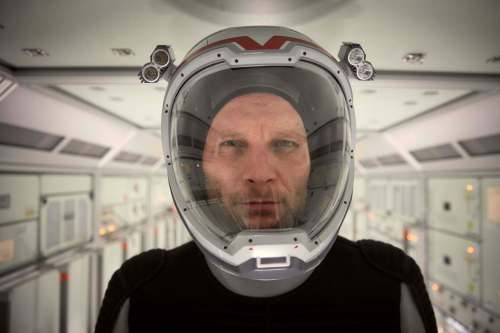
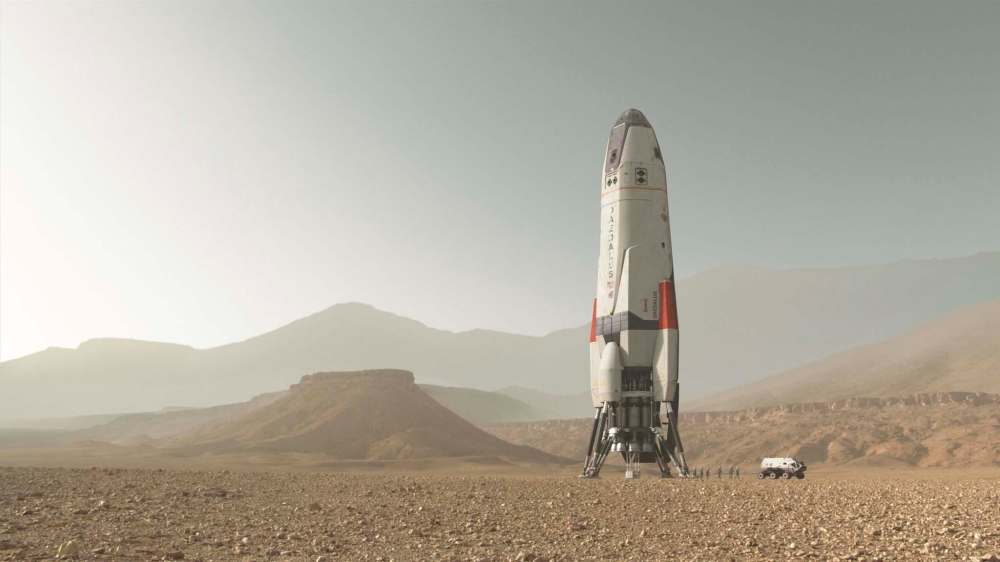
The scripted portion of Mars is set in 2033, when Earth’s global space agency — a combination of government bodies and private-industry partners operating under the banner of the International Mars Science Foundation — launches its first mission intended to establish a permanent human settlement on the distant planet.
As the crew prepares for launch aboard the massive Daedalus spacecraft, mission commander Ben Sawyer (Edmonton native Ben Cotton) reminds his colleagues what they’re facing.
“Some of us, if not all of us, will almost certainly die on this mission — might be in takeoff, might be in landing, might be in the new world itself,” he offers, adding, “but you all are the bravest group of women and men I’ve ever met.”
As the clock ticks down toward liftoff, Mars jumps back in time to 2016, shifting into documentary mode to examine current scientific efforts to prepare humankind for just the kind of mission the scripted in-the-future segments explore.
The focus of the present-day sequences is on the work of SpaceX, the private-industry agency founded by tech-sector entrepreneur Elon Musk, who views the drive to establish a permanent settlement on Mars as essential to human survival.
“Either we’re going to become a multi-planet species and a space-faring civilization, or we’re going to be stuck on one planet until some eventual extinction event,” he says in one of the documentary stream’s numerous interview clips. “In order for me to be excited about the future, it’s got to be the first option.”
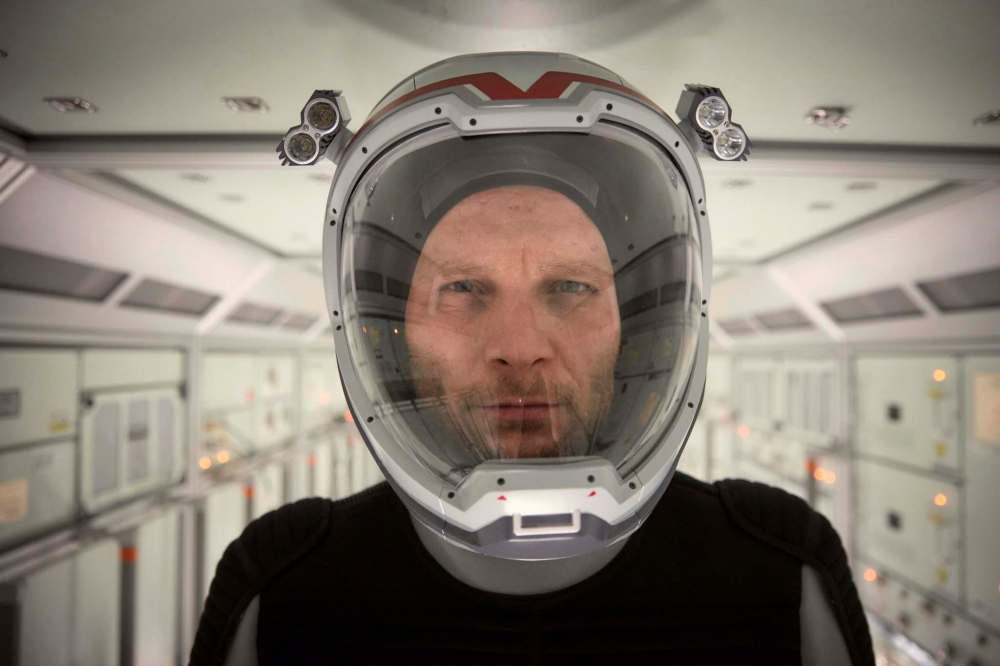
In order for viewers to be excited about Mars’s immediate six-episode future, the series must succeed in its bold goal of combining genres in a manner few directors have attempted before. And to a large extent, it does — the scripted, circa-2033 scenes in the series première are very well done, building suspense effectively while presenting a simple but believable version of what space exploration might look like in the relatively near future.
The factual portions are fairly effective, as documentary content goes, thanks to the contributions of dozens of commentators — including scientist Neil deGrasse Tyson, former astronauts Charles Bolden and James Lovell and author Andy Weir (The Martian) — with deep knowledge of Mars-mission subject matter.
But it’s in the frequent transitions between genre sequences that Mars’s greatest weakness lies. Every time the scripted action builds tension to a breaking point (true to the feature-film ethos of series producers Ron Howard and Brian Grazer), the inevitable quick cut back to a bunch of documentary-style talking heads effectively fires the narrative retro-rocket boosters and forces the drama to restart its main engines before attempting another fictional-sequence takeoff.
Such boldness in storytelling should be applauded, but it must also produce results. Mars is good, but “good” is a destinations millions of TV-series missions have reached before.
brad.oswald@freepress.mb.caTwitter: @BradOswald
TV REVIEW

MARS
Starring Ben Cotton, Alberto Ammann, Jihae and Clementine Poidatz; featuring Elon Musk, Andy Weir and Neil deGrasse Tyson
Monday at 8 p.m.
National Geographic Channel
3 1/2 stars out of 5
Advertisement Advertise With Us
Advertisement Advertise With Us