Revival a chance to relive Twin Peaks’ weird glory

Advertisement
Read this article for free:
or
Already have an account? Log in here »
To continue reading, please subscribe:

Digital Subscription
One year of digital access for only $205*
- Enjoy unlimited reading on winnipegfreepress.com
- Read the E-Edition, our digital replica newspaper
- Access News Break, our award-winning app
- Play interactive puzzles
*First annual payment billed as $205.00 + GST for one year. This annual subscription will automatically renew at $233.00 + GST every 52 weeks (10% off the regular annual price of $259.35). Offer available to new and qualified returning subscribers only. Cancel any time.
To continue reading, please subscribe:
Add Free Press access to your Brandon Sun subscription for only an additional
$1 for the first 4 weeks*
- Enjoy unlimited reading on winnipegfreepress.com
- Read the E-Edition, our digital replica newspaper
- Access News Break, our award-winning app
- Play interactive puzzles
*Your next Brandon Sun subscription payment will increase by $1.00 and you will be charged $17.95 plus GST for four weeks. After four weeks, your payment will increase to $24.95 plus GST every four weeks.
Read unlimited articles for free today:
or
Already have an account? Log in here »
Hey there, time traveller!
This article was published 13/05/2017 (3427 days ago), so information in it may no longer be current.
Watching the original Twin Peaks will always be a trippy experience — the dream sequences, the Log Lady, the brief by-the-way lecture on Tibet, the damn fine cherry pie. But watching it for the first time in 1990 — before it generated a zillion references and reiterations and Simpsons spoofs — was a pop-culture bolt from the blue.
Take it from someone whose initial viewing involved a boxy TV set and a lot of wide-eyed, what-the-hell-was-that astonishment, the debut of this quasi-supernatural crime series, created by David Lynch and Mark Frost, marked a fundamental shift in the way we looked at television.
Like so many revolutionary works, Twin Peaks ended up overshadowed by its own achievements. Its themes, tropes and tics have been taken up by so many successors (The X-Files, The Sopranos, Lost, The Killing, True Detective, Riverdale) that it can be hard to realize just how strange and original the show was when it first aired.
Writing about Twin Peaks’ TV-changing stylistic influence, Sam Adams at Slate describes a seemingly simple scene involving a telephone. In a series known for the outrageous and the outre, this relatively understated sequence, which takes place early in the first episode, seems like an odd place to begin.
I understand exactly what he means, though. A lot of my recollections of the show have become lost or blurred over 26 years — I had somehow completely blanked on David Duchovny’s transgender DEA agent, for instance — but that phone moment has remained fixed in my mind.
I remember being absolutely mesmerized by this long, slow shot, which travels down the cord of a dropped phone as news of the death of Laura Palmer (Sheryl Lee) spreads through Twin Peaks, a small town in the Pacific Northwest. Never mind all the Lynchian derangement that will come later: This is the director’s declaration that he will not be rushed by the brisk, get-things-done pacing of conventional network television. It felt unprecedented.
Then there was the tonal mix. Before Twin Peaks, most TV series could be easily slotted. A show was either a comedy or a drama, a PBS prestige project or a soapy pleasure. Suddenly, we were in a surreal smash-up of light and dark, high and low, gee-whiz earnestness and eyebrow-raising irony. That tragic phone scene, for example, is smack next to a slapstick phone bit in which adorable, hamster-voiced receptionist Lucy (Kimmy Robertson) struggles to transfer a call to Sheriff Truman (Michael Ontkean).
There are some Twin Peaks influences I wish hadn’t spread so readily, such as the whole “dead girl” set-up. The question of who killed Laura Palmer drives the show’s narrative, with the doomed homecoming queen first seen lifeless, nude and wrapped in plastic.
This basic template has since been overlaid by the thousands of murdered girls who have become cheap default plotlines for serial-killer miniseries and CSI episodes. Unfortunately, many of these subsequent gone girls lack the complicated three-dimensional characterization of Laura, reconstructed as the series goes on and brought to difficult life in the 1992 sequel film Twin Peaks: Fire Walk with Me.
With its tricky tone and often opaque content, the series also changed the crucial relationship between show and audience. Slate television writer Willa Paskin calls the show a progenitor of the “puzzle TV” genre. Because of Twin Peaks, she points out, we no longer just watch TV. We try to solve it.

Lynch and Frost presented the surfaces of a postcard-perfect town and then wandered into a deep, dark, piney forest of mystery, conspiracy, sexual intrigue, threatened violence and supernatural shenanigans. Many viewers followed them in.
The puzzling was harder back then. Repeat viewings involved VCR tapes. Water-cooler discussions often involved actual water coolers. But on rudimentary Internet bulletin boards, Twin Peaks helped to kick-start the eccentric, obsessive, gloriously overthinking participatory fan culture we now take for granted.
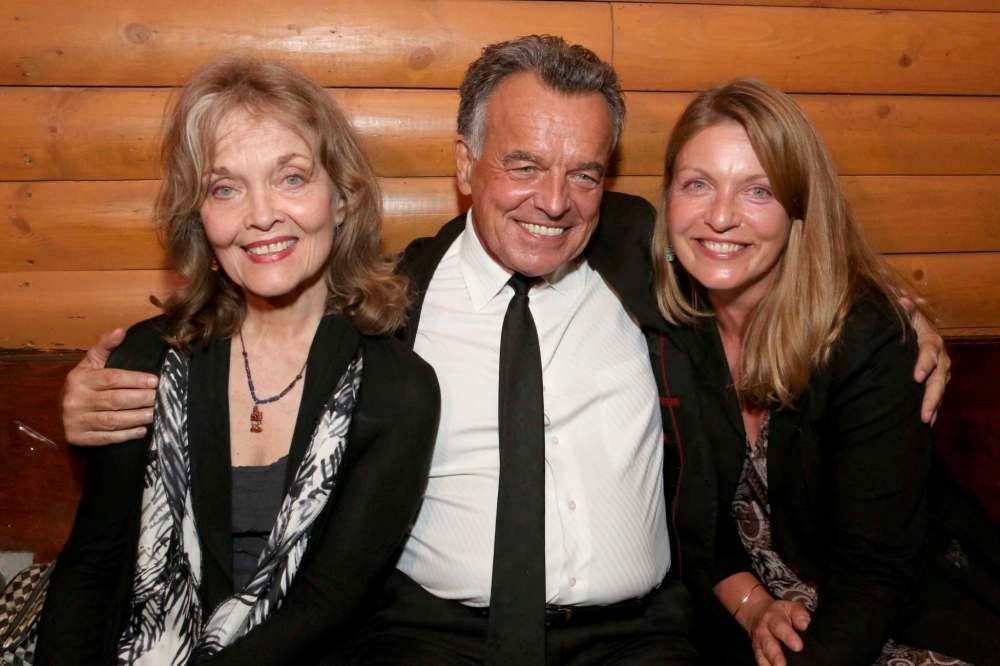
Re-watching the original series as the reboot is poised to start (through Showtime in the U.S.; The Movie Network and CraveTV in Canada on May 21) feels poignant. In some ways 1990 was a simpler time. (“An orange light still meant slow down, not speed up,” as Agent Cooper, played by Kyle MacLachlan, might say.) The cast members, some of whom are returning next week, look so young and clean-cut.
In 2017, we’re all 25 years older, and so is the TV landscape. Can we still be astonished? Is that gum we like going to come back in style?
alison.gillmor@freepress.mb.ca
Studying at the University of Winnipeg and later Toronto’s York University, Alison Gillmor planned to become an art historian. She ended up catching the journalism bug when she started as visual arts reviewer at the Winnipeg Free Press in 1992.
Our newsroom depends on a growing audience of readers to power our journalism. If you are not a paid reader, please consider becoming a subscriber.
Our newsroom depends on its audience of readers to power our journalism. Thank you for your support.
Studying at the University of Winnipeg and later Toronto’s York University, Alison Gillmor planned to become an art historian. She ended up catching the journalism bug when she started as visual arts reviewer at the Winnipeg Free Press in 1992.
Our newsroom depends on a growing audience of readers to power our journalism. If you are not a paid reader, please consider becoming a subscriber.
Our newsroom depends on its audience of readers to power our journalism. Thank you for your support.
Related Articles
Free Press fans discuss the return of Twin Peaks
Advertisement Advertise With Us
Advertisement Advertise With Us