Netflix doc digs into nun’s murder
Decades-old cold case turns former students into detectives
Advertisement
Read this article for free:
or
Already have an account? Log in here »
To continue reading, please subscribe:

Digital Subscription
One year of digital access for only $205*
- Enjoy unlimited reading on winnipegfreepress.com
- Read the E-Edition, our digital replica newspaper
- Access News Break, our award-winning app
- Play interactive puzzles
*First annual payment billed as $205.00 + GST for one year. This annual subscription will automatically renew at $233.00 + GST every 52 weeks (10% off the regular annual price of $259.35). Offer available to new and qualified returning subscribers only. Cancel any time.
To continue reading, please subscribe:
Add Free Press access to your Brandon Sun subscription for only an additional
$1 for the first 4 weeks*
- Enjoy unlimited reading on winnipegfreepress.com
- Read the E-Edition, our digital replica newspaper
- Access News Break, our award-winning app
- Play interactive puzzles
*Your next Brandon Sun subscription payment will increase by $1.00 and you will be charged $17.95 plus GST for four weeks. After four weeks, your payment will increase to $24.95 plus GST every four weeks.
Read unlimited articles for free today:
or
Already have an account? Log in here »
Hey there, time traveller!
This article was published 27/05/2017 (3356 days ago), so information in it may no longer be current.
They call themselves retired grandma Nancy Drews. One is a former emergency room nurse, the other a longtime elementary school teacher.
They make notes on coffee filters instead of index cards and wear clam diggers and sensible sneakers.
But thanks in part to the amateur sleuth work of Gemma Hoskins and Abbie Schaub, the 47-year-old unsolved murder of a young Catholic nun is gaining national attention. Earlier this year, the Baltimore County Police Department conducted DNA tests on the exhumed body of a priest in relation to the case. And now, with the debut of Netflix’s The Keepers, the seven-part docuseries in which the two are central figures, Hoskins and Schaub are being treated like Cagney & Lacey.
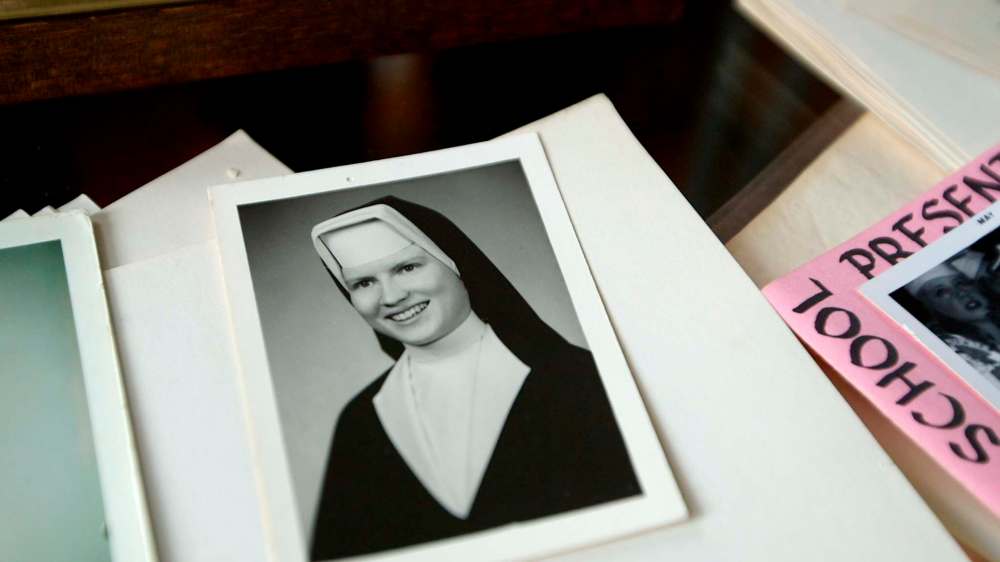
The two were classmates at Archbishop Keough High School in the 1960s, where Sister Cathy Cesnik was their teacher. But the nun disappeared suddenly on Nov. 7, 1969, after driving to a local shopping centre to buy some Muhly’s dinner rolls, cash a paycheque and purchase an engagement gift for her sister. She never returned home and her car was found directly across the street from where she lived, parked haphazardly, the rear jutting out into the road. The tires were caked with mud, and a twig hung from the steering wheel. The Muhly’s bag was still inside the vehicle.
Cesnik’s body wasn’t discovered until Jan. 3, 1970, abandoned in a snowy, wooded area just a few miles from where she lived.
Her death remained a sad, murky mystery until Hoskins got a call from a former Baltimore Sun reporter searching for anyone who had been a student of Cesnik’s.
Hoskins, wanting to help the reporter figure out who had hurt Cesnik, posted a message to a Facebook page for Keough High alumni but was berated for muddying up a space usually filled with birth and anniversary announcements with such an unpleasant topic. One person, however, came to Hoskins’ defence: Schaub.
It wasn’t long before the two started a new Facebook group, this one seeking justice for Cesnik.
Hoskins has always liked true-crime stories; she’s watched Dateline and 20/20 every Friday night for years. But it wasn’t until this mystery turned up in her own backyard that she realized just how adept she was at detective work.
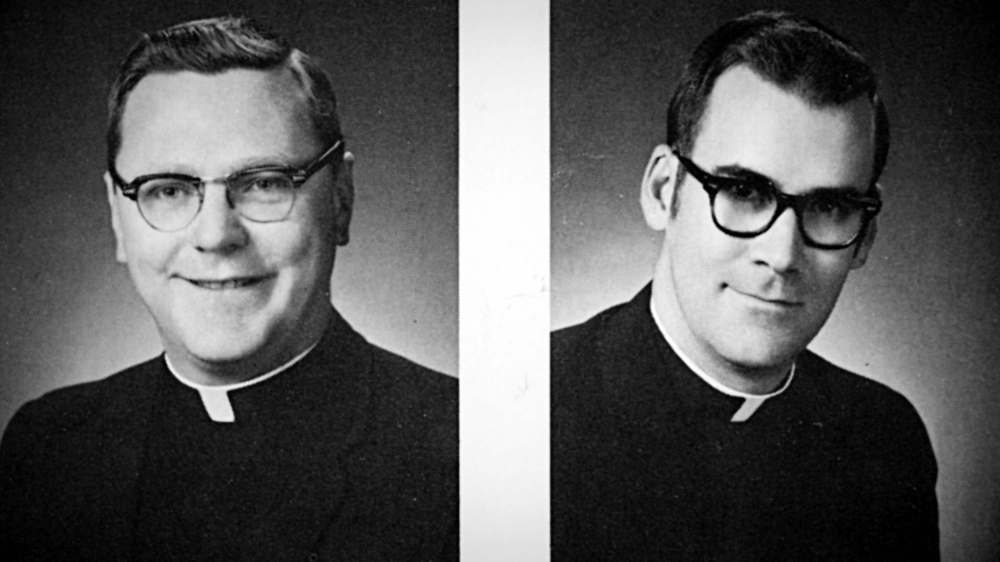
Following tips often submitted through the Facebook page, Hoskins and Schaub began seriously investigating Cesnik’s death, which led to the theory explored in The Keepers that the teacher was killed after students confided in her about sexual abuse taking place at Keough. Numerous subjects interviewed by Hoskins and Schaub say they were molested by Father Joseph Maskell, who served as the school’s chaplain, counsellor and religion teacher.
The two made a good team: Schaub had a knack for research and, through Google, she learned how to access public records, digging up old court documents, sifting through microfilm and even filing Freedom of Information Act requests.
Hoskins, meanwhile, preferred to do the face-to-face work. If a new Maskell survivor popped up, she’d conduct the interview. She wasn’t afraid of knocking on doors or flirting to get information.
“Gemma and I are opposite souls,” explains Schaub, 65. “She is outgoing, confident and knows everybody in the community. I am far more of an introvert. I am keen to find substantive, hard facts. I want to see a paper trail. I don’t really like cold-calling people. So her strengths are my weaknesses.”
As a teenager, Hoskins had been terrified of the nuns who taught at her all-girls private school. They were old and serious, the white headdresses framing their faces so tightly it looked painful. There was a rumour that one of them didn’t have any toes.
But Cesnik was different. She was in her 20s, pretty and charismatic.
When Hoskins found out about the murder, she felt sick.
“The idea of her laying there for two months just makes me want to scream,” she says, “because she was so special. I can’t imagine her beautiful body and face — her presence — laying in the snow. It wasn’t right.”
Today, a small metal placard has been drilled onto an ivy-covered tree near where Cesnik’s body was found. It would be hard to find the memorial if you weren’t with someone who had been there before. The tree is on private land, hidden about 45 metres off the street in some woods thick with underbrush.
“Back when Cathy was found, this was just a place where people dumped their garbage. All these trees weren’t here,” says White, pointing through the greenery.
Hoskins feels confident that she and Schaub have made a dent in the cold case. Recently, she says, Baltimore County Police Officer Robin Teal asked to meet with them to hear about what kind of information they’d gathered. (Teal did not respond to a request for comment.)
“She told us, ‘You have done my homework for me,’ ” says Hoskins. “As we were leaving, she said we’d given her some really good smoking guns. She calls me probably once a week. But we just hope it isn’t a PR thing because of the documentary.”
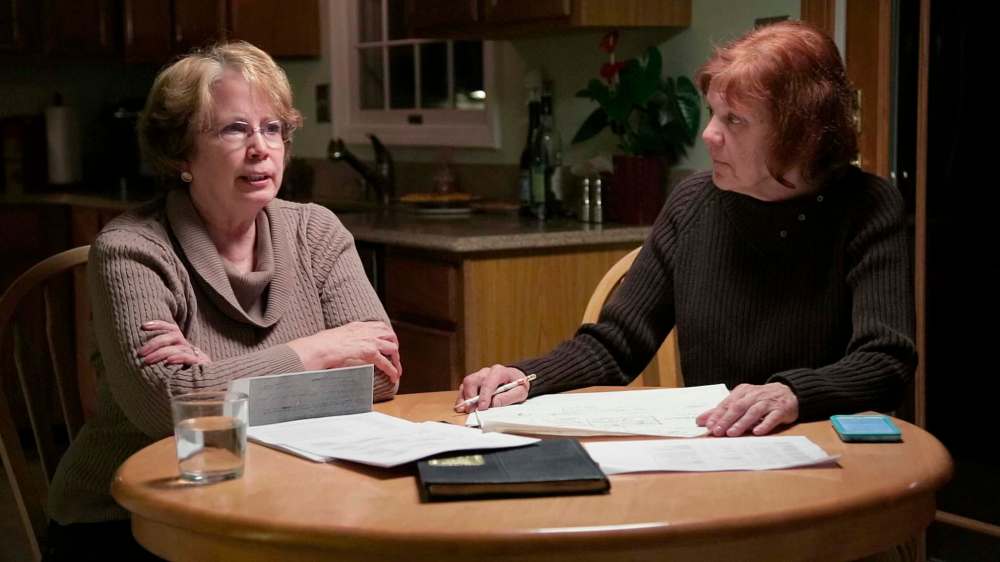
Recently Hoskins, after 64 years of living in Baltimore County — and seeing Schaub several times a week — decided to move permanently to her beachside apartment in Ocean City.

It makes for a good place to study. She recently decided to pursue a criminal justice degree through a local community college. She can take courses online from her rocker and just finished criminology this spring. When she graduates, she’d like to start working for a private investigator.
She shouldn’t have trouble getting work.
The Keepers has garnered strong reviews from critics and Hoskins thinks the series could have a bigger effect than recent crime stories like Making a Murderer, The Jinx and Serial.
“I think that with Cathy dying so young, she could have had such an impact on our lives — but she’s having a bigger one now. And maybe that was the way it was supposed to be… Cathy — I think she’s driving the bus,” she says, her eyes watering. “My teeth are in this thing. I love that woman and (Maskell) was a monster and I’m going to see what I can do about it. I feel like this is what I’m here for.”
— Los Angeles Times