How TV series handle real-world loss
Riverdale not the first show to have to move on without one of its stars
Advertisement
Read this article for free:
or
Already have an account? Log in here »
To continue reading, please subscribe:

Digital Subscription
One year of digital access for only $205*
- Enjoy unlimited reading on winnipegfreepress.com
- Read the E-Edition, our digital replica newspaper
- Access News Break, our award-winning app
- Play interactive puzzles
*First annual payment billed as $205.00 + GST for one year. This annual subscription will automatically renew at $233.00 + GST every 52 weeks (10% off the regular annual price of $259.35). Offer available to new and qualified returning subscribers only. Cancel any time.
To continue reading, please subscribe:
Add Free Press access to your Brandon Sun subscription for only an additional
$1 for the first 4 weeks*
- Enjoy unlimited reading on winnipegfreepress.com
- Read the E-Edition, our digital replica newspaper
- Access News Break, our award-winning app
- Play interactive puzzles
*Your next Brandon Sun subscription payment will increase by $1.00 and you will be charged $17.95 plus GST for four weeks. After four weeks, your payment will increase to $24.95 plus GST every four weeks.
Read unlimited articles for free today:
or
Already have an account? Log in here »
Hey there, time traveller!
This article was published 08/03/2019 (2743 days ago), so information in it may no longer be current.
The death of an actor on a TV show understandably elicits feelings of sadness, as is the case with Luke Perry of Riverdale.
The CW drama shut down production for at least two days after Monday’s news of Perry’s death, less than a week after he suffered a stroke.
Perry’s family, friends and his many fans need time to absorb and mourn the loss, but eventually, his Riverdale colleagues will have to figure out how to go on without the actor and his character, Fred Andrews, father of central character Archie (K.J. Apa).
Neither CW nor Warner Bros. Television, which produces the series, has announced plans. But here’s a quick update of where Riverdale stands: 14 of 22 season 3 episodes have aired.
Fred is expected to appear in any episodes Perry shot before the stroke.
The drama, a reimagining of the Archie Comics characters that has performed well for CW, has already been renewed for a fourth season.
Although Perry’s Fred is not a main character in Riverdale — and overall, the show has pared back on adult storylines this season — his absence requires resolution. The drama series revolves around Archie and his high school contemporaries, but wise Fred serves as a grounded presence amid the tempest of Riverdale teen drama.
A look at how past shows have dealt with actor deaths provides an idea of what options Riverdale might consider. In most cases, the accompanying character also dies. (That also has happened in cases that don’t involve an actor’s death, most recently with the off-screen death of matriarch Roseanne Conner on ABC’s The Conners, a spinoff that arose after the firing of Roseanne Barr and cancellation of Roseanne.)
In some cases, the show can’t (or won’t) go on, to contradict an entertainment bromide, as the actor is too integral or the program is not established enough to survive.
That happened in 2017 with CBS’s Training Day, after Bill Paxton, who played one of the two main characters and was by far the show’s biggest star, died as first-season episodes were airing. CBS broadcast all 13 episodes, which finished shooting before Paxton’s death, and then cancelled the series, which may have happened anyway due to poor ratings.
In recent years, programs have more readily acknowledged an actor’s death, either through the accompanying character’s demise or some type of dedication, than in the past, when the mention of real-life death might have seemed too sensitive and viewers were less likely to be as knowledgeable about behind-the-scenes happenings.
Cory Monteith was a major Glee character when he died at the age of 31 in 2013. The fifth season of the Fox musical dramedy took a production break before eventually presenting a tribute episode that dealt with the death of his character, quarterback Finn. Later, executive producer Ryan Murphy revealed his hoped-for final series scene, which was precluded by Monteith’s death. Glee, which already had begun major cast changes before Monteith’s death, ended after its sixth season.
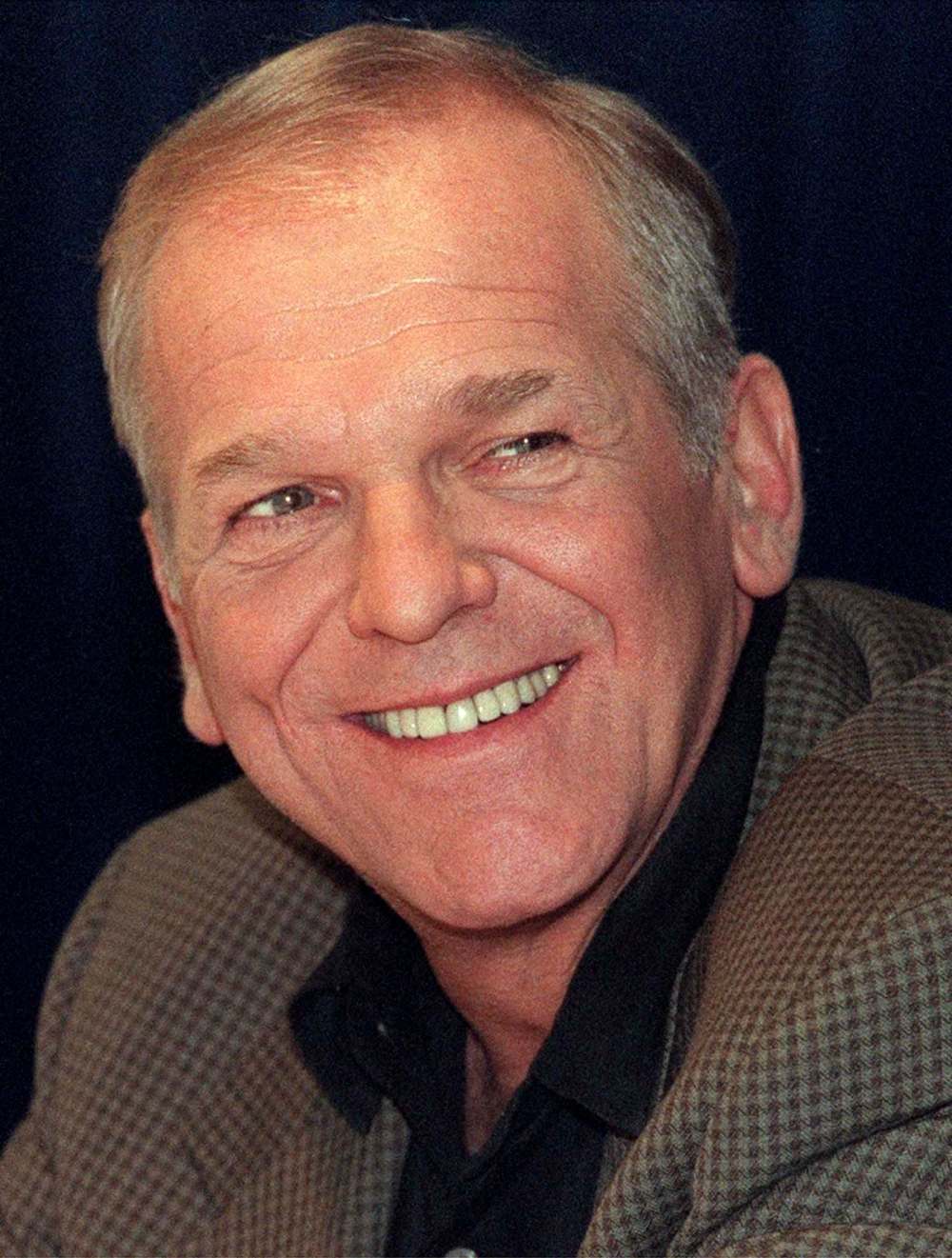
A decade earlier, 8 Simple Rules went on after the death of central star John Ritter, who died in 2003 during the ABC comedy’s second season. After a break, Rules returned, acknowledging the death of Ritter’s family patriarch, Paul, while bringing in James Garner and David Spade as new cast members. The show ran for three seasons, with ratings falling significantly after Ritter’s death.
In the case of actors in supporting roles on established programs, the situation closest to Perry and Riverdale, the show historically has moved on, with the character’s death usually written into the story, as was the case with Leo McGarry of The West Wing after John Spencer’s 2005 death. Often, the actor is honoured with some form of on-screen dedication.
Besides Paxton, other 2017 actor deaths included Miguel Ferrer, whose character’s demise and a tribute were part of a posthumous episode of CBS’s NCIS: Los Angeles, and Glenne Headly, who played the main character’s mother on Hulu’s Future Man. The talented actors made significant contributions to their shows, but each played a supporting character whose departure didn’t affect the program’s continuation.
Voice actors not seen on screen are theoretically easier to replace in the event of death, but some shows have chosen to honour valued cast members by retiring the characters. CBS’s The Big Bang Theory commemorated the 2014 loss of Carol Ann Susi, who played Howard’s unforgettably loud, raspy and hilarious (but unseen) mother, with a story in which she dies in her sleep.
The Simpsons retired teacher Edna Krabappel after the 2013 death of Marcia Wallace, who voiced the beloved character. The show later offered a tribute to Wallace with an epilogue from another character, Ned Flanders. In the 1990s, the long-running animated classic made a similar move, ending popular characters Troy McClure and Lionel Hutz after the death of Phil Hartman.

In cases where a character doesn’t have a specific family relationship, as Perry’s Fred does as Archie’s father, replacement can succeed, especially when the newcomer has a different personality.
Woody Harrelson became a star as Woody, the sweetly dim-witted bartender who joined Cheers after the 1985 death of Nicholas Colasanto, who played gruff, lovable Coach.
When Christopher Evan Welch died in 2013 after filming five episodes of HBO’s Silicon Valley, his character, venture capitalist Peter Gregory, was mentioned in the remaining season 1 episodes. Season 2 introduced Laurie Bream (Suzanne Cryer), who was as socially awkward as Peter but less empathetic. The fact that both Cheers and Silicon Valley were fairly new at the time of the actors’ deaths might have made it easier to make replacements.
Riverdale will do the best it can to adjust and continue after the loss of an important family member. As other shows have found, that’s a difficult hole to fill professionally, much the same as it is personally.
— USA Today