A game of audience manipulation
Stellar storytelling keeps fans hooked to series despite gore, sexual violence
Advertisement
Read this article for free:
or
Already have an account? Log in here »
To continue reading, please subscribe:

Digital Subscription
One year of digital access for only $205*
- Enjoy unlimited reading on winnipegfreepress.com
- Read the E-Edition, our digital replica newspaper
- Access News Break, our award-winning app
- Play interactive puzzles
*First annual payment billed as $205.00 + GST for one year. This annual subscription will automatically renew at $233.00 + GST every 52 weeks (10% off the regular annual price of $259.35). Offer available to new and qualified returning subscribers only. Cancel any time.
To continue reading, please subscribe:
Add Free Press access to your Brandon Sun subscription for only an additional
$1 for the first 4 weeks*
- Enjoy unlimited reading on winnipegfreepress.com
- Read the E-Edition, our digital replica newspaper
- Access News Break, our award-winning app
- Play interactive puzzles
*Your next Brandon Sun subscription payment will increase by $1.00 and you will be charged $17.95 plus GST for four weeks. After four weeks, your payment will increase to $24.95 plus GST every four weeks.
Read unlimited articles for free today:
or
Already have an account? Log in here »
Hey there, time traveller!
This article was published 13/04/2019 (2691 days ago), so information in it may no longer be current.
Ned was beheaded. Theon’s manhood was lopped off. The dashing man from Dorn had his regal skull crushed like a rotting melon under the wheel of a peasant cart.
Others whose names are long forgotten — or whose screen life was so brief they were never given a title — were skinned alive, charbroiled or witnessed their own innards being devoured by rats. Popcorn, anyone?
The miracle of Game of Thrones isn’t that a nerdy collection of Dungeons & Dragons-inspired novels was turned into peak television’s most celebrated drama since The Wire, or that the gorgeously crafted production made resurrection by black magic, birthing dragons in a funeral pyre and the art of wearing a dead man’s face seem utterly plausible.
The marvel is that audiences kept coming back, season after season, Sunday after Sunday, knowing their spirit character was just one cruel twist away from being pulverized by the Hound or ravaged by the rotting, skeletal army of the dead.
Since its debut eight years ago, the David Benioff and D.B. Weiss series has exterminated more key players in hideous ways than The Sopranos and Westworld combined, and it’s been done with such frequency and abandon that it makes the sadistic rampage of Ramsay Bolton (Iwan Rheon) look measured and thoughtful in comparison.
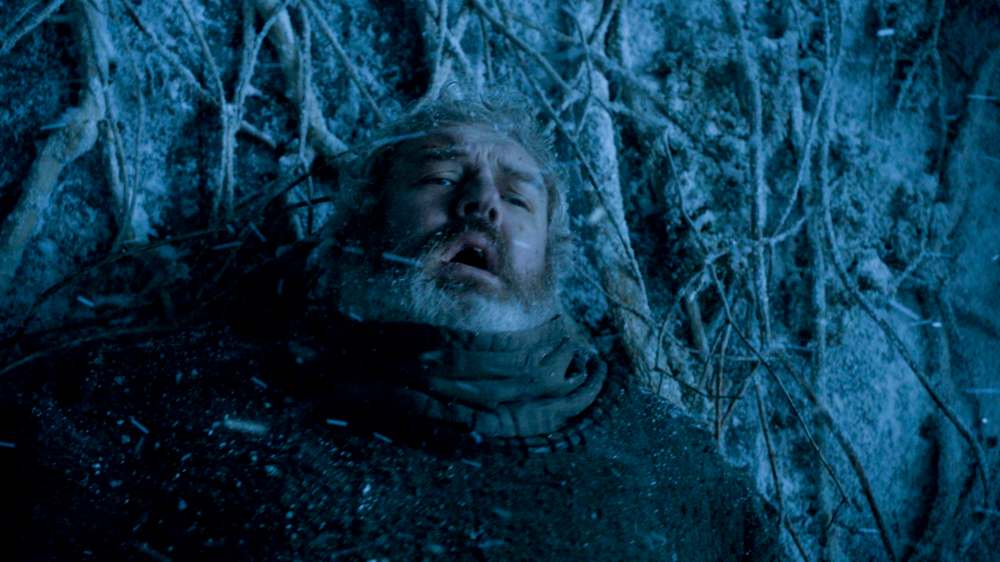
It was the ultimate audience manipulation, as central to the series as mud, blood and brothels, and we all had our stated limits: “If the sweet Hodor (Kristian Nairn) gets it, I’m out!”
Yet, even after that gentle giant was consumed by wights, here we are again, eagerly consuming teasers for the eighth and final season, sharing the Game of Thrones Oreo commercial, communicating in Cersei Lannister (Lena Headey) memes — “I chose violence” — and mourning the end of a series that never once mourned the beloved and wonderfully evil characters that it killed off with joyful abandon.
The show’s stellar storytelling is one of the main reasons viewers of different persuasions have stuck around — and the (surely foolish) hope that all the rape, murder and torture will pay off in the end with a supremely dramatic, satisfying and just finale. Otherwise lefty snowflakes have worshipped the show, despite its depiction of the patriarchal abuse of women, senseless violence and a nearly all-white cast, while MAGA (Make America Great Again) hatters invested in a narrative where women challenge a corrupt male establishment and actively wrestle power from generations of lecherous, sword-wielding men.
Leaving our guiding principles at the door to watch the undead break it down (poor Hodor) isn’t a total surrender of what we believe.
After all, anything’s possible in this fictional realm, especially comeuppance, a popular theme in the real world as we head into the 2020 U.S. election. Kamala Harris, Elizabeth Warren and Amy Klobuchar may not be riding in with a Dothraki death squad, but along with Kirsten Gillibrand and Tulsi Gabbard, they are an unprecedented show of female force campaigning to wrest the Oval Office from a patriarchal ruler.
The dynamic of trailblazing women such as Nancy Pelosi passing the torch to this new generation is reminiscent of a prescient theme in Game of Thrones. In one great moment, the matriarch Lady Olenna (Diana Rigg) advises Daenerys Targaryen (Emilia Clarke), Mother of Dragons, how to conquer her foes. “I’ve known a great many clever men. I’ve outlived them all. Do you know why? I ignored them.”
If only the other women in Game of Thrones had that option. Those who survived into season 8 have arguably suffered more than their male counterparts, with the exception of sad, tortured Theon.
Men were at least afforded a last shred of dignity when they were hurled into the abyss through a moon door, had their throats slit in Flea Bottom or their skulls melted under a pot of molten gold. They were allowed to die fully clothed.
Not the women. Ros (Esmé Augusta Bianco) was porno eye candy up until the end when young King Joffrey Baratheon (Jack Gleeson) impaled her to the wall of his bedchamber. He shot her with his crossbow — including two arrows to her groin and one between her breasts — just for the fun of it.
Shae, who like Ros was a prostitute, was post-coital when she was strangled by her ex, Tyrion Lannister (Peter Dinklage) — the compassionate one — when he discovered she’d been sleeping with his father. Dad arguably suffered a more humiliating demise — he was on the toilet when his son killed him — but Lord Tywin Lannister (Charles Dance) was still was provided the self-respect of a long nightshirt.
The women who’ve survived to fight another season may have found their power, but almost all were sexually assaulted first, as if it were a rite of passage.
Prior to gaining her novel-length title that includes “Breaker of Chains,” Dany was sold into marriage and raped before the close of the debut episode. Sansa Stark (Sophie Turner) was stripped and beaten on orders of King Joffrey, then brutally assaulted by her second merciless husband in front of her stepbrother. Cersei was violated by her brother — next to her son’s corpse. Even the formidable Brienne of Tarth (Gwendoline Christie) was beaten before narrowly escaping a gang rape.
Let’s hear it for Arya Stark (Maisie Williams), one of the series’ only surviving female leads who’s made it through seven seasons with her clothes on and no sexual violence in her storyline.
It’s hard to imagine that the pre-#MeToo version of Game of Thrones, meaning the majority of the drama, would have made it to the pilot stage, let alone Little Finger’s brothel, in today’s TV scape. It was steeped in the male gaze when it arrived, which would render it laughable next to a new generation of rich narratives — The Handmaid’s Tale, Killing Eve — where women are telling the story and men are the backdrop.
Still, Game of Thrones was that good that millions of fans, including me, gave its misogyny and addiction to cruelty a pass. And it’s unlikely we’ll ever witness a drama of such epic scale now that niche TV is everything.
Season 8 is where those hopes will be realized — or dashed — and it better be a spectacle of epic proportions, HBO, because if the fierce Mother of Dragons is defeated and Podrick the squire (Daniel Portman) somehow stumbles his way onto the throne, social media will blow up the cable network’s chances of ever having another notable hit, just like Cersei lit up Great Sept of Baelor with a billion barrels of wildfire.
Just keep telling yourself that as one of the best shows in modern memory comes to a close. One thing, however, is certain: Game of Thrones will keep dazzling with dragons and disgusting with gore, leaving us dangling between hope and despair, right up until the very end. Then comes the prequel.
— Los Angeles Times
Game or the big game?
You know Game of Thrones has taken over the world when hockey-pool competitors in Winnipeg, busy deciding to choose between Mark Scheifele or Sidney Crosby for their playoff teams, were hoping Sunday’s Game 3 between the Winnipeg Jets and the St. Louis Blues wouldn’t intrude on their planned viewing of Season 8’s opener of the hit HBO series.
The Jets game starts at 6:30 p.m. For most folks with an HBO Canada subscription in Winnipeg, the Game starts at 10 p.m. If they have an eastern feed of HBO Canada, the familiar Game of Thrones theme song will commence at 8 p.m.
Need we suggest you set your PVR?
Related Articles
HBO looks beyond 'Game of Thrones,' maybe back to a prequel
Advertisement Advertise With Us
Advertisement Advertise With Us