Not-so-merry old England weighs heavy on The Crown

Advertisement
Read this article for free:
or
Already have an account? Log in here »
To continue reading, please subscribe:

Digital Subscription
One year of digital access for only $205*
- Enjoy unlimited reading on winnipegfreepress.com
- Read the E-Edition, our digital replica newspaper
- Access News Break, our award-winning app
- Play interactive puzzles
*First annual payment billed as $205.00 + GST for one year. This annual subscription will automatically renew at $233.00 + GST every 52 weeks (10% off the regular annual price of $259.35). Offer available to new and qualified returning subscribers only. Cancel any time.
To continue reading, please subscribe:
Add Free Press access to your Brandon Sun subscription for only an additional
$1 for the first 4 weeks*
- Enjoy unlimited reading on winnipegfreepress.com
- Read the E-Edition, our digital replica newspaper
- Access News Break, our award-winning app
- Play interactive puzzles
*Your next Brandon Sun subscription payment will increase by $1.00 and you will be charged $17.95 plus GST for four weeks. After four weeks, your payment will increase to $24.95 plus GST every four weeks.
Read unlimited articles for free today:
or
Already have an account? Log in here »
Hey there, time traveller!
This article was published 21/11/2020 (2146 days ago), so information in it may no longer be current.
As The Crown heads into its fourth season (now on Netflix), we know we will see lots of pomp and circumstance. We will see royals brooding at windows, isolated and alone in their mercilessly high-ceilinged rooms, or tramping about in the Scottish Highlands in their boots and waxed Barbour jackets.
This being the season that covers the 1980s, we will also see the teenaged Lady Diana Spencer (Emma Corrin) listening to Duran Duran on her Walkman while roller-skating through Buckingham Palace.
“The people’s princess” adds some splashes of colour in season 4, with her hot pink llama-motif sweaters and her un-royal bouts of emotional expression. These Di-related high spirits are deceptive, though.
Overall, this new season feels much, much darker.
As Queen Elizabeth (Olivia Colman) engages in power struggles with her new daughter-in-law and her new prime minister, Margaret Thatcher (a helmet-haired Gillian Anderson), The Crown explores some difficult historical terrain. There are storylines set against the Irish conflict and apartheid-era South Africa, and another episode that dives into the unrelenting cruddiness of working-class life in Thatcherite Britain, with its double-digit unemployment and gutted social services.
Meanwhile, the family drama has become even more vicious (and according to some detractors, even more fictionalized). Showrunner Peter Morgan is leaning into the ghastliness of most of his main characters, getting increasingly explicit about their cruelty, their callousness, their distance from each other and from the people they profess to lead. Very often the only sympathetic characters in sight are the corgis.
Working the tension between the characters’ outsize public roles and their hidden private lives, between their lavish material privilege and their wretched emotional poverty, Morgan gives us characters who are both powerful and pitiable. This season of The Crown is a very tricky viewing experience, as it should be.
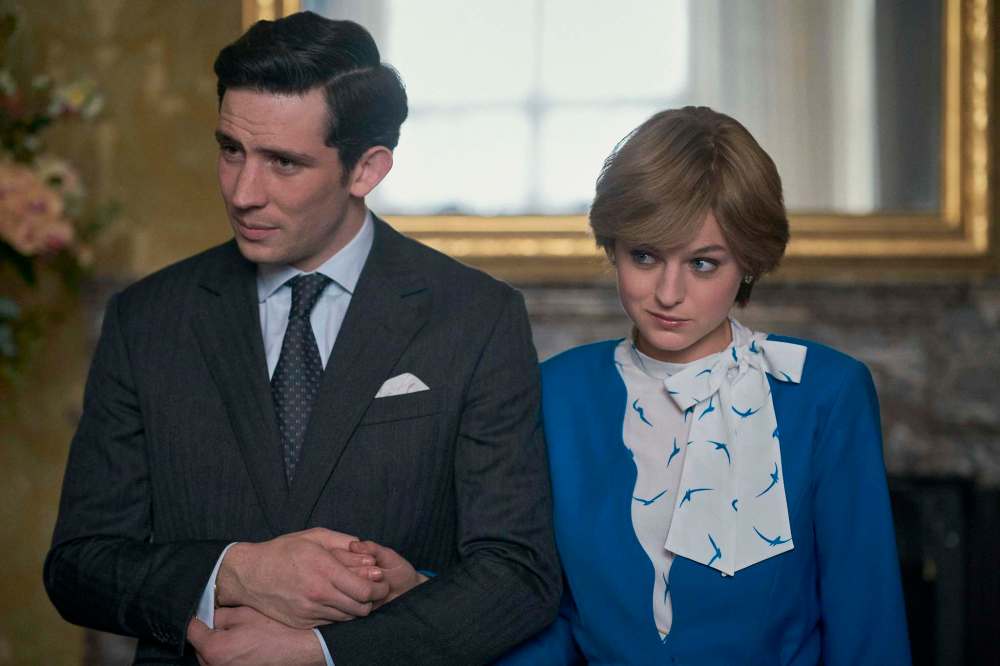
In a terse exchange with Prince Charles (Josh O’Connor), who has come to talk about his doomed marriage, the queen puts it this way: “When people look at you and Diana, they see two privileged young people who, through good fortune, have ended up with everything one could dream of in life. No one, not a single breathing living soul anywhere, sees cause for suffering.”
As she briskly tells him, he and his wife are both immature, spoiled and endlessly complaining, and they need to buck up.
One can see her point. Charles spends most of season 4 in a permanent pout, either stricken or sullen or seething, feeling he has been pressured into “a grotesque misalliance” — his words.
Many viewers are claiming a clear victory for Team Diana in this depiction of the royal marriage, and in some ways, Morgan does view the Princess of Wales as a victim of the royal family’s machinations. She’s young enough to think she’s entered into a love story, only to find she’s joined “The Firm.” We feel her deep psychological distress — because of the graphic depictions of the princess’s bulimia, several episodes start with a trigger warning and information on eating disorders.
But in this dark, depressive season, Morgan doesn’t seem to be looking for a heroine. Corrin’s Diana is radiant and warm; she can also be calculating and callow. She and Charles are both hurting and hurt in their terrible relationship.

There is lots of minor unpleasantness thrown into this season — money-grubbing from Prince Edward, jealousies from Princess Anne.
Perhaps the most intriguingly awful character, however, is Margaret Thatcher. Morgan shows us Thatcher at her absolute worst, gleefully destroying Britain’s welfare state, rushing aggressively, enthusiastically even, into the Falklands war.
At the same time, Anderson’s committed and eccentric performance makes the Iron Lady fascinating, if not sympathetic. We see Thatcher enduring the bullying condescension of old-boy establishment Tories and aristocrats who dismiss her as “a shopkeeper’s daughter.” We also watch her with her husband Denis. In a series where almost all the marriages are either unhappy shout-fests or pragmatic accommodations, these two seem genuinely fond of each other.
With this season’s complicated characters and uncomfortable storylines, Morgan seems to be stripping off the series’ veneer of historical nostalgia and period glamour. He’s getting more cynical, even a little satirical, and this will probably come in handy for the next season, as The Crown moves even closer to our present period of royal controversy and crisis.
alison.gillmor@freepress.mb.ca
Studying at the University of Winnipeg and later Toronto’s York University, Alison Gillmor planned to become an art historian. She ended up catching the journalism bug when she started as visual arts reviewer at the Winnipeg Free Press in 1992.
Our newsroom depends on a growing audience of readers to power our journalism. If you are not a paid reader, please consider becoming a subscriber.
Our newsroom depends on its audience of readers to power our journalism. Thank you for your support.
Studying at the University of Winnipeg and later Toronto’s York University, Alison Gillmor planned to become an art historian. She ended up catching the journalism bug when she started as visual arts reviewer at the Winnipeg Free Press in 1992.
Our newsroom depends on a growing audience of readers to power our journalism. If you are not a paid reader, please consider becoming a subscriber.
Our newsroom depends on its audience of readers to power our journalism. Thank you for your support.
Advertisement Advertise With Us
Advertisement Advertise With Us