Crime drama The Investigation eschews glamour

Advertisement
Read this article for free:
or
Already have an account? Log in here »
To continue reading, please subscribe:

Digital Subscription
One year of digital access for only $205*
- Enjoy unlimited reading on winnipegfreepress.com
- Read the E-Edition, our digital replica newspaper
- Access News Break, our award-winning app
- Play interactive puzzles
*First annual payment billed as $205.00 + GST for one year. This annual subscription will automatically renew at $233.00 + GST every 52 weeks (10% off the regular annual price of $259.35). Offer available to new and qualified returning subscribers only. Cancel any time.
To continue reading, please subscribe:
Add Free Press access to your Brandon Sun subscription for only an additional
$1 for the first 4 weeks*
- Enjoy unlimited reading on winnipegfreepress.com
- Read the E-Edition, our digital replica newspaper
- Access News Break, our award-winning app
- Play interactive puzzles
*Your next Brandon Sun subscription payment will increase by $1.00 and you will be charged $17.95 plus GST for four weeks. After four weeks, your payment will increase to $24.95 plus GST every four weeks.
Read unlimited articles for free today:
or
Already have an account? Log in here »
Hey there, time traveller!
This article was published 06/02/2021 (2040 days ago), so information in it may no longer be current.
The Investigation (currently streaming on Crave, with new episodes Mondays at 10 p.m.) is an unusual crime drama. This is a series that dives deep into a murder case while stringently refusing to give any screen time to the murderer. In fact, the show doesn’t even call him by name. When other characters refer to him, he is identified only as “the accused.”
This slow, tamped-down six-episode series is part of a recent recentring of the crime genre. In the past, it has often been the female victim who is anonymous, presented only as a brutalized, naked body, her violent death serving as the pretext for a showdown between some fascinating monster of a killer and some super-intense, equally damaged detective. Violent, sensationalist and often sadistic, these shows offer their audiences a queasy wallow in the darkest recesses of the human psyche and then justify that wallow with righteous punishment.
In The Investigation (in Danish, with subtitles), creator Tobias Lindholm presents a dramatized account of a real-life crime: the so-called “submarine murder” that made world headlines in 2017. The case involved the death of Swedish journalist Kim Wall, who had gone to interview a Danish inventor and entrepreneur on his homemade submarine and never returned.
The murder of Wall was horrific, but the series refuses to replicate that horror directly. Instead, Lindholm and his dedicated cast want to give dignity to the dead. They want to acknowledge the full weight of grief experienced by those left behind. They want to track the damage done by violent crime.
Perhaps appropriately for such an austerely realistic procedural, The Investigation begins with failure. Police chief inspector Jens Moller (Soren Malling of The Killing) and special prosecutor Jakob Buch-Jepsen (Pilou Asbaek of Borgen and Game of Thrones) are watching another case fall apart in court. We witness the pain of a murder victim’s pregnant girlfriend as it becomes clear that his murderer has been acquitted.
For the dogged, dry Moller, this is a reminder that it’s not what you know. It’s what you can prove. Faced later that day with the disappearance of Wall, he begins a meticulous, months-long investigation and the patient building of a provable homicide case.
The work of this case unfolds with rigorous slowness under flat Scandinavian light. There’s no deep mystery. Almost from the beginning, Moller knows the accused’s shifting story doesn’t hold water. There are no sudden revelations, no lightning strikes of investigative genius.
There are no psychological showdowns, no twisty mind-games, no flirting with the glamour of evil. We don’t even get inside the interrogation room. Moller delegates the first interviews with the accused to another detective, who then supplies flat, undramatic summaries.
Most importantly, perhaps, there are no reconstructions of the crime.

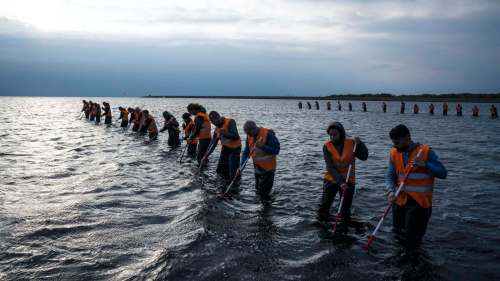
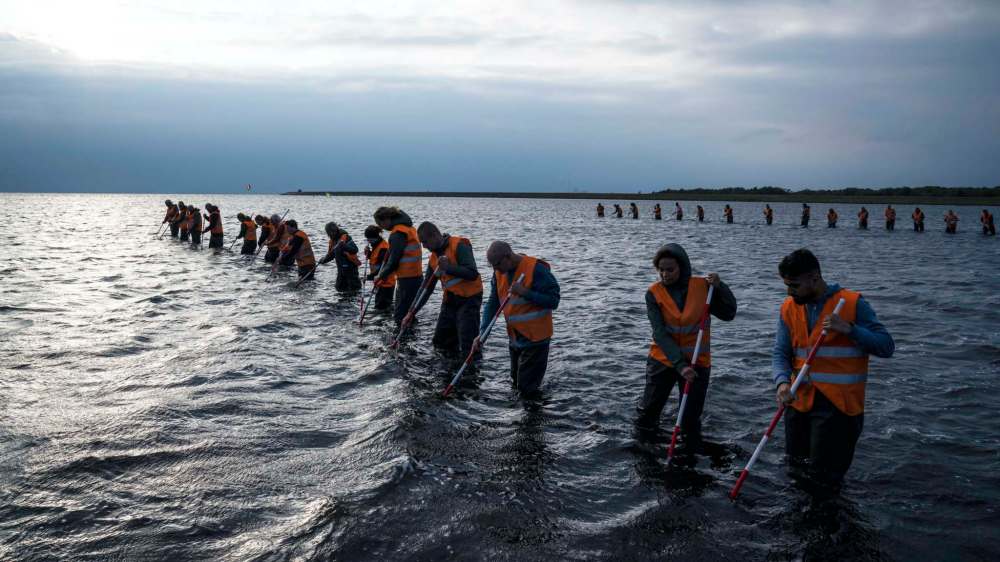
It would be wrong, though, to suggest The Investigation is defined only by what it doesn’t show. It also builds up a detailed picture of the difficult, deliberate, stop-and-start process of working toward justice. We see the labour of many people. There are police and prosecutors, of course, but also divers — the Oresund, its waters cold and iron-grey, is the crime scene — and scientists, working with whatever scant forensic evidence can be salvaged from the sea.
And there is an unvarnished examination of sorrow, in the performances of Pernilla August and Rolf Lassgard as Wall’s shocked and stricken parents. Perhaps the clearest sign that The Investigation is trying to find a new way to represent true crime is that Lindholm collaborated closely with Ingrid and Joachim Wall as he was making this series. The family’s real-life dog even makes an onscreen appearance.
The Investigation requires a lot from the viewer, offering not sensationalized spectacle, but a slow, steady narrative pull. But maybe that’s because the series is asking an important question: Just how entertaining should the true-crime genre be?
alison.gillmor@freepress.mb.ca
Studying at the University of Winnipeg and later Toronto’s York University, Alison Gillmor planned to become an art historian. She ended up catching the journalism bug when she started as visual arts reviewer at the Winnipeg Free Press in 1992.
Our newsroom depends on a growing audience of readers to power our journalism. If you are not a paid reader, please consider becoming a subscriber.
Our newsroom depends on its audience of readers to power our journalism. Thank you for your support.
Studying at the University of Winnipeg and later Toronto’s York University, Alison Gillmor planned to become an art historian. She ended up catching the journalism bug when she started as visual arts reviewer at the Winnipeg Free Press in 1992.
Our newsroom depends on a growing audience of readers to power our journalism. If you are not a paid reader, please consider becoming a subscriber.
Our newsroom depends on its audience of readers to power our journalism. Thank you for your support.
Advertisement Advertise With Us
Advertisement Advertise With Us