Good TV? Bad TV? Bent coppers!

Advertisement
Read this article for free:
or
Already have an account? Log in here »
To continue reading, please subscribe:

Digital Subscription
One year of digital access for only $205*
- Enjoy unlimited reading on winnipegfreepress.com
- Read the E-Edition, our digital replica newspaper
- Access News Break, our award-winning app
- Play interactive puzzles
*First annual payment billed as $205.00 + GST for one year. This annual subscription will automatically renew at $233.00 + GST every 52 weeks (10% off the regular annual price of $259.35). Offer available to new and qualified returning subscribers only. Cancel any time.
To continue reading, please subscribe:
Add Free Press access to your Brandon Sun subscription for only an additional
$1 for the first 4 weeks*
- Enjoy unlimited reading on winnipegfreepress.com
- Read the E-Edition, our digital replica newspaper
- Access News Break, our award-winning app
- Play interactive puzzles
*Your next Brandon Sun subscription payment will increase by $1.00 and you will be charged $17.95 plus GST for four weeks. After four weeks, your payment will increase to $24.95 plus GST every four weeks.
Read unlimited articles for free today:
or
Already have an account? Log in here »
Hey there, time traveller!
This article was published 18/06/2021 (1922 days ago), so information in it may no longer be current.
For the past few weeks, I’ve been bingeing Line of Duty. And I find when I’m talking with someone who’s also watching the show, we inevitably end up shouting “Bent coppers!” at each other in bad Northern Irish accents.
If you’re also a Line of Duty fan, you’ll know exactly why that happens. Even though this super-watchable British police procedural has somehow gotten itself billed as prestige TV drama, it is, in fact, as predictable as a ‘90s sitcom.
One of the show’s most reliable and repetitive pleasures involves Ted Hastings (Adrian Dunbar), a former Belfast beat cop who’s risen up the ranks to head an anti-corruption unit, announcing that he’s “interested in one thing and one thing only, and that’s… bent coppers.”
The first five seasons of Line of Duty are currently available on Netflix and Amazon Prime, while season 6 is showing in Canada exclusively on BritBox. The BBC show was a smash hit in the U.K., especially season 6, which aired this year from March to May to a transfixed lockdown audience. The fanbase reportedly includes the Queen, who “got very into Line of Duty,” according to a Sunday Times report. (Does the monarch get “very into” things? One thinks not.)
When LOD premiered back in 2012, it was sometimes optimistically described as “The Wire, but British.” It’s more like “The Wire, but preposterous.” As the seasons progressed and some highly idiosyncratic LOD clichés started stacking up (so many burner phones!), there has been heated debate over whether this is one of the best British dramas ever, or just “ludicrous and overhyped,” as one critic suggests.
For me, Line of Duty is an immensely satisfying wrestling match between good TV and bad TV. The show presents as deeply serious. It’s got some ace actors, including Thandiwe Newton, Kelly Macdonald and Keeley Hawes, delivering lots of terse, tense dialogue. It’s got dark atmosphere, gritty violence, gripping suspense and some terrific set-pieces.
But when you look at the underlying structure, especially as LOD heads toward season 6, it’s flimsy, even a little silly, and riddled with plot holes. And while shows that aren’t as good as they think they are can be really irritating — think True Detective 2 — there’s something weirdly appealing about LOD’s distinctive tone, which often starts off hard-nosed and high-toned and then gets a bit unhinged.
Set in an unnamed northern English city, LOD centres on the upright Ted Hastings, who runs a unit tasked with investigating police corruption with the help of Det. Const. Kate Fleming (Vicky McClure) and the new guy, Det. Sgt. Steve Arnott (Martin Compston). Each season explores a stand-alone plot involving a different bent copper — of course! — but there’s also an overarching storyline running through all six seasons about a secret criminal conspiracy embedded at the highest levels of the police service.
LOD works best as an almost bureaucratic police procedural. There’s nothing better than the show’s crackling interrogation scenes, even though they generally come down to four or five people stuck around a conference table with binders of documents and lots of talk.
LOD also lures viewers in by casually tossing around acronyms and abbreviations, until you find yourself nodding knowingly when a character brings up the ACU or the OCG or the DIR or Reg-15’s.
You start feeling like an insider. You start thinking you have a nose for bent coppers.
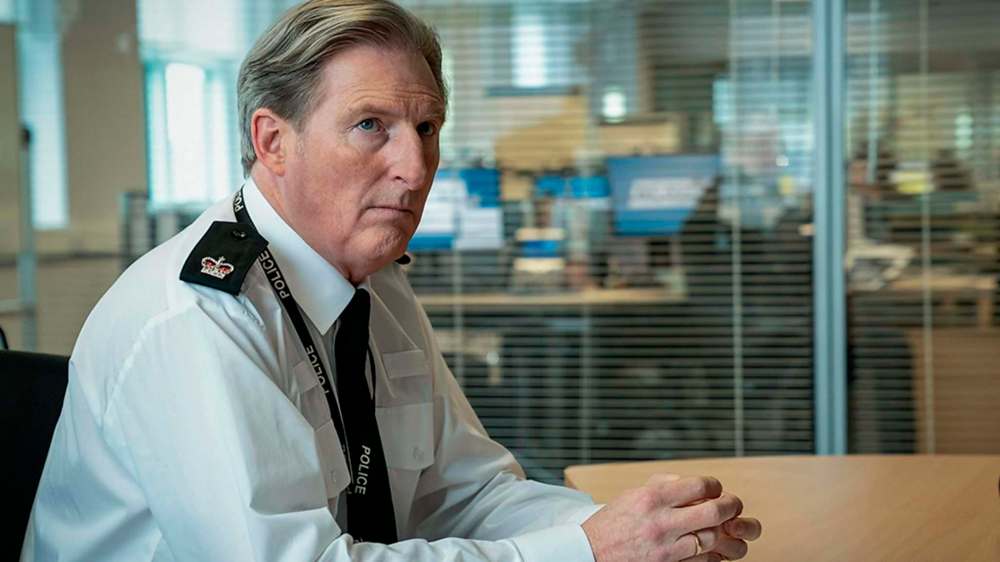
The squad’s one job is to investigate corrupt police officers, but even their own anti-corruption unit has been infiltrated by a criminal element. At one point, we have (possibly) bent coppers investigating other (possibly) bent coppers who are investigating other (almost certainly) bent coppers, a multilayered plotline that is byzantine in some ways and simplistic in others.
In particular, instead of confronting the moral murk of broad institutional corruption, an urgent issue at a time when people are talking about how to reform policing, the show focuses on the hunt for the mysterious “H,” the masterminding monster who’s supposedly pulling everyone’s strings, cops and crooks alike. In the U.K., fan theories proliferated during the twists and turns of season 6, which ended with a reveal that provoked internet howls and comparisons to the letdown of the Game of Thrones finale.
Well, if you’re expecting plausible scripting, the series is bound to be disappointing. If, on the other hand, you’re playing a drinking game where you get to take a shot every time a character mentions “bent coppers,” it will be a ton of fun.
alison.gillmor@freepress.mb.ca
Studying at the University of Winnipeg and later Toronto’s York University, Alison Gillmor planned to become an art historian. She ended up catching the journalism bug when she started as visual arts reviewer at the Winnipeg Free Press in 1992.
Our newsroom depends on a growing audience of readers to power our journalism. If you are not a paid reader, please consider becoming a subscriber.
Our newsroom depends on its audience of readers to power our journalism. Thank you for your support.
Studying at the University of Winnipeg and later Toronto’s York University, Alison Gillmor planned to become an art historian. She ended up catching the journalism bug when she started as visual arts reviewer at the Winnipeg Free Press in 1992.
Our newsroom depends on a growing audience of readers to power our journalism. If you are not a paid reader, please consider becoming a subscriber.
Our newsroom depends on its audience of readers to power our journalism. Thank you for your support.
Advertisement Advertise With Us
Advertisement Advertise With Us