Guilbeault praises CBC’s plans to boost local news coverage

Advertisement

Advertise with us

OTTAWA - Culture Minister Steven Guilbeault is praising CBC/Radio-Canada’s plans to increase local news coverage as part of its new five-year strategy.

Read this article for free:


or

Already have an account? Log in here »

To continue reading, please subscribe:

Subscribe and receive a limited-edition Free Press branded hat or tote.

Digital Subscription

One year of digital access for only $205*

  • Enjoy unlimited reading on winnipegfreepress.com
  • Read the E-Edition, our digital replica newspaper
  • Access News Break, our award-winning app
  • Play interactive puzzles

*First annual payment billed as $205.00 + GST for one year. This annual subscription will automatically renew at $233.00 + GST every 52 weeks (10% off the regular annual price of $259.35). Offer available to new and qualified returning subscribers only. Cancel any time.

To continue reading, please subscribe:

Add Free Press access to your Brandon Sun subscription for only an additional

$1 for the first 4 weeks*

  • Enjoy unlimited reading on winnipegfreepress.com
  • Read the E-Edition, our digital replica newspaper
  • Access News Break, our award-winning app
  • Play interactive puzzles
Start now

*Your next Brandon Sun subscription payment will increase by $1.00 and you will be charged $17.95 plus GST for four weeks. After four weeks, your payment will increase to $24.95 plus GST every four weeks.

Hey there, time traveller!
This article was published 21/10/2025 (330 days ago), so information in it may no longer be current.

OTTAWA – Culture Minister Steven Guilbeault is praising CBC/Radio-Canada’s plans to increase local news coverage as part of its new five-year strategy.

“I think there’s lots of really good elements in this plan. I really like the fact that the public broadcaster wants to invest more in local news across the country,” he told reporters on Parliament Hill Tuesday.

While Guilbeault pointed to the Liberals’ promised funding increase for the CBC, he would not say whether it will be included in the upcoming federal budget.
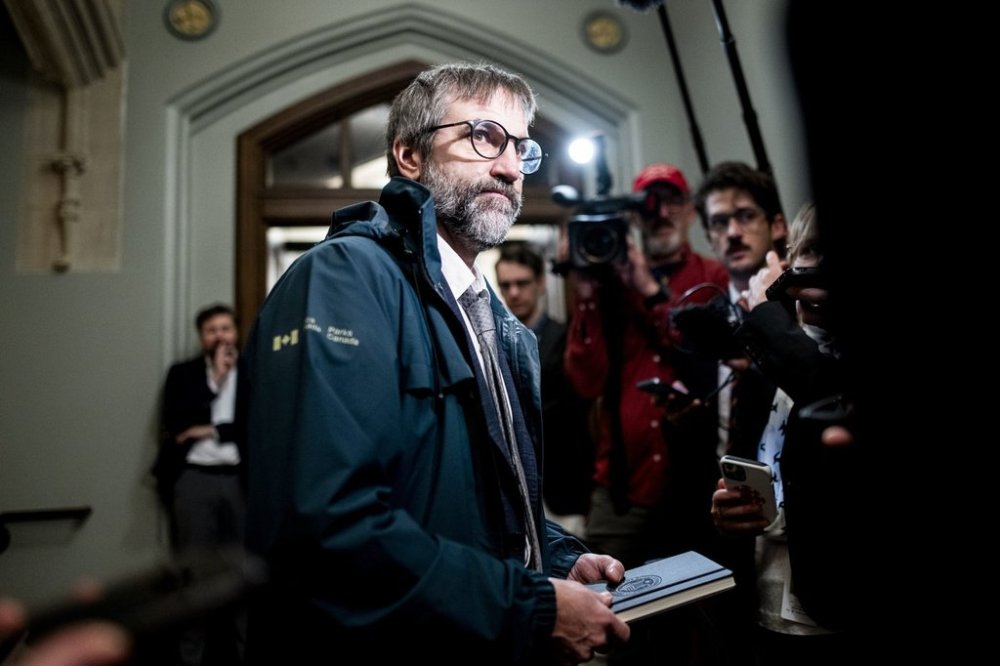
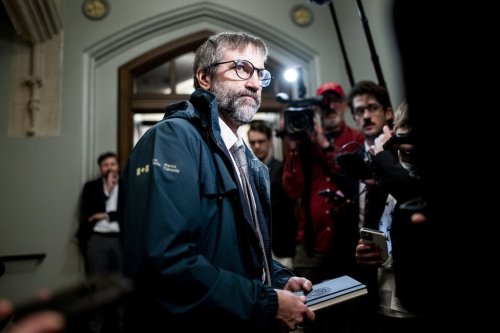
Minister of Canadian Identity and Culture Steven Guilbeault speaks to reporters ahead of a Liberal Caucus party meeting on Parliament Hill in Ottawa, on Wednesday, Oct. 8, 2025. THE CANADIAN PRESS/Spencer Colby

The Liberals promised an initial $150 million boost to the broadcaster’s annual funding during the spring election campaign. They also said they would make the CBC’s federal funding statutory, which would make it harder for future governments to eliminate it.

Guilbeault said “those additional resources will help them make sure that Canadians have access to more information, non-biased information, and more local news across the country.”

CBC president Marie-Philippe Bouchard told a Senate committee Tuesday morning she does not know what the budget has in store for the CBC.

Sen. Donna Dasko asked Bouchard about the prospect of a funding increase, or of having to make cuts in response to a government directive to trim program spending by 15 per cent.

Bouchard said the CBC has flexibility either way.

“Our strategy is really like an accordion,” she responded. “Depending on whether or not we get more funding or we are asked to reduce our dependency on the (parliamentary) appropriation, we will make those decisions based on those priorities.”

Bouchard said she has been given “no assurances of one or another. This is all cabinet secret at this point.”

The public broadcaster has laid out a strategy to expand its audience by reaching out to children and youth, newcomers and non-users or dissatisfied users. Bouchard has said that means a new focus on rural areas and Western Canada through a larger on-the-ground journalistic presence.

The strategy says the CBC intends to “fund additional coverage and hire sufficient journalists” to cover 15 to 20 smaller communities.

A CBC spokesperson later told The Canadian Press the broadcaster had identified the markets where it wants to expand news coverage, and provided a list of 20 communities with populations of 50,000 that are either not served or are underserved by the CBC.

The list included only four communities in Western Canada — three in British Columbia and one in Alberta. No communities from either Saskatchewan or Manitoba made the list.

When asked about the lack of Western Canadian locations on the list, CBC spokesperson Leon Mar said the broadcaster already announced last month it was hiring new journalists in Western Canada, including six in British Columbia, six in Alberta, two in Saskatchewan and one in Manitoba.

Mar also said the list is made up of communities with more than 50,000 people that do not have CBC or Radio-Canada staff “on the ground.” He said the list is not the final word on where the broadcaster will extend its coverage.

In a followup email, Mar said no final decisions have been made yet and the CBC may expand to those communities or others that are not listed, including some in provinces that are not on the list.

This report by The Canadian Press was first published Oct. 22, 2025.

Report Error Submit a Tip

More Stories

Seven years sought for serial harasser

Dean Pritchard 5 minute read Preview

Seven years sought for serial harasser

Dean Pritchard 5 minute read Yesterday at 2:01 AM CDT

Alexander Beaton finished serving a two-year jail sentence for criminally harassing six women and didn’t last two days in the community before he was back at it, sending unwanted obscene messages and videos to a dozen women.

Now prosecutors are seeking a seven-year prison sentence for the 30-year-old Winnipeg man, whose latest string of victims includes a police officer who investigated his earlier crimes.

“He essentially continued (offending) unabated,” Crown attorney Brett Rach told provincial court Judge Malcolm McDonald at a sentencing hearing Friday. “It caused more than a nuisance to these victims — it caused them to fear for their safety.”

Beaton pleaded guilty to 14 charges of criminal harassment, sending indecent communications and breaching court orders for a campaign of harassment waged between 2015 and 2025.

Read
Yesterday at 2:01 AM CDT

Wind and batteries the best bet

James Wilt 5 minute read Preview

Wind and batteries the best bet

James Wilt 5 minute read 2:01 AM CDT

For years, Manitoba Hydro has claimed that we can’t rely on wind turbines during multi-day or even multi-week cold snaps. Although turbines can be equipped with cold-weather packages to operate down to –30 C, as at the St. Leon and St. Joseph wind farms, Hydro routinely warns of the possibility of a lengthy winter wind drought at the same time as electricity use peaks due to high heating demand.

This concern is largely why Hydro is pushing to build a 750 MW fossil gas-fired power plant in Brandon, rather than building more wind farms.

But new analysis by Alexander Hogeveen Rutter, a former energy modeller for Manitoba Hydro, shows that wind-generation reliability well exceeds assumptions and that, if combined with battery energy storage, it could meet even the most bullish load growth forecasts. (These findings were presented to the Public Utilities Board on Aug. 31, and the full report can be found on Climate Action Team Manitoba’s website.)

Hydro’s low estimate of wind generation stems from its erroneous assumption that all new wind farms will be built in the same locations as Manitoba’s two existing wind farms (St. Leon and St. Joseph). Because these two wind farms are only 100 kilometres apart, they have highly correlated wind speeds; when wind conditions are low at one site, they likely are at the other as well. This is not how new wind farms will be built in Manitoba. Instead, they will be located in different areas and use much taller turbines with higher generation potential than the existing wind farms.

Read
2:01 AM CDT

Guilbeault praises CBC’s plans to boost local news coverage

Anja Karadeglija, The Canadian Press 4 minute read Preview

Guilbeault praises CBC’s plans to boost local news coverage

Anja Karadeglija, The Canadian Press 4 minute read Tuesday, Oct. 21, 2025

OTTAWA - Culture Minister Steven Guilbeault is praising CBC/Radio-Canada’s plans to increase local news coverage as part of its new five-year strategy.

"I think there's lots of really good elements in this plan. I really like the fact that the public broadcaster wants to invest more in local news across the country," he told reporters on Parliament Hill Tuesday.

While Guilbeault pointed to the Liberals’ promised funding increase for the CBC, he would not say whether it will be included in the upcoming federal budget.

The Liberals promised an initial $150 million boost to the broadcaster's annual funding during the spring election campaign. They also said they would make the CBC’s federal funding statutory, which would make it harder for future governments to eliminate it.

Read
Tuesday, Oct. 21, 2025

Nothing wrong with planting trees, but it won’t get province very far on path to net zero

Dan Lett 5 minute read Preview

Nothing wrong with planting trees, but it won’t get province very far on path to net zero

Dan Lett 5 minute read Monday, Sep. 14, 2026

Manitoba’s new plan to achieve net zero carbon emissions by 2050 is a lot of things. It’s detailed. It’s certainly comprehensive in scope. But when it is all said and done, it is still very much a work in progress.

Read
Monday, Sep. 14, 2026

Food literacy curriculum on the menu

Maggie Macintosh 5 minute read Preview

Food literacy curriculum on the menu

Maggie Macintosh 5 minute read 2:01 AM CDT

Manitoba has a new recipe for health class and “food literacy” is a key ingredient.

The in-class portion of phys-ed has historically involved lessons about puberty, the risks of consuming drugs and dissecting Canada’s food guide.

A new pilot program asks teachers to expand their nutrition units and include in-depth discussions about how everything from diet culture to food insecurity affects eating habits.

“This is really moving beyond a conception of food as only fuel, where you just boil down food to its calories, its vitamins,” said Sarah Elvins, a food historian at the University of Manitoba who researches popular culture and marketing.

Read
2:01 AM CDT

Winnipeg, police and downtown crime

Editorial 4 minute read Preview

Winnipeg, police and downtown crime

Editorial 4 minute read 2:01 AM CDT

A safer downtown is not much use if people are still afraid to walk there.

That is the uncomfortable message from Winnipeg’s latest police citizen survey, and one city council should take seriously.

Downtown crime has fallen this year, according to the most recent police statistics. Violent crime is down even more. But for most Winnipeggers, the downtown still feels like a place to avoid, particularly after dark.

Only 44 per cent of survey respondents said they feel very or reasonably safe walking alone downtown during the day. At night, that number plunges to just eight per cent. Among women, it is an appalling three per cent, compared with 14 per cent of men.

Read
2:01 AM CDT