Mystery ingredient / Water caltrop
Advertisement
Read this article for free:
or
Already have an account? Log in here »
To continue reading, please subscribe:

Digital Subscription
One year of digital access for only $205*
- Enjoy unlimited reading on winnipegfreepress.com
- Read the E-Edition, our digital replica newspaper
- Access News Break, our award-winning app
- Play interactive puzzles
*First annual payment billed as $205.00 + GST for one year. This annual subscription will automatically renew at $233.00 + GST every 52 weeks (10% off the regular annual price of $259.35). Offer available to new and qualified returning subscribers only. Cancel any time.
To continue reading, please subscribe:
Add Free Press access to your Brandon Sun subscription for only an additional
$1 for the first 4 weeks*
- Enjoy unlimited reading on winnipegfreepress.com
- Read the E-Edition, our digital replica newspaper
- Access News Break, our award-winning app
- Play interactive puzzles
*Your next Brandon Sun subscription payment will increase by $1.00 and you will be charged $17.95 plus GST for four weeks. After four weeks, your payment will increase to $24.95 plus GST every four weeks.
Read unlimited articles for free today:
or
Already have an account? Log in here »
Hey there, time traveller!
This article was published 02/10/2010 (5804 days ago), so information in it may no longer be current.
What is it?
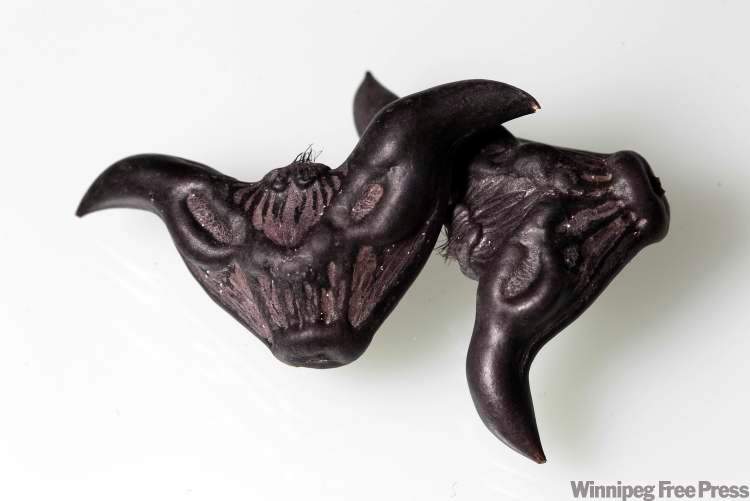
The bizarre, ornately shaped fruit or “corm” (the swollen tip of an underground stem) of a water plant that grows in freshwater ponds and streams in Indonesia, southern China, Japan, Italy, and tropical America. The water caltrop is also known as the European water chestnut, buffalo-head fruit, bull nut and Jesuit’s nut. Not to be confused with the familiar sweet-and-crunchy Chinese water chestnut, the water caltrop is actually toxic if eaten raw.
Looks like:
A tiny horned bull’s head, or a bat. It looks like it would make a cool ornamental clasp for a bolo tie. The hard-shelled, ebony black fruit is named after the caltrop, a vicious medieval weapon with two or more sharp nails or spines, arranged in such a manner that one is always pointed upward from a stable base — to slow down the advance of war elephants, horses, humans, or, in modern times, vehicles.
Tastes like:
A starchier, blander, nuttier version of the water chestnut. Although the Chinese and European water caltrop are not related, they are similar in flavour and appearance (once you get through the caltrop’s tough outer wall).

Used in:
After you shell water caltrops, you’ll need to steam or boil them before you can eat them,] as they contain harmful toxins in their raw state. The fruits can also be sautéed with rice and vegetables. Again, do NOT eat them raw.
Found at:
Lucky Supermarket, 1051 Winnipeg Ave.