Two takes on traditional stuffed Ukrainian treats

Advertisement
Read this article for free:
or
Already have an account? Log in here »
To continue reading, please subscribe:

Digital Subscription
One year of digital access for only $205*
- Enjoy unlimited reading on winnipegfreepress.com
- Read the E-Edition, our digital replica newspaper
- Access News Break, our award-winning app
- Play interactive puzzles
*First annual payment billed as $205.00 + GST for one year. This annual subscription will automatically renew at $233.00 + GST every 52 weeks (10% off the regular annual price of $259.35). Offer available to new and qualified returning subscribers only. Cancel any time.
To continue reading, please subscribe:
Add Free Press access to your Brandon Sun subscription for only an additional
$1 for the first 4 weeks*
- Enjoy unlimited reading on winnipegfreepress.com
- Read the E-Edition, our digital replica newspaper
- Access News Break, our award-winning app
- Play interactive puzzles
*Your next Brandon Sun subscription payment will increase by $1.00 and you will be charged $17.95 plus GST for four weeks. After four weeks, your payment will increase to $24.95 plus GST every four weeks.
Read unlimited articles for free today:
or
Already have an account? Log in here »
Hey there, time traveller!
This article was published 12/06/2013 (4859 days ago), so information in it may no longer be current.
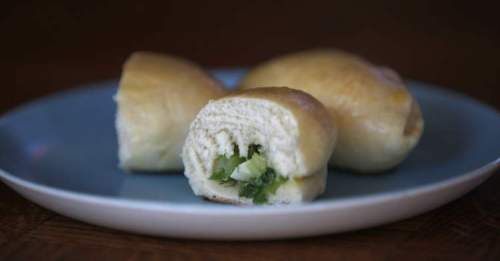
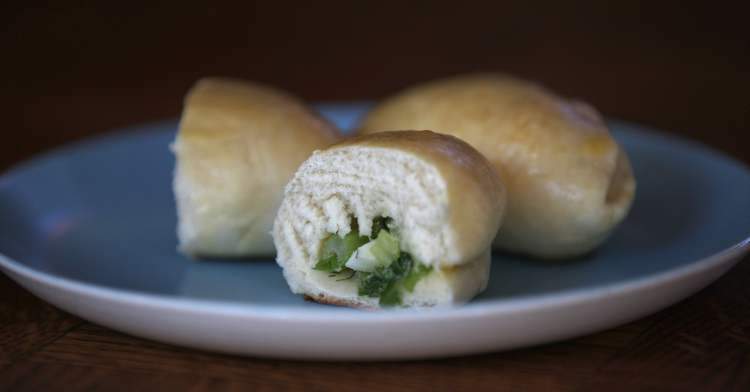
This week we have another instalment for a reader named Jean who was looking for traditional Ukrainian recipes. Thanks to Johanne O’Brien, Aster Hansen of St. Adolphe and Linda Snider of Glenboro for their recipes for perishke (also spelt perishky, pyrizhky and quite a few other ways), basically little buns baked with a variety of fillings. Thanks also to Doreen Maryk, who sent in recipes for several fillings and two kinds of dough, one the well-known yeast dough and the other a less common variant, a rich shortcrust pastry.
I mentioned last week that when making these traditional dishes, I often wish I had someone’s grandmother to help me along. Irene Ellis, who lives in Toronto but who grew up in Winnipeg, wrote to tell me that when grandmothers aren’t available, there is a book that will help. Traditional Ukrainian Cookery by Savella Stechishin is published in Winnipeg by Trident Press.
“This is the cookbook that Ukrainian kids asked for when they grew up and moved away from home, and knew that they would be cooking the traditional goodies on their own,” writes Irene.
This week we have an interesting request. Jillian Barrott is looking for a recipe for crunchy cinnamon buns, one of her boyfriend’s childhood favourites. According to Jillian, Einfeld’s Bakery at Victoria Beach sells a cinnamon bun that is relatively flat with a crunchy sugar topping and a texture closer to a Danish pastry. Perhaps some Victoria Beach regulars can help. (And I was just getting the hang of the soft, fluffy kind and the gooey, caramelly version.) If you can help with a recipe request, have your own request, or a favourite recipe you’d like to share, send an email to recipeswap@freepress.mb.ca, fax it to 697-7412, or write to Recipe Swap, c/o Alison Gillmor, Winnipeg Free Press, 1355 Mountain Ave. Winnipeg, MB, R2X 3B6. Please include your first and last name, address and telephone number.
Yeast Dough Perishke With Green Onion Filling
5 ml (1 tsp) granulated sugar
60 ml (1/4 cup) lukewarm water (38-43 C or 100-110 F)
1 pkg. dry active yeast (2 1/4 tsp or 8 g or 11 ml)
250 ml (1 cup) scalded milk
60 ml (1/4 cup) butter or shortening or oil
2 eggs, beaten
7 ml (1 1/2 tsp) salt
60 ml (1/4 cup) granulated sugar
1,125 to 1,250 ml (4 1/2 to 5 cups) sifted all-purpose flour
Dissolve the sugar in the lukewarm water, sprinkle the yeast over the water and let stand for 10 minutes. To the hot scalded milk, add the butter; stir and cool to lukewarm. Add the eggs, salt, sugar and yeast mixture. Mix in enough flour to make a medium-soft dough as for bread. Knead on a floured board until smooth and satiny, about 5-10 minutes. Return to the bowl, cover, and let rise until double in bulk. Punch down, knead a few times in the bowl, and let rise again. To make perishke, cut off small egg-sized pieces of dough, flatten each into a circle or roll out 6 mm (1/4 in) thick. Place a spoonful of your favourite filling in the centre, bring the edges together, and press to seal securely. (You can wet the edges with a bit of flour mixed with water for a better seal.) All edges must be free of filling. Shape into an oblong with a plump centre and tapering ends. This is the traditional shape of perishke.
As an alternative method, the dough may be rolled 6 mm (1/4 inch) thick, cut into squares, filled, and sealed as directed.
Place, sealed side down, on a greased baking sheet, spacing them 2.5-4 cm (1-1 1/2 inch) apart. Cover and let rise in a warm place until light, for about 1 hour.
Brush with a beaten egg diluted with 30 ml (2 tbsp) water or milk. Bake at 190 C (375 F) for 30-35 minutes, depending on size.
Green onion filling:
900 ml (4 cups) green onions, cut fine
45 ml (3 tbsp) butter
125 ml (1/2 cup) chopped dill
3 to 4 hard-cooked eggs, chopped fine
Salt and pepper
In a medium pan over medium heat, cook the onions in the butter until wilted. Stir in the dill and cook for 1 minute. Remove the onions from heat, add the eggs, and season to taste with salt and pepper. Cool before using. Use this filling with yeast-raised dough.
Tester’s notes: These were really tasty, but I struggled a bit, definitely needing a grandmother’s advice. I found it hard to get the dough thin enough — it tended to shrink back and puff up. Finding the right balance of filling — enough to be tasty, not so much that it leaked — was also tricky. And my perishke would look completely sealed and safe even when they weren’t. Several opened up while baking, though this wasn’t a kitchen tragedy. They still tasted good; they just looked a bit odd.
Shortcrust Pastry Perishke With Mushroom Filling
500 ml (2 cups) sifted all-purpose flour
2 ml (1/2 tsp) salt
155 ml (1/2 cup plus 2 tbsp) butter or shortening
1 egg yolk
10 ml (2 tsp) lemon juice
45-60 ml (3 to 4 tbsp) ice water
All the ingredients should be very cold. In medium bowl, sift the flour with the salt. Cut in the butter or shortening with a pastry blender until the mixture resembles coarse meal. Combine the egg yolk with the lemon juice and water. Sprinkle the liquid over the flour and mix lightly until the dough holds together. Chill thoroughly. Roll the dough 6 mm (1/4 inch) thick and cut into squares or rectangles of the desired size. Place a portion of the filling in the centre, bring the edges together, and seal in a neat ridge along the centre. Place, sealed side up, on a greased baking sheet. Brush with a beaten egg diluted with 30 ml (2 tbsp) water or milk. Bake in a 205 C (400 F) oven for 15-20 minutes.
Mushroom Filling:
454 g (1 lb) mushrooms
1/2 small onion, chopped fine
30 ml (2 tbsp) butter
30 ml (2 tbsp) sour cream
125 ml (1/2 cup) soft bread crumbs
7 ml (1 1/2 tsp) chopped dill
1 hard-cooked egg, chopped fine
Salt and pepper

Clean the mushrooms. (When using wild mushrooms, cook them in boiling water for 5 minutes and then drain thoroughly. Cultivated mushrooms need not be boiled.) Chop the mushrooms very fine. In a large pan over medium heat, cook the onion in the butter until tender. Add the mushrooms and cream; cook over low heat for 15 minutes. Stir in the remaining ingredients. Season to taste and cool the mixture. If the filling is crumbly, add a raw egg. If the filling is too wet, add more bread crumbs. This filling is good with a shortcrust pastry.
Tester’s notes: The use of pastry may be unusual — it may even be heretical — but it certainly tastes good here, with a rich, flaky dough enclosing a creamy filling. While I found the shortcrust dough easier to make than the yeast dough, it was a little fiddly to work with.
What seems at first like a massive mountain of raw mushrooms does cook down to a smaller amount, but I still ended up with more filling than I needed for the pastry on hand. You might want to double the pastry recipe or decrease the amounts in the mushroom filling.
Studying at the University of Winnipeg and later Toronto’s York University, Alison Gillmor planned to become an art historian. She ended up catching the journalism bug when she started as visual arts reviewer at the Winnipeg Free Press in 1992.
Our newsroom depends on a growing audience of readers to power our journalism. If you are not a paid reader, please consider becoming a subscriber.
Our newsroom depends on its audience of readers to power our journalism. Thank you for your support.
Studying at the University of Winnipeg and later Toronto’s York University, Alison Gillmor planned to become an art historian. She ended up catching the journalism bug when she started as visual arts reviewer at the Winnipeg Free Press in 1992.
Our newsroom depends on a growing audience of readers to power our journalism. If you are not a paid reader, please consider becoming a subscriber.
Our newsroom depends on its audience of readers to power our journalism. Thank you for your support.
Advertisement Advertise With Us
Advertisement Advertise With Us
History
Updated on Wednesday, June 12, 2013 9:52 AM CDT: adds photo