Smoking foods simply in our nature
Advertisement
Read this article for free:
or
Already have an account? Log in here »
To continue reading, please subscribe:

Digital Subscription
One year of digital access for only $205*
- Enjoy unlimited reading on winnipegfreepress.com
- Read the E-Edition, our digital replica newspaper
- Access News Break, our award-winning app
- Play interactive puzzles
*First annual payment billed as $205.00 + GST for one year. This annual subscription will automatically renew at $233.00 + GST every 52 weeks (10% off the regular annual price of $259.35). Offer available to new and qualified returning subscribers only. Cancel any time.
To continue reading, please subscribe:
Add Free Press access to your Brandon Sun subscription for only an additional
$1 for the first 4 weeks*
- Enjoy unlimited reading on winnipegfreepress.com
- Read the E-Edition, our digital replica newspaper
- Access News Break, our award-winning app
- Play interactive puzzles
*Your next Brandon Sun subscription payment will increase by $1.00 and you will be charged $17.95 plus GST for four weeks. After four weeks, your payment will increase to $24.95 plus GST every four weeks.
Read unlimited articles for free today:
or
Already have an account? Log in here »
Hey there, time traveller!
This article was published 30/05/2015 (4153 days ago), so information in it may no longer be current.
When I fire up a smoker, the reaction is always the same. The neighbours emerge from their homes, noses tilted in the air.
“Gosh, that smells so good!” they say.
We can blame our ancestors for our universally positive reaction to smoked food.
“In evolutionary terms, we all started cooking with fire,” Marcia Pelchat, a sensory scientist at the Monell Chemical Senses Center in Philadelphia, told the Washington Post last year.
“That smoky smell is a really strong stimulus.”
It’s all based on science. Flavour is made up of three elements: taste, physical stimulation and smell. It’s the latter one that’s strongest, because the sense is buried deep in a part of our brain that houses emotion and long-term memories.
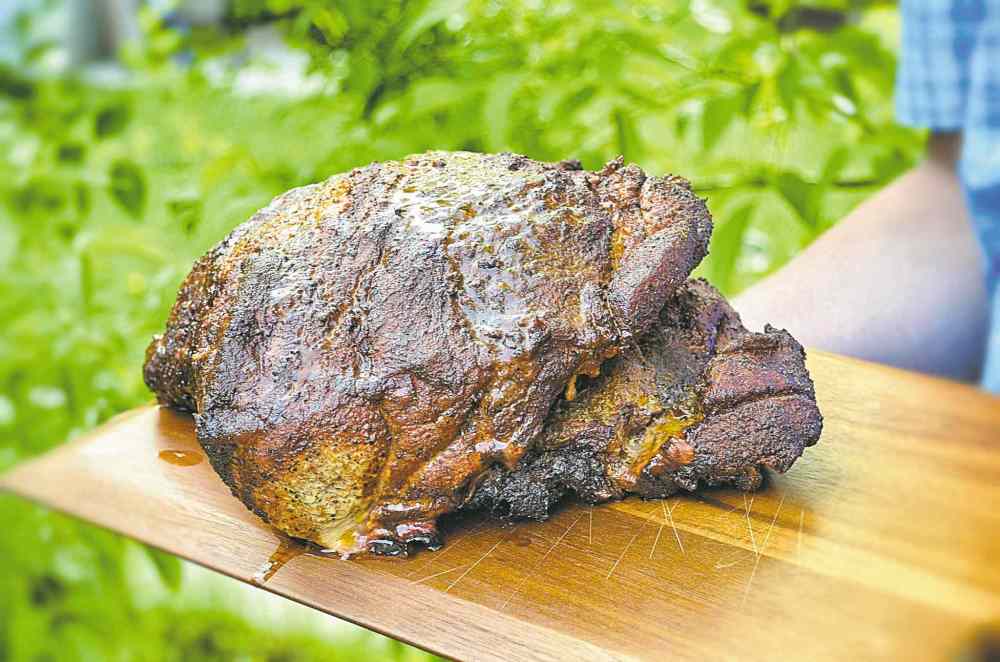
Physical stimulation is also there with smoked foods. Just think about the crunchy bark on a pork butt that’s been slathered with a rub and smoked for nine hours.
As far as taste goes, smoked foods always include hints of sweetness and bitterness — and that’s why we love them.
Whether you’re a novice or a veteran, smoking is about patience. It’s not uncommon to smoke a chunky cut of meat for eight, 10 or 12 hours. You likely won’t smoke anything for less than two hours. Again, it’s about science. Low temperatures (usually between 93 C and 104 C) and long cooking times allow connective tissue in the meat to break down and convert into sugar (especially in pork butt or beef brisket).
If you’re just getting into the smoking game, decide on what kind of fuel you want to use. There’s charcoal (or charwood), propane, wood pellets and electricity.
Electric and propane models require the least amount of babysitting, although every smoking project needs at least a minimal amount of supervision. An electric or propane smoker means you can set it, forget it and end up with an excellent product.
If you want to be a purist, charcoal or charwood is the choice, but keep in mind you’ll be spending a significant amount of time getting to know your smoker and its quirks. If you want to test your skills and patience and have a lot more options of what you can do with your smoker, a charcoal model is probably right for you.

A pork butt (sometimes called a shoulder) is arguably the most forgiving cut when it comes to smoking. Plenty of fat means you’ll end up with a flavourful end product, even if you make a few errors along the way.
Give yourself a good 10 hours before serving time. Pulled pork on a bun is a popular choice, but it’s also great on tacos with grilled pineapple, or on pizza, with barbecue sauce as the base instead of tomato sauce.
Butt or shoulder? It’s the same cut, but with two different names. Shoulder, of course, makes sense because it comes from the front part of the hog. Butt takes a little more explaining. The term hails from old English and loosely refers to the widest part of an animal. On a hog, that’s the shoulder area.
Shel Zolkewich writes about food, travel and the outdoors when she’s not eating, on the road or playing outside.