Lots of latkes
Classic Hanukkah staple has many variations from wherever Jews settled
Advertisement
Read this article for free:
or
Already have an account? Log in here »
To continue reading, please subscribe:

Digital Subscription
One year of digital access for only $205*
- Enjoy unlimited reading on winnipegfreepress.com
- Read the E-Edition, our digital replica newspaper
- Access News Break, our award-winning app
- Play interactive puzzles
*First annual payment billed as $205.00 + GST for one year. This annual subscription will automatically renew at $233.00 + GST every 52 weeks (10% off the regular annual price of $259.35). Offer available to new and qualified returning subscribers only. Cancel any time.
To continue reading, please subscribe:
Add Free Press access to your Brandon Sun subscription for only an additional
$1 for the first 4 weeks*
- Enjoy unlimited reading on winnipegfreepress.com
- Read the E-Edition, our digital replica newspaper
- Access News Break, our award-winning app
- Play interactive puzzles
*Your next Brandon Sun subscription payment will increase by $1.00 and you will be charged $17.95 plus GST for four weeks. After four weeks, your payment will increase to $24.95 plus GST every four weeks.
Read unlimited articles for free today:
or
Already have an account? Log in here »
Hey there, time traveller!
This article was published 24/12/2016 (3531 days ago), so information in it may no longer be current.
I like latkes. All kinds: starchy potato, sweet potato, zucchini, cheese, apple, leek, even vegan and gluten-free ones. But for too long, Hanukkah has been all about the latkes — and I’m just about over it.
Sure, there are the games of dreidel, the chocolate gelt and sugary doughnuts with the fancy Hebrew name sufganiyot. But it’s almost as though guests won’t even know they’ve arrived at a Hanukkah party — the first of the Jewish holiday’s eight nights falls on Christmas Eve this year — unless they’re greeted by that telltale oily fried smell. From synagogue preschool parties to an annual celebration at the White House, the potato pancake is the guest of honour.
At their best, latkes are a crunchy, savoury delight, just snatched from hot oil, perfectly golden brown and ready to be topped with sour cream or applesauce or, even better, eaten straight up. But even if a distant cousin from the supermarket freezer case shows up, a bit soggy and barely warm, it doesn’t seem to matter. People feel compelled to consume.
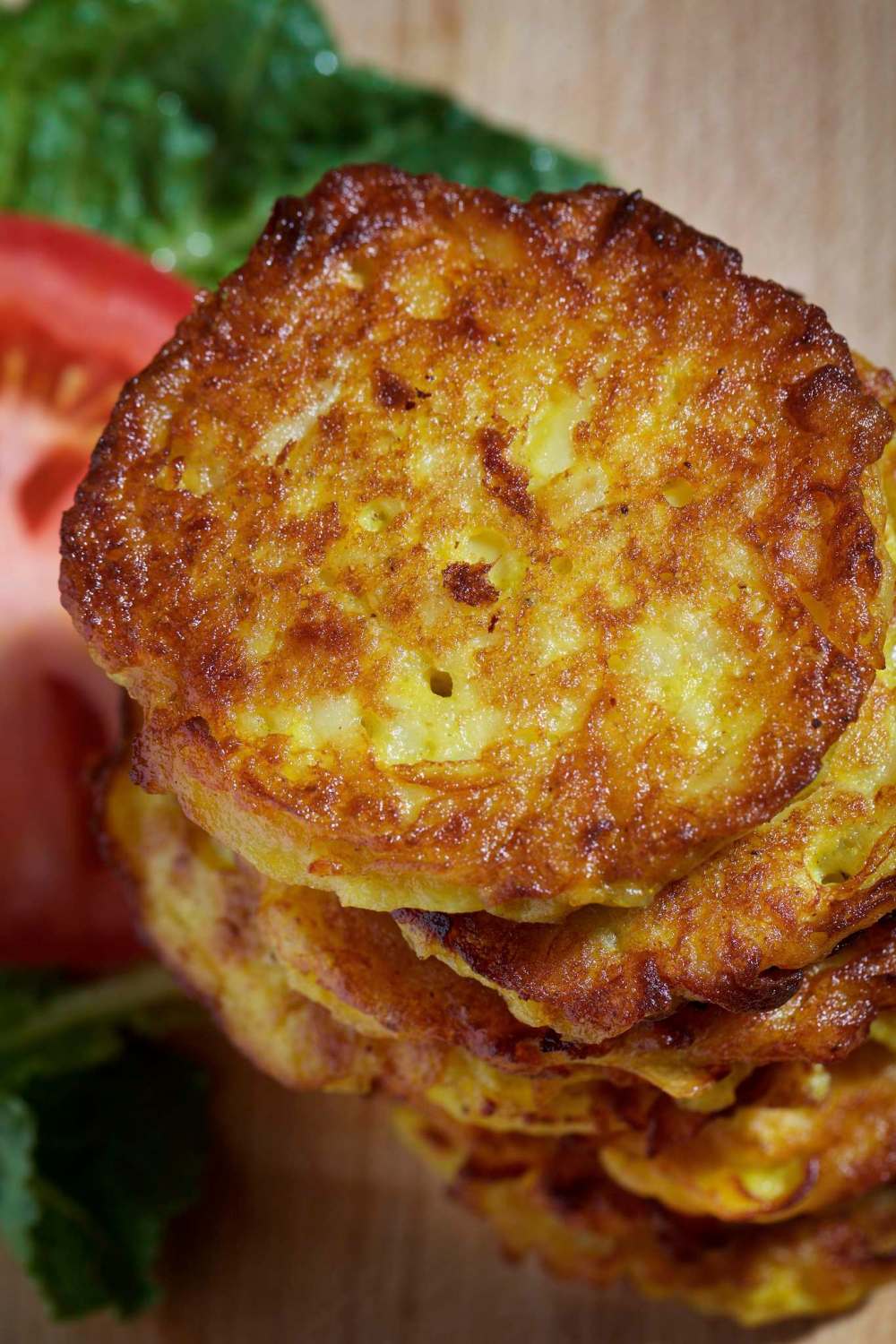
Such iconic food status is hard to dismiss — not that I want to. But latkes aren’t the only oil-involved foods appropriate for the holiday. How did they take over Hanukkah, anyway?
Well, there’s nothing like a story from biblical times to give us permission to eat fried food. Hanukkah commemorates the victory in 165 BC of the rebellious Jewish Maccabees over the Syrian Greeks. Once back in control, the victors were able to clean up and rededicate the Temple in Jerusalem. As the story goes, they needed purified sacred olive oil to light the lamps in the Temple but found only enough for one day rather than the eight days needed to purify more oil. By a miracle, that little bit of oil lasted until more could be made. We eat foods with oil in a starring role during this Festival of Lights, as Hanukkah is also known.
There’s another, lesser-known part of the Hanukkah story. Years before the Maccabean victory, a fierce woman named Judith who understood the power of food and drink saved her village by plying the invading general with salty cheese, which then made him thirsty for wine. Once he fell into a drunken sleep, Judith beheaded him with his own sword.
A good story, but how does it fit in the story of Hanukkah and latkes?
For many centuries, Hanukkah was a minor holiday, with no written history of traditional foods. Then, in the 14th century, we find writings in Italy about pancakes for the holiday made from ricotta cheese and fried in oil, an ideal dish combining the symbolic foods from the two stories associated with the holiday.
Cheese pancakes for Hanukkah remained popular in Europe for a few more centuries, with Eastern European, or Ashkenazic, Jews also serving other dairy dishes such as cheesecake, sweet noodle kugels and cheese dumplings or fritters. In the 1850s, there were massive crop failures in the heart of the Ashkenazic world: Poland, Ukraine and the Pale of Settlement, territories in czarist Russia where Jews were allowed to live. To survive, the people planted cheap, easy-to-grow potatoes. Guess what they fried up for Hanukkah at that point? Yup, and with a couple of million Eastern European Jews coming to North America beginning around the same time until the 1920s — well, you can figure out how it was the latke’s big break into a new market.
Truth is, the latke is part of a wide variety of traditional potato pancakes found in nearly every European cuisine. However, it’s a surprise to many that Sephardic Jewish cuisines from the Mediterranean and the Middle East also have their own versions of potato pancakes. Most of those are served year-round as well as at Hanukkah, which remains a minor holiday in many Jewish communities, away from the increased “competition” with Christmas found in North America and Europe.
Potomac, Md., resident Ellie Dayan traces her mother’s family back over 2,500 years in Persia (now Iran). Dayan was born there, coming to the U.S. in 1996 after her son was born. For Hanukkah, she makes kookoo sib zamini, the traditional Persian version of a potato pancake. Unlike for Ashkenazic latkes, the potatoes are cooked before being grated, which makes for less time in the oil, and more eggs are used in proportion to the potato. The pancakes are served with lettuce, sliced tomatoes, pickles and often fresh baguette.
Jews from Iraq have a similar dish, explains Rabbi Haim Ovadia of Magen David Sephardic Congregation in Rockville, Md., except the cooked potatoes are mashed with onions, which sometimes are fried first. Like the Persian version, the Iraqi patty leans toward an omelet or frittata.
Franz Afraim Katzir, founding director of SHin-DC, which stands for Sephardic Heritage in the District of Columbia, makes the Syrian version using the familiar grated raw potato and onion. Called ejjeh batata, these pancakes have the distinctly Syrian flavors of allspice and Aleppo pepper. They are eaten stuffed in a pita with raw and pickled vegetables.
If you’re looking for alternatives to latkes, it’s easy to find your way to some versions of syrup-soaked, deep fried dough or fritters perfect for Hanukkah. The batter can be dropped into hot oil in clumps or thinned out and squeezed into shapes, like the spirals of Iraqi zangoola or the fried squiggles of Syrian zalabieh — both thinner, crisper relatives of funnel cake. Latin America has its buñuelos, India its jalebi. For Persian Jews it’s zoloobiah, while Italian Jews serve anise-flavoured frittelle di Hanukkah.
Rabbi Ovadia’s wife, Edna, born in Morocco, remembers sfenj served with tea with nana (mint). Not just for Hanukkah, sfenj is a favourite year-round breakfast treat.
I inherited a taste for buñuelos from my father’s family. Sometimes called the Sephardic or Turkish beignet, the hot, fried buñuelos are dipped in honey-sugar syrup instead of getting a beignet’s dusting of confectioners’ sugar.
Expanding my horizons of Hanukkah foods even more, I realize frying isn’t required. Olive oil-poached Turkish green beans, an omelet or frittata and even a salad with olive oil dressing or a really good olive oil for dipping crusty bread could all bring welcome variety to any Hanukkah celebration. Suddenly, cheese-filled blintzes browned in some oil and butter also seem a perfect dish for this holiday.
While I am reconciled to latke love, this year I plan to invite other food friends to the party, establishing some new Hanukkah traditions with a full roster of co-stars alongside that iconic latke.
Susan Barocas, the founding director of the Jewish Food Experience, is a filmmaker, writer and cooking teacher who lives in the District of Columbia.
Persian Potato Pancakes (Kookoo Sib Zamini)
Those who know regular potato latkes will notice right away that these are different in texture and appearance, as they start with cooked potato, use more eggs and are a lovely golden colour inside.
Instead of making individual potato pancakes, you can spoon the whole batch into a single layer in the skillet, creating one large rosti-type pancake.
Serve with dill pickles, tomato slices and lettuce, or serve with baguette slices for sandwich-making.
Make Ahead: The potatoes can be cooked, cooled, grated, covered and refrigerated a day or two in advance.
Tested size: 4-6 servings; makes about thirty 7.5-cm (3-inch) pancakes
900 g (2 lbs) red potatoes
Sea salt
15 ml (1 tbsp) flour
5 ml (1 tsp) baking powder
2.5 ml (1/2 tsp) ground turmeric
Freshly ground black pepper
5 large eggs, beaten
90 ml (6 tbsp) vegetable oil
Scrub the potatoes. If they vary in size, cut the larger ones in half. Put all the potatoes in a large pot with a couple pinches of salt and cover with cool water by at least an inch. Bring to a boil over high heat, then reduce the heat to medium-low and cook for 30 to 40 minutes (depending on their size), until the potatoes are barely fork-tender. Drain and place in a bowl of cold water to cool completely.
Drain the potatoes and discard the potato skins. Use the large-holed side of a box grater to grate the cooled potatoes.

Whisk together the flour, baking powder and turmeric in a large mixing bowl. Season generously with salt and pepper. Add the grated potatoes and beaten eggs, mixing until well incorporated.
Heat the oil in a large skillet over medium heat. Use your hands to form oval or round patties, using all the potato mixture. Once the oil shimmers, add several patties to the pan, gently flattening them with the back of a wooden spoon. Cook for about 8 minutes, turning them once, until both sides are a rich golden brown.
Serve warm.
Adapted from Potomac, Md., resident Ellie Dayan
— Washington Post
The Free Press is committed to covering faith in Manitoba through our Religion in the News project. This reporting continues because readers like you step forward to fund it.
Donate now to support our reporting on religion.
Your donation is eligible for a charitable tax receipt.
BECOME A FAITH JOURNALISM SUPPORTER
The Free Press acknowledges the financial support it receives from members of the city’s faith community, which makes our coverage of religion possible.