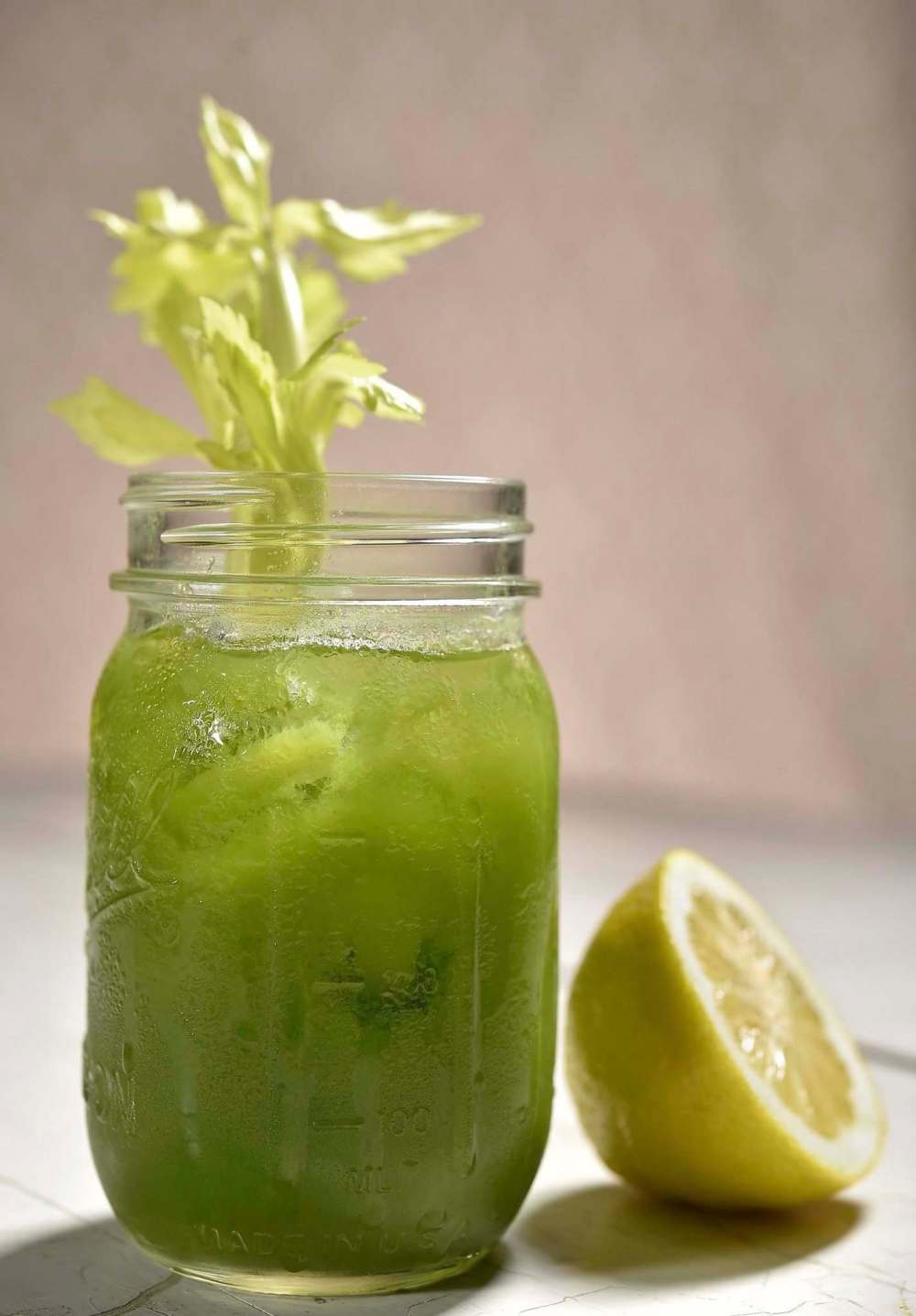
Parsley more than diner-dish garnish
Advertisement
Read this article for free:
or
Already have an account? Log in here »
To continue reading, please subscribe:

Digital Subscription
One year of digital access for only $205*
- Enjoy unlimited reading on winnipegfreepress.com
- Read the E-Edition, our digital replica newspaper
- Access News Break, our award-winning app
- Play interactive puzzles
*First annual payment billed as $205.00 + GST for one year. This annual subscription will automatically renew at $233.00 + GST every 52 weeks (10% off the regular annual price of $259.35). Offer available to new and qualified returning subscribers only. Cancel any time.
To continue reading, please subscribe:
Add Free Press access to your Brandon Sun subscription for only an additional
$1 for the first 4 weeks*
- Enjoy unlimited reading on winnipegfreepress.com
- Read the E-Edition, our digital replica newspaper
- Access News Break, our award-winning app
- Play interactive puzzles
*Your next Brandon Sun subscription payment will increase by $1.00 and you will be charged $17.95 plus GST for four weeks. After four weeks, your payment will increase to $24.95 plus GST every four weeks.
Read unlimited articles for free today:
or
Already have an account? Log in here »
Hey there, time traveller!
This article was published 09/06/2018 (2996 days ago), so information in it may no longer be current.
Poor parsley. Its songmates sage, rosemary and thyme are all so much more evocative — each one brings a scent, even a feeling, to mind, while the ear just elides parsley. And who doesn’t love basil? Even cilantro inspires fear and loathing, at least. Parsley’s barely thought of as a herb at all.
In American cooking, parsley’s most frequent role is as an absolutely expendable extra — a mere garnish. Picture any of millions of diner dishes with a sprig of parsley, valiantly curly and bright, consigned to a corner with an equally arbitrary half-moon of orange. You might eat the orange slice; you definitely don’t touch the parsley.
The party that is herbes de Provence does not invite parsley in, though this is understandable, because dried parsley is a dud. Dried parsley is definitely part of parsley’s overall PR problem: compared to how other, admittedly more potent (you could say pushy) herbs smell and taste when dried, parsley’s like dusty leaf-particles of why-bother. (Check the aroma and taste of dried versus fresh rosemary, then parsley, and you’ll see. Never mind; don’t: you’ll just end up with dried parsley sitting there sadly among your spices until you throw it away.)
Poor unsung parsley didn’t make the cut for James Beard’s six essential herbs in his essential-reading Beard on Food from 1974, though he does acknowledge its ubiquity in an offhand, backhanded way: “Parsley, too, of course, but that is so universal it goes without saying.”
But it needs saying. The goddesses of cooking, Julia Child and Marcella Hazan, likewise recommend its use everywhere, yet do not deign to discuss it, as far as I can find (and Hazan, especially, has unminced words on everything).
The handful of chopped parsley that’s supposed to be flung over so many dishes at the end seemed like such an afterthought to me that, for a long time, I just blithely skipped it. Then a couple summers ago, I happened to grab two Italian flat-leaf parsley starts and stuck them in two pots on the balcony. They went nuts! I started putting parsley in and around and over everything. And parsley was good! Parsley was beautiful! Parsley made life better!
Some say Italian parsley tastes less bitter than the diner-plate curly kind, but “bitter” is such a judgmental term. Curly parsley (Petroselinum crispum var. crispum) is cute, all riled-up looking, and it stays full of lively texture in, say, a salad. Italian parsley (Petroselinum crispum var. neapolitanum) makes a more sedate confetti. Both look and smell and taste like freshness incarnate, full of verdant colour and leafy life. Use whichever! Maybe you’ll like one better! That’s your prerogative!
When you buy fresh parsley, trim the ends off the stems right when you get home, and stick it in a cup (or a pretty little vase!) of water, as you would for cut flowers. If you don’t use it all right away, change the water every day. Don’t let it go to waste. Start putting it on everything. Don’t take the simplest, loveliest things for granted.
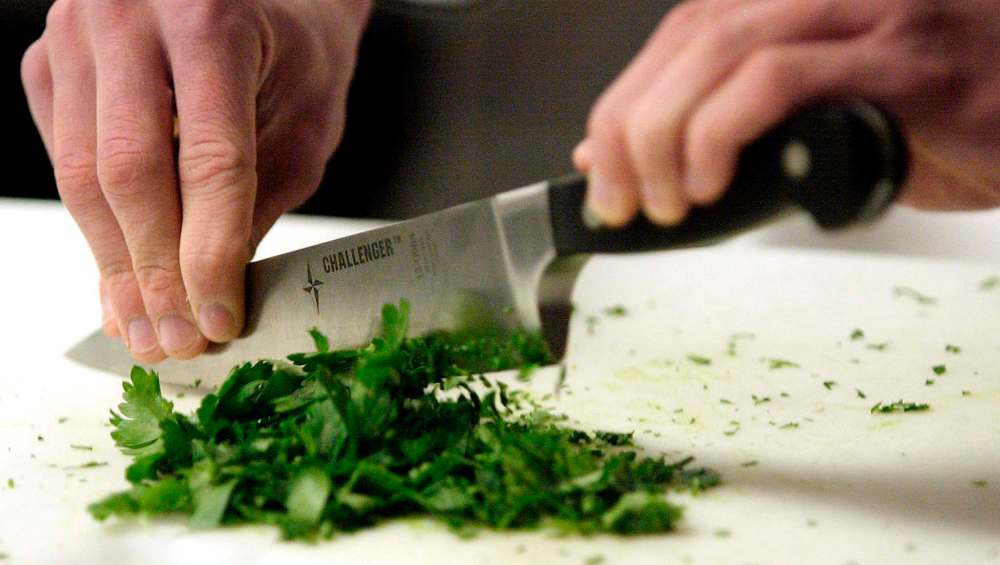
1. Put chopped parsley on everything: Don’t chop it too finely — bigger pieces are prettier and have more flavour. Throw it with abandon on top of grilled vegetables, roasted potatoes, a cold green-bean salad, stews, soups, pasta, hot or cold grain dishes like couscous or quinoa or tabbouleh or…
2. Make a super-simple parsley salad: Throw it together along the lines of the Epicurious recipe that involves just a couple-few cups of Italian parsley leaves, a couple tablespoons of extra-virgin olive oil, a teaspoon of fresh lemon juice and a little salt (or, to get fancy, substitute umeboshi vinegar for the salt).
3. Make a slightly more complicated parsley salad: Try (or make your own variation on) Alton Brown’s parsley salad recipe, with flat-leaf parsley, lemon juice, lemon zest, walnut and sesame oil, honey and sesame seeds. Find it online, along with a minute-long video in which he declares it’s “perfectly capable of playing first string” — my hero! And he notes that this parsley salad keeps for three weeks in the refrigerator, though how you wouldn’t eat it all up immediately is a mystery.
4. Make a salad with lots of parsley in it: Tear up any mild lettuce (butter is nice), and mix in plenty of Italian or curly parsley, roughly chopped (a cup or even two), then dress with a favourite vinaigrette. I know this sounds boring. It is not. Or…
5. Make super-delicious creamy parsley salad dressing, and put it on a salad with lots of parsley in it: It’s just 125 ml (1/2 cup) plain Greek yogurt (whole milk is best), 60 ml (1/4 cup) extra-virgin olive oil, 60 ml (1/4 cup) fresh parsley (either kind), kosher salt and fresh-ground black pepper, all mixed up together — chop the parsley and mix by hand, or use an immersion blender (easiest cleanup), regular blender or food processor. This also makes a great dip for vegetables. Or for chips. Or your life in general. This dressing is really, truly, surprisingly spectacular. (I stole the idea from Amy Pennington’s cookbook Salad Days, which has the same recipe but calls for dill. Nobody truly loves dill.)
6. Make tomato-parsley sumac salad: Mehdi Boujrada of spice-and-oil company Villa Jerada sent me this one, and it is good. Combine two tomatoes (roughly diced), 60 ml (1/4 cup) white onion (more finely diced) and 125 ml (1/2 cup) parsley leaves (roughly chopped); drizzle with olive oil; then add sumac, salt and pepper to taste (start slowly, mix, add more, and when it starts to taste marvellous, add yet a little bit more).
7. Put parsley in a smoothie: This comes from Becky Selengut’s How to Taste, and she promises it gives “a burst of brightness.” (She also mentions doing this with mint… sure, fine.) Another Selengut parsley hint: instead of discarding stems, stow them in a bag in the freezer, and throw them in when making stock.
8. Make a super-simple parsley sauce, and put it on everything: Put a half a bunch of parsley (use mostly leaves, about a cup), a clove of garlic (I prefer a smaller one or half a big one), 2.5 ml (1/2 tsp) of kosher salt and about 60 ml (1/4 cup) extra-virgin olive oil together, and blend well. You could add lemon juice and zest, and call it gremolata; add toasted nuts and Parmesan, and make it pesto; sub a bit of shallot for the garlic; add a little anchovy paste for a lot more oomph (but less pure parsley taste). Again, an immersion blender is your friend here, though a regular one or a food processor is fine; you also could chop and blend by hand. This sauce is magical on a juicy steak, or a piece of fish (maybe cooked en papillote), or on vegetables, or inside a grilled-cheese sandwich, or drizzled on a soup or stew, or… It also keeps for a long time in the fridge — just let it warm to room temperature to use.
9. Make garlic-parsley butter, and apply with abandon: Called, fancily, “Beurre Maître d’Hotel” in French, this is just butter (say 125 ml or 1/2 cup), fresh lemon juice (a tablespoon or so), garlic (optional, a clove or two, minced finely) and finely chopped parsley (60 ml or 1/4 cup) creamed together — start with the butter alone, then slowly add the rest in order. Add a little lemon zest for more, well, zestiness. Again, apply to seafood, grilled meat, vegetables, life.
You might think it’s weird to love parsley, but you’ll see!
— Seattle Times