Eating less beef, more plants can be a gradual change, experts say

Advertisement

Advertise with us

TORONTO - New recommendations urging a drastic reduction in the amount of meat Canadians eat would require support from industry and government to achieve, say nutrition and food experts who suggest individuals start by making small changes in their diet.

Read this article for free:


or

Already have an account? Log in here »

To continue reading, please subscribe:

Subscribe and receive a limited-edition Free Press branded hat or tote.

Digital Subscription

One year of digital access for only $205*

  • Enjoy unlimited reading on winnipegfreepress.com
  • Read the E-Edition, our digital replica newspaper
  • Access News Break, our award-winning app
  • Play interactive puzzles

*First annual payment billed as $205.00 + GST for one year. This annual subscription will automatically renew at $233.00 + GST every 52 weeks (10% off the regular annual price of $259.35). Offer available to new and qualified returning subscribers only. Cancel any time.

To continue reading, please subscribe:

Add Free Press access to your Brandon Sun subscription for only an additional

$1 for the first 4 weeks*

  • Enjoy unlimited reading on winnipegfreepress.com
  • Read the E-Edition, our digital replica newspaper
  • Access News Break, our award-winning app
  • Play interactive puzzles
Start now

*Your next Brandon Sun subscription payment will increase by $1.00 and you will be charged $17.95 plus GST for four weeks. After four weeks, your payment will increase to $24.95 plus GST every four weeks.

Hey there, time traveller!
This article was published 18/01/2019 (2767 days ago), so information in it may no longer be current.

TORONTO – New recommendations urging a drastic reduction in the amount of meat Canadians eat would require support from industry and government to achieve, say nutrition and food experts who suggest individuals start by making small changes in their diet.

A report by the Stockholm-based non-profit EAT says people should be eating much fewer eggs, meat and fish and next to no sugar.

The study, published Wednesday by the medical journal Lancet, represents a big shift that could be hard for many Canadians to stomach: it recommends about 100 grams of red meat per week when Canadians on average eat about 90 grams per day, says University of Guelph nutrition professor Jess Haines.

Meat is shown in a grocery store in Toronto on Friday, Nov. 30, 2018. New recommendations urging a drastic reduction in the amount of meat Canadians eat would require support from industry and government to achieve, say nutrition and food experts who suggest individuals start by making small changes in their diet. THE CANADIAN PRESS/Nathan Denette

The report also recommends 50 grams of pulses per day, when only 13 per cent of Canadians regularly eat such foods, which include beans, peas and lentils.

“We certainly can’t expect the consumer to just take these drastic shifts in intake without support, and I think that would mean we need investment from governments at various levels to make this happen,” says Haines, noting EAT urges adoption by 2050 in order to feed a growing global population and address ecological pressures.

That could include making such foods the norm at schools, childcare centres, long-term care homes and restaurants. Haines says industry should pursue innovations in developing meat substitutes and calls on government to offer subsidies to encourage production of particular kinds of vegetables, and offset costs that prevent one in eight Canadians from affording a healthy diet.

Education is key, as well, she says, suggesting that cooking classes be mandatory in schools.

“Given that we don’t typically eat a lot of those pulses, it’s likely that many people aren’t that familiar with recipes on how to prepare those.”

The study limits red meat to a hamburger a week, while eggs are capped at four a week. Dairy foods should be about a serving a day, or less. Meanwhile, it encourages whole grains, beans, fruits and most vegetables, and says people should limit refined grains such as white rice and starches including potatoes and cassava.

Montreal chef David McMillan says he believes many Canadians are already moving towards this model, and that the restaurant industry is responding.

“We’re seeing a lot more whole-grain eating, lentil, vegetable soups are selling like mad, sandwiches composed of mostly vegetables are selling easily,” says McMillan, whose Quebec eateries include the venerable Joe Beef, McKiernan Luncheonette and the veggie-heavy Le Vin Papillon.

“Large salads are back. Not because we’re deciding that but because the customer is asking for it and we’re accommodating them. We can see that we can get away ultimately now with cutting a very thin steak as opposed to having a giant steak before.”

Still, McMillan said it’s hard for the home cook to pivot with evolving dietary advice. He pointed to the layout of most large grocery stores as being part of the problem by setting up distinct zones for produce, baked goods, meat and dairy.

“When you’re separating all of these things, we’re not creating combinations for people to make it easier for them to do their groceries. That’s why all these meal plan companies are having actual success when they’re shipping you a bag and in the bag there’s a carrot, an onion, a celery, one pound of hamburger steak and a can of red kidney beans and a card that says: Brown meat, add onion, carrot, celery, kidney beans, tomato paste, now you have chili,” he says.

“How are we teaching people to cook for themselves? …We don’t necessarily know how to cook as a people. I’m astounded at how little the kids are (taught). Not teaching cooking in schools is ridiculous”

Haines suggests individuals take small steps towards increasing plant-based proteins, noting people are more likely to stick with new ideas that way.

“Do you normally have a meat pasta sauce? Could you cut the meat in half and also add some beans to that?” she suggests.

“And then gradually you can make it more and more beans and next thing you know everyone in the family is used to eating more of those beans.”

Lenore Newman, Canada research chair in food security and environment at the University of the Fraser Valley, says people may also have more success by shifting their view on animal protein as something to be reserved for the occasional meal, rather than viewing it as a staple.

“In Alberta, I’m sure people are going to keep eating steaks for quite a while yet. But they might be looking at it and saying, ‘Well, maybe not everyday. Maybe not quite as often, maybe more as a special occasion,'” says Newman, the Vancouver-based author of “Speaking in Cod Tongues: A Canadian Culinary Journey.”

“Day-to-day, people aren’t going to eat an East Coast lobster or a West Coast salmon. They’re not doing that every day. So in their daily food, which of course is the bulk of it, they’re much more likely to follow trends they think might improve their health, improve the environment or save them money.”
Report Error Submit a Tip

More Stories

Proposed Transcona development — which could add 20,000 people — gets thumbs down from residents

Joyanne Pursaga 5 minute read Preview

Proposed Transcona development — which could add 20,000 people — gets thumbs down from residents

Joyanne Pursaga 5 minute read Friday, Aug. 14, 2026

Dozens of Winnipeggers fear plans to make way for up to 20,000 more people to live in south Transcona would dramatically alter their neighbourhood and tie hefty fees for new services to their property titles.

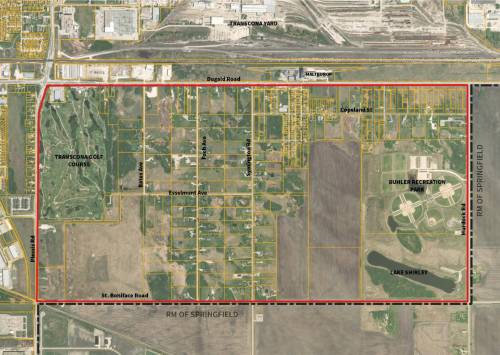
If city council adopts the proposed South Transcona secondary plan, all future development applications would need to conform to its goals. The affected area is located south of Dugald Road, north of St. Boniface Road, east of Plessis Road and west of Murdock Road.

Homeowner Virginia Page Jähne fears the plan could add a massive tab to the title of her 4.3-acre property to cover services required for the development.

“My main concern is that they are wanting to put $1.4 million onto my title to pay for this. Now, they say that I will not have to pay it unless I subdivide. But if a person comes by and wants to buy from me … and they see that $1.4 million … what’s the first thing (they’re) going to do?” said Page Jähne, in an interview.

Read
Friday, Aug. 14, 2026

Could renewed interest in strategically critical rare earth elements finally make sub-sector profitable?

Joel Schlesinger 6 minute read Preview

Could renewed interest in strategically critical rare earth elements finally make sub-sector profitable?

Joel Schlesinger 6 minute read Yesterday at 3:00 AM CDT

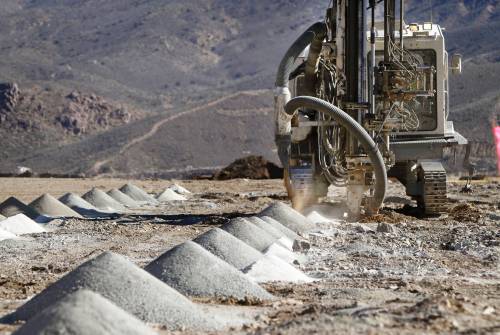
Rare earth elements are among the most critical of mined resources for modern economies.

They’re essential in manufacturing specialized magnets used in a host of technologies from wind turbines and electric vehicles to hard drives, smartphones, television screens, and fibre optics. Most notably, however, rare earth minerals are increasingly vital to the defence industry.

These 17 elements — closely related chemically and usually found all together in mineral deposits — have indeed been growing in geopolitical importance as the United States, Canada and other Western nations recognize their dependence on production from China.

It is the world’s largest producer and processor of rare earths, including the most in-demand elements neodymium and praseodymium used to manufacture very light and powerful magnets for an array of technologies, including the most advanced weapons of modern warfare.

Read
Yesterday at 3:00 AM CDT

Trailblazing Western Scrap Metals heavy-equipment operator relishes role at massive crane’s control

David Sanderson 7 minute read Preview

Trailblazing Western Scrap Metals heavy-equipment operator relishes role at massive crane’s control

David Sanderson 7 minute read Friday, Aug. 14, 2026

Less than five per cent of heavy-equipment operators in the country are women but that number is trending upward, according to a study conducted by trade magazine Crane & Hoist Canada.

It was reported that in Ontario roughly eight per cent of jobs in the transport and heavy-equipment field are currently held by women. Furthermore, in 2024 almost 20 per cent of graduates at an Edmonton-based heavy-equipment operator training school were female, the article stated.

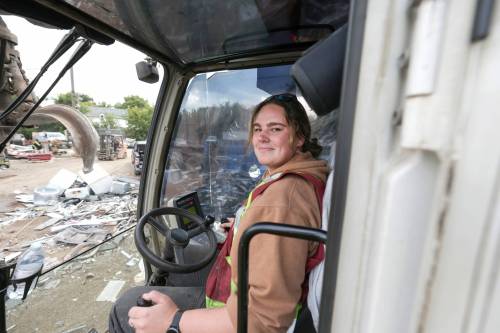
That brings us to Harmony Guspodarchuk, the first female crane operator in the 70-year history of Western Scrap Metals, a family-owned business at 18 Sutherland Ave.

Three years ago, Guspodarchuk literally stepped into the driver’s seat of a 27,500-kilogram, Liebherr C 924 Heavy Lift Litronic crane. The 29-year-old hasn’t looked back much since.

Read
Friday, Aug. 14, 2026

Poilievre’s lips moving, but Canadians aren’t interested in what he’s saying

Tom Brodbeck 5 minute read Preview

Poilievre’s lips moving, but Canadians aren’t interested in what he’s saying

Tom Brodbeck 5 minute read Thursday, Aug. 6, 2026

Pierre Poilievre’s biggest political challenge right now isn’t Prime Minister Mark Carney’s popularity.

It’s the fact that he still seems to be campaigning against a political landscape that no longer exists.

More than a year after the 2025 federal election, the Conservative leader is still relying on the same message, the same themes and the same attacks that defined his party’s campaign before voters went to the polls.

And Canadians appear to be tuning it out.

Read
Thursday, Aug. 6, 2026

West Kildonan Industrial residents call for speed bumps after child hit by truck

Morgan Modjeski 3 minute read Preview

West Kildonan Industrial residents call for speed bumps after child hit by truck

Morgan Modjeski 3 minute read Updated: Yesterday at 3:09 PM CDT

Residents in the West Kildonan Industrial neighbourhood are calling on the city to install speed bumps in their area after a child was hit and dragged by a vehicle Thursday.

Katelyn Bemister lives near the area where the child — who was hospitalized as a result of the incident and has been upgraded to stable condition — was struck. She says people frequently speed in the area.

“They’re going really fast, and they’re not really paying attention at all to the pedestrians in the area,” says Bemister.

In video supplied to the Free Press by a resident, the child can be seen riding a bike down a sidewalk along the 500 block of North Point Boulevard.

Read
Updated: Yesterday at 3:09 PM CDT

Impaired driving victim honoured

Morgan Modjeski 5 minute read Preview

Impaired driving victim honoured

Morgan Modjeski 5 minute read Yesterday at 6:16 PM CDT

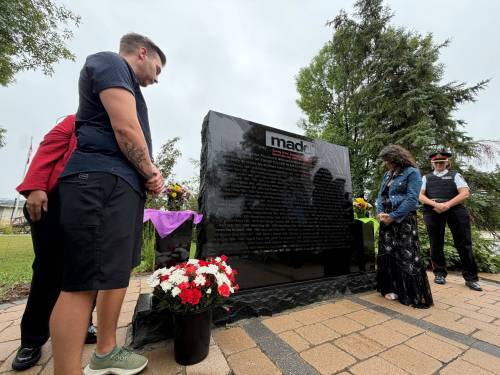
Ten years after he was killed in a collision involving an impaired driver in 2016, Robbie Anderson’s name has been added to MADD Canada’s Manitoba Memorial honouring those killed in drunk and drug-impaired-related crashes.

His older brother Chris Anderson, was one of two dozen people who gathered at the Glen Eden Funeral Home and Cemetery in West St. Paul Saturday to remember their loved ones, 86 victims whose names are etched into the granite monument near the heart of the graveyard.

“It’s heavy,” said Anderson when asked what it was like to be part of the ceremony and see his brother’s name added. “It’s been something I’ve been thinking about for a while.”

Grateful for MADD’s work and its efforts to honour Robbie, who was 27 when he died, Anderson said his brother, represented the “absolute best of us.”

Read
Yesterday at 6:16 PM CDT