Shokupan is the sandwich bread everyone needs to try
Advertisement
Read this article for free:
or
Already have an account? Log in here »
To continue reading, please subscribe:

Digital Subscription
One year of digital access for only $205*
- Enjoy unlimited reading on winnipegfreepress.com
- Read the E-Edition, our digital replica newspaper
- Access News Break, our award-winning app
- Play interactive puzzles
*First annual payment billed as $205.00 + GST for one year. This annual subscription will automatically renew at $233.00 + GST every 52 weeks (10% off the regular annual price of $259.35). Offer available to new and qualified returning subscribers only. Cancel any time.
To continue reading, please subscribe:
Add Free Press access to your Brandon Sun subscription for only an additional
$1 for the first 4 weeks*
- Enjoy unlimited reading on winnipegfreepress.com
- Read the E-Edition, our digital replica newspaper
- Access News Break, our award-winning app
- Play interactive puzzles
*Your next Brandon Sun subscription payment will increase by $1.00 and you will be charged $17.95 plus GST for four weeks. After four weeks, your payment will increase to $24.95 plus GST every four weeks.
Read unlimited articles for free today:
or
Already have an account? Log in here »
Hey there, time traveller!
This article was published 09/12/2021 (1730 days ago), so information in it may no longer be current.
For the past two decades my parents’ go-to bread option has been the thick-sliced sandwich loaves from Bakery Nakamura in Markham’s J-Town.
It’s called shokupan, the umbrella term for Japanese-style sandwich bread (it means “eating bread” in English), and Bakery Nakumura was one of the first to bring it to the GTA. There’s an airy, chewier consistency and a hint of sweetness, and it can be used for anything (the slices also freeze well).
Sometimes shokupan is baked in a pullman loaf pan to give it a uniform square shape ideal for sandwiches, other times in a regular loaf pan. Shokupan is sometimes referred to as milk bread because it can contain milk, though not always.
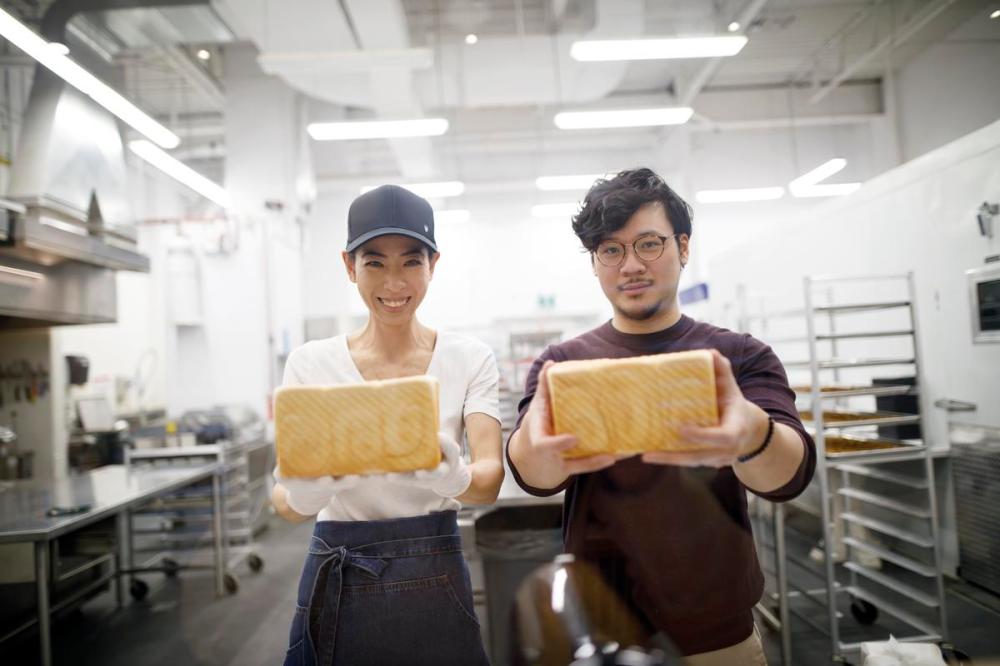
“I think in 2022 there will be more people opening these bakeries or toast shops,” said Albert Yamada Hsueh, founder of Markham’s Iki Shokupan, who opened the bakery when his downtown restaurant Kyoto Katsugyu had to temporarily close due to the pandemic.
Hsueh started small. He turned to a family friend, head baker Jing Yang, to start baking 20 loaves a day for online orders. Word spread and they moved to a larger commercial kitchen offering curbside pickup (downtowners can get the bread on weekends at Katsugyu).
The menu expanded to include honey-whole wheat, matcha and chocolate variations, and a premium loaf with condensed milk. A savoury cheese shokupan is in the works.
At College Street’s year-old vegan Japanese cafe Tsuchi Cafe, baker Haruna Makino combines vegan butter, water, flour, cane sugar and yeast to make about eight loaves each day, in addition to loaves for sandwiches.
It’s a time-consuming process that requires multiple, hours-long proofs and long periods of kneading, a technique called nakadane. Makino also makes a sourdough version to give the bread a slight tang, while still maintaining the soft and chewy texture.
“I want to spread the shokupan culture and have everyone eat it,” Makino said.
Another technique to making shokupan is the yudane method, which is adding hot water to flour in order to make the dough more elastic, yielding a slightly denser consistency than nakadane bread — it’s still pillowy though. This also helps maintain moisture levels, said Wilson Shin of Scarborough’s Katsupan bakery and sandwich shop.
Shin, who previously cooked in fine-dining kitchens, started a home bakery at the start of the pandemic, Earlier this year he opened a storefront selling loaves as well as katsu (fried cutlet) sandwiches. His bread contains milk, which he says increases the fat content to keep it soft and chewy.
“I would compare it to the grocery store white bread, but more flavourful and the texture has a good substance,” said Shin, adding that shokupan also makes excellent French toast and croutons. “A lot of white bread just disintegrates or it gets gummy. When you toast shokupan, it toasts well because of the milk in the dough.”

Read all of the stories from this week’s Toronto food coverage:
How Caribbean black cake brings families together during the holidays
What goes into making panettone? A Toronto baker breaks down the four-day process
This line of Toronto chocolate bars combines flavours unlike any other
Karon Liu is a Toronto-based food reporter for the Star. Reach him via email: karonliu@thestar.ca