All hail the Wine King
B.C. wine baron effervescent about Canadian viticulture

Advertisement
Read this article for free:
or
Already have an account? Log in here »
To continue reading, please subscribe:

Digital Subscription
One year of digital access for only $205*
- Enjoy unlimited reading on winnipegfreepress.com
- Read the E-Edition, our digital replica newspaper
- Access News Break, our award-winning app
- Play interactive puzzles
*First annual payment billed as $205.00 + GST for one year. This annual subscription will automatically renew at $233.00 + GST every 52 weeks (10% off the regular annual price of $259.35). Offer available to new and qualified returning subscribers only. Cancel any time.
To continue reading, please subscribe:
Add Free Press access to your Brandon Sun subscription for only an additional
$1 for the first 4 weeks*
- Enjoy unlimited reading on winnipegfreepress.com
- Read the E-Edition, our digital replica newspaper
- Access News Break, our award-winning app
- Play interactive puzzles
*Your next Brandon Sun subscription payment will increase by $1.00 and you will be charged $17.95 plus GST for four weeks. After four weeks, your payment will increase to $24.95 plus GST every four weeks.
Read unlimited articles for free today:
or
Already have an account? Log in here »
Hey there, time traveller!
This article was published 10/06/2023 (1223 days ago), so information in it may no longer be current.
In 17-plus years of writing about wine and drinks for the Free Press, I’ve chatted with some pretty heavy hitters in the industry. But arguably none have made as big an impact on the Canadian wine scene — and, arguably, the global drinks landscape — as Anthony von Mandl.
The 73-year-old von Mandl was in Winnipeg in May to receive the International Distinguished Entrepreneur Award (IDEA) from The Associates of the University of Manitoba’s Asper School of Business. He doesn’t do a lot of interviews, but I figured I’d put in a request for even just a few minutes of his time to talk wine.
First, a Coles Notes version of his life: born in Vancouver, he and his family moved to Europe before he returned to Canada to go to school. Von Mandl followed his passion for wine and set up an importing company, which didn’t do so well, then purchased a run-down winery in the Okanagan Valley in 1981 and renamed it Mission Hill.
As the winery made slow inroads, von Mandl generated cash flow by essentially creating the flavoured cider category followed by the Mike’s Hard line of coolers, both of which took off (and which he subsequently sold).
Chronic Creative / The Associates Anthony von Mandl (left) tells Free Press drinks writer Ben Sigurdson he is amazed at how his dreams for B.C. wine have taken off. “To see how many wineries there are in the Okanagan now is incredible,” he says.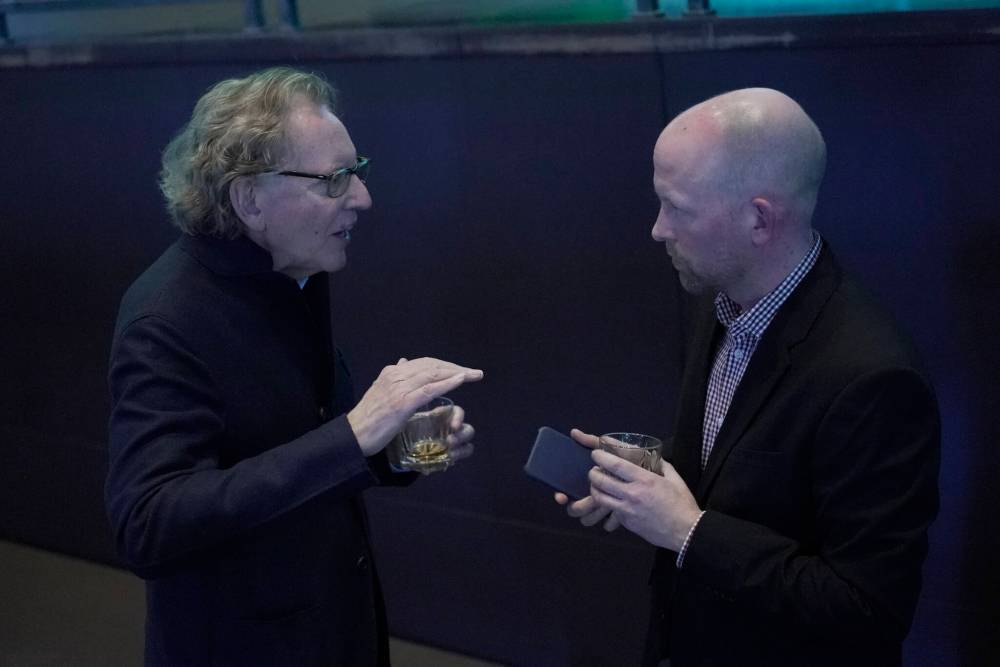
He created the Palm Bay line of coolers while continuing to expand his involvement in his passion, the B.C. wine industry. With a focus on quality, Mission Hill eventually flourished, and has become one of the Okanagan’s most famous wineries, a stunning architectural and artistic spot.
Other award-winning, critically acclaimed wineries in the Okanagan Valley under von Mandl’s Iconic Wineries of British Columbia umbrella include Martin’s Lane (producers of stellar Riesling and Pinot Noir), Checkmate (makers of premium Chardonnay and Merlot), CedarCreek Estate Winery and Road 13.
Under the Mark Anthony Wine & Spirits umbrella, von Mandl returned to the importing business and today helps bring well-known wines into the Canadian market including Penfolds, 19 Crimes, Beringer, Gabbiano, Stag’s Leap and many more.
Oh, and on top of it all, the billionaire went and created White Claw, arguably the best-known and bestselling hard seltzer in the world.
A few minutes were set aside for me to chat with von Mandl at a sponsor dinner the night before he spoke with business students and received his award. As we sampled his Bearface Canadian whisky — he also owns distilleries in Scotland and Ireland — he waxed poetic about the leaps and bounds Canadian wine has taken in terms of quality and reputation.
Chronic Creative / The Associates Anthony von Mandl (left) talks about the rising profile of Canadian wines with Free Press drinks writer Ben Sigurdson at the IDEA sponsor dinner at Club Regent Event Centre on May 3.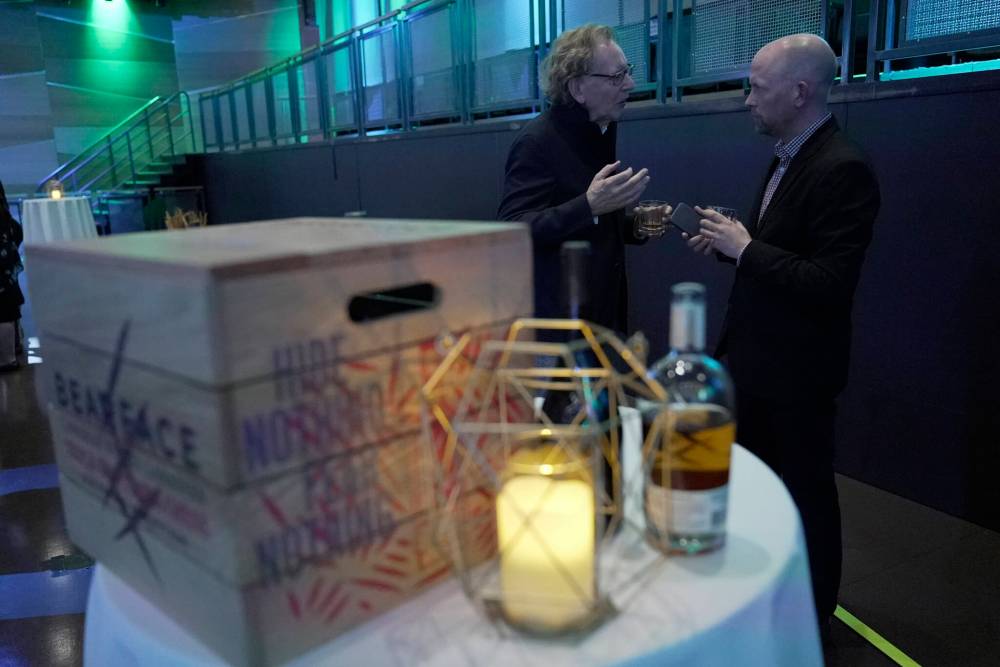
“When I acquired an almost out-of-business winery back in 1981 and renamed it Mission Hill, after the hill it’s located on, there were only five wineries in the Okanagan — and they certainly weren’t focused on quality,” he recalls. “I was looking at the incredible fruit grown in the Okanagan — the cherries, the peaches, the apples — and thought we should be able to grow absolutely amazing grapes.”
The vision von Mandl had for Canadian wine got a big boost when the 1992 Mission Hill Chardonnay won the world’s best Chardonnay accolade at the 1994 International Wine and Spirits Competition.
“It took 13 years until my dream had legs… and to see how many wineries there are in the Okanagan now is incredible,” he says. “But we’re still a tiny grain of sand in the wine business.”
The success of Okanagan Valley wines, says von Mandl, comes down in large part to climate and soil. “The incredible cool nights, the tension between the heat and the natural acidity, the phenolic ripeness we have — we’re producing such magical wines today that are really putting us on the world stage,” he says. “We’re also in a rain shadow, so we don’t have issues with botrytis fungus during harvest.”
Nurturing the culture
Canada’s size and the distance between our primary wine-producing regions has brought challenges when it comes to fostering an overarching Canadian wine culture, but von Mandl reckons that will change with time and increasingly high-quality wines.
“It’s so important to build a wine culture. We’re no different than Australia, South Africa, New Zealand, California… if you go back 50 years, California was known for [wine brand] Italian Swiss Colony, for sweet, sparkling wines,” he says.
For von Mandl, quality begins with the way vines and fruit are cared for in his estate vineyards. “One of the fundamental decisions we made about seven or eight years ago was to put a stake in the ground, so to speak, and go entirely organic,” he says. “What’s important is what’s happening to the vines, to the canes, the leaves, the skins — what that’s giving us is expressions of the natural fruit, of the soil, that we haven’t seen before.”
The investment von Mandl has made in Okanagan Valley wine has helped make inroads beyond our country’s borders.
“I just found out this morning that we’re in 60 top London restaurants — 20 of them are Michelin starred,” he says. “Our Checkmate Artisanal Chardonnay, our Martin’s Lane Pinot Noir — these have become cult wines because they’re so scarce.” (While both are delicious, he’s sadly correct about the scarcity — neither are available in Manitoba, but can be ordered online at iconicwineriesbc.com).
And while hard-to-find critically acclaimed “cult” wines have helped bolster the reputation of Canadian wine, it’s the well-made everyday reds, whites, sparkling wines and rosés that are the backbone of the industry. “Our Mission Hill Sauvignon Blanc — that’s the wine I drink at home at night, when I come in, put my feet up and relax, have dinner,” he says.
It’s hard to imagine von Mandl putting up his feet and relaxing, and as he continues to rhapsodize about the Sauvignon Blanc, there’s still a spark to do more. “The crispness of the wine, the style is so amazing. I see enormous potential, frankly, to do a lot more of that — and to take that to America and the world.”
uncorked@mts.net
@bensigurdson
Drinks of the week
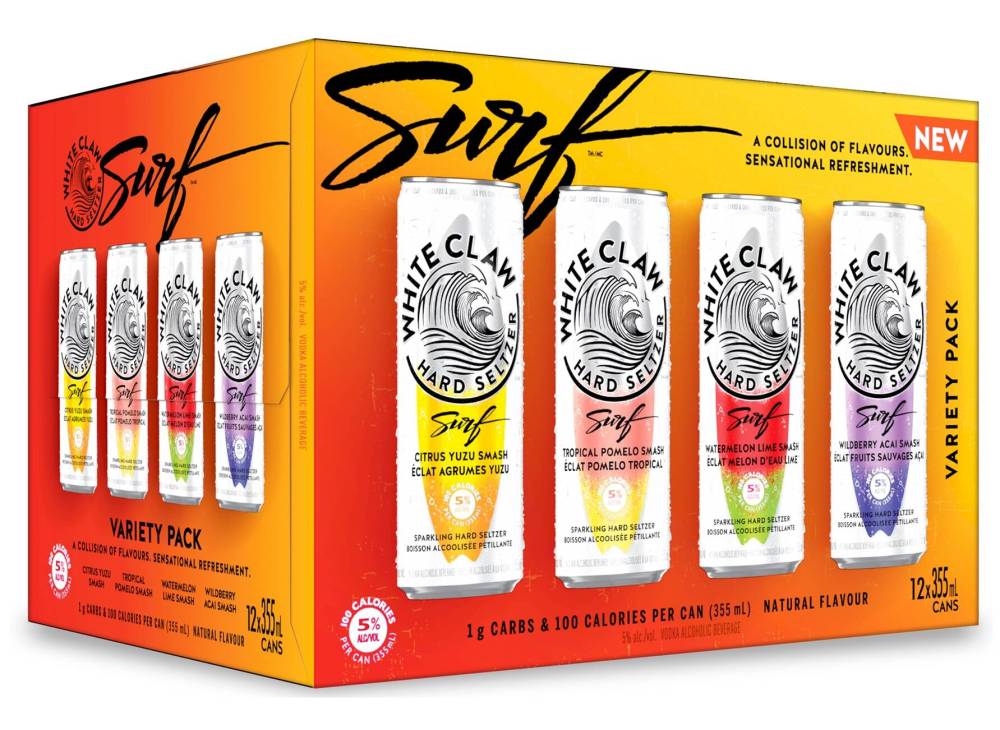
White Claw Tropical Pomelo Smash Hard Seltzer (Toronto — $33.99/12×355 ml cans, Liquor Marts, beer vendors)
One of four flavours in the new-ish White Claw Surf variety pack (along with watermelon lime, citrus yuzu and wildberry acai), this sparkling hard seltzer has no colour and, aromatically, offers ripe mandarin, peach candy and something reminiscent of chewable orange Vitamin C from the 1980s. On the light-bodied palate there’s both tart and slightly sweet notes, with that chalky (but not unpleasant) orange-vitamin note hanging around along with lemon drops and grapefruit. More tart than most White Claw flavours, it’s a hard seltzer with decently intense flavours for warm-weather sipping. 2.5/5
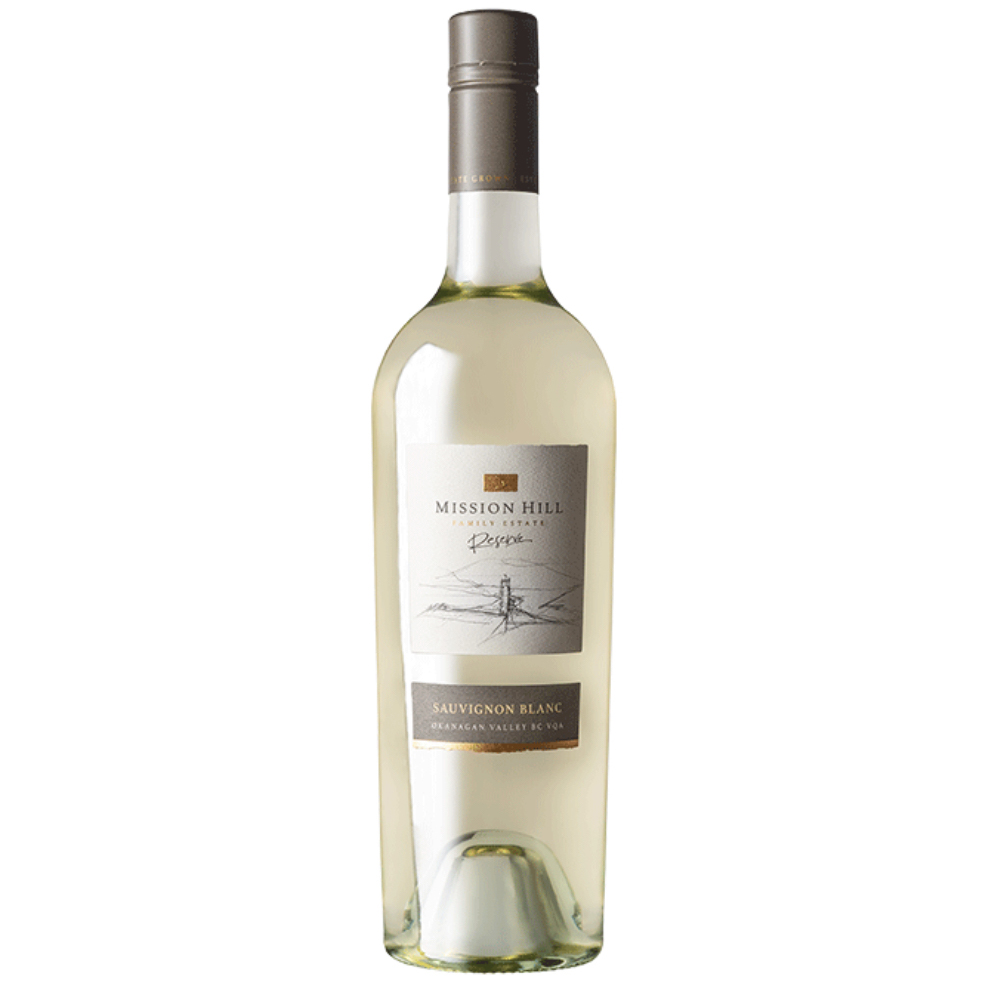
Mission Hill Family Estate 2021 Reserve Sauvignon Blanc (Okanagan Valley, B.C. — $24.99, Liquor Marts and beyond)
Pale straw in colour, there’s a lovely combo of lemon zest, grapefruit pith, green apple and chalk notes that come through aromatically. It’s light-bodied and vibrant, offering bright lemon-lime notes, a persistent green apple component throughout, underlying chalky and herbal notes and racy, mouth-watering acidity on the lengthy finish. Fresh, crisp and tasty. 3.5/5

Mission Hill Family Estate 2020 Meritage (Okanagan Valley, B.C. — $32.99, Liquor Marts and beyond)
Made with fruit sourced from two vineyards in the southern Okanagan Valley, this Bordeaux-style red is a 42-34-17-7 blend of Cabernet Franc, Cabernet Sauvignon, Merlot and Petit Verdot. Aromatically it shows lovely cassis, plum, violet and peppery notes, with secondary bell pepper and iron notes. It’s a full-bodied, dry red with a nice core of ripe blackberry, plum and blueberry, secondary bell pepper, mocha, vanilla and spice (some of which comes from 14 months in oak barrels), medium tannins and a warm finish (it’s 14 per cent alcohol). Drink now or cellar for 24-36 months. 4/5
Ben Sigurdson
Literary editor, drinks writer
Ben Sigurdson is the Free Press‘s literary editor and drinks writer. He graduated with a master of arts degree in English from the University of Manitoba in 2005, the same year he began writing Uncorked, the weekly Free Press drinks column. He joined the Free Press full time in 2013 as a copy editor before being appointed literary editor in 2014. Read more about Ben.
In addition to providing opinions and analysis on wine and drinks, Ben oversees a team of freelance book reviewers and produces content for the arts and life section, all of which is reviewed by the Free Press’s editing team before being posted online or published in print. It’s part of the Free Press‘s tradition, since 1872, of producing reliable independent journalism. Read more about Free Press’s history and mandate, and learn how our newsroom operates.
Our newsroom depends on a growing audience of readers to power our journalism. If you are not a paid reader, please consider becoming a subscriber.
Our newsroom depends on its audience of readers to power our journalism. Thank you for your support.
Ben Sigurdson
Literary editor, drinks writer
Ben Sigurdson is the Free Press‘s literary editor and drinks writer. He graduated with a master of arts degree in English from the University of Manitoba in 2005, the same year he began writing Uncorked, the weekly Free Press drinks column. He joined the Free Press full time in 2013 as a copy editor before being appointed literary editor in 2014. Read more about Ben.
In addition to providing opinions and analysis on wine and drinks, Ben oversees a team of freelance book reviewers and produces content for the arts and life section, all of which is reviewed by the Free Press’s editing team before being posted online or published in print. It’s part of the Free Press‘s tradition, since 1872, of producing reliable independent journalism. Read more about Free Press’s history and mandate, and learn how our newsroom operates.
Our newsroom depends on a growing audience of readers to power our journalism. If you are not a paid reader, please consider becoming a subscriber.
Our newsroom depends on its audience of readers to power our journalism. Thank you for your support.
Advertisement Advertise With Us
Advertisement Advertise With Us