Avoiding shrinkflation is difficult, but these shoppers have a few tips
Advertisement
Read this article for free:
or
Already have an account? Log in here »
To continue reading, please subscribe:
Digital Subscription
One year of digital access for only $1.44 a week*
- Enjoy unlimited reading on winnipegfreepress.com
- Read the E-Edition, our digital replica newspaper
- Access News Break, our award-winning app
- Play interactive puzzles
*Billed as $5.77 plus GST every four weeks. After 52 weeks, price increases to the regular rate of $19.95 plus GST every four weeks. Offer available to new and qualified returning subscribers only. Cancel any time.
To continue reading, please subscribe:
Add Free Press access to your Brandon Sun subscription for only an additional
$1 for the first 4 weeks*
- Enjoy unlimited reading on winnipegfreepress.com
- Read the E-Edition, our digital replica newspaper
- Access News Break, our award-winning app
- Play interactive puzzles
*Your next Brandon Sun subscription payment will increase by $1.00 and you will be charged $17.95 plus GST for four weeks. After four weeks, your payment will increase to $24.95 plus GST every four weeks.
Read unlimited articles for free today:
or
Already have an account? Log in here »
Hey there, time traveller!
This article was published 31/03/2024 (938 days ago), so information in it may no longer be current.
MONTREAL – Stefani Balinsky not only brings her list when she goes grocery shopping, she also brings a calculator.
Oftentimes Balinsky, a mother of a teenager and a 20-year-old, finds herself standing in the aisles and calculating if she’s getting the best deal for every dollar spent. It’s her way of fighting back against shrinkflation.
She recalled her most recent trip to a local grocery store in Montreal. She looked at a variety of cheeses — both with deals and without. While a deal for two blocks of cheese sounded enticing, she said she was getting less per unit weight for the price, compared to the ones without offers.
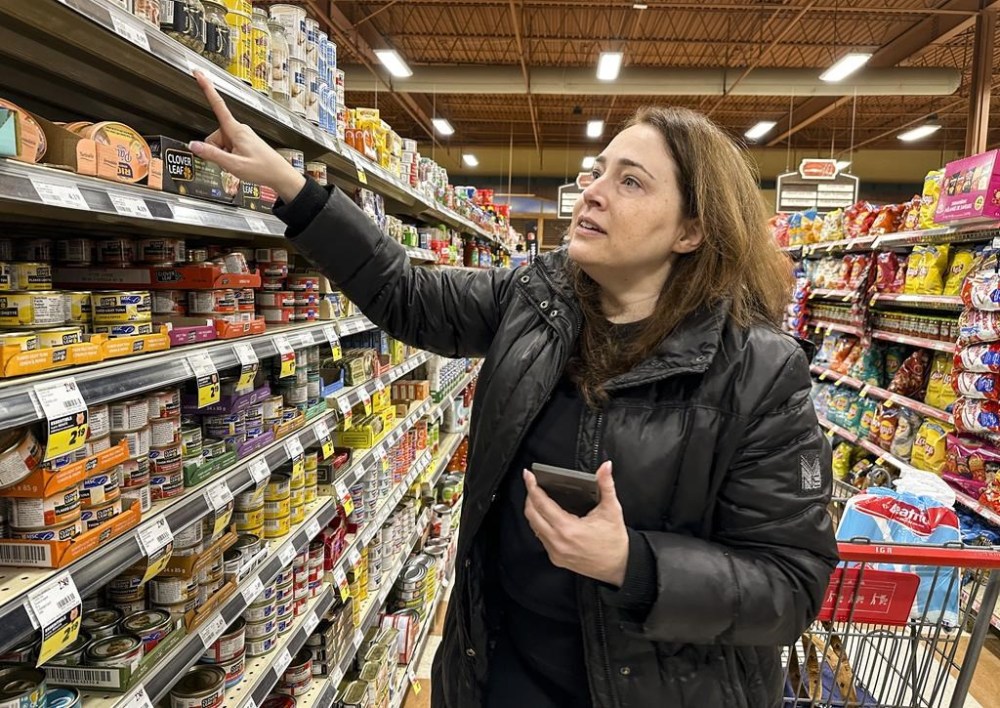
Smallercereal boxes, lighter chip bags and shorter spaghetti strands are common examples of shrinkflation — items that are priced the same even after they are reduced in weight or size. It’s less noticeable than a higher price but the food is more expensive because shoppers get less for their money.
As rising food prices continue to be a pain point in household budgets, many Canadians are on the lookout for grocery store items that have shrunk.
Confectionary items, such as cookies or chocolates, are more susceptible to downsizing, said Marissa Alexander, co-executive director of Food Secure Canada.
“Anything that is packaged (and) processed, it’s easier to get away with shrinkflation because it’s less obvious,” said Alexander, who is also a registered dietitian.
“The issue now is that a lot of the companies that are creating the same products are all doing shrinkflation,” she added, leaving fewer options for consumers.
The main reason is affordability, Alexander said. “Companies are also feeling the issue with our food system — processing food, transporting food and exporting/importing food is all really expensive,” she explained.
But consumers continue to bear the brunt of it, with high costs being passed on to them in deceitful ways.
Jay Jackson, director of policy and strategy at the Consumer Council of Canada, said shrunken food items have become another irritant that shoppers have to deal with alongside high food prices.
But he adds consumers know what to do when they get a sense they’re being tricked.
“When the prices are outrageous, they know how to switch to lower-priced products, or just walk away and find another way,” he said.
For Deidre Cross, an affinity for loyalty cards and flyers has saved her from paying full price every once in a while — and helped her year-over-year grocery bills go down.
“I’m a big fan of using the loyalty programs that the stores have in place (and) I have signed up for them all — PC Optimum, Air Miles,” said Cross, who runs social media channels called Ohh You Budget.
While inflation has lightened her cereal boxes, she manages to collect enough points to sometimes go on a month-long no-spend shopping challenge. She points out many people don’t realize what they can get with loyalty rewards.
“I showed my followers on social media — they see me getting free groceries, they see me getting free car washes and gas,” Cross said. Her audience is often surprised to see her cash in loyalty points for big-ticket grocery items, she added.
“It’s because I see the end result,” Cross said.
She suggested downloading apps that can manage all loyalty cards in one place, such as Stocard, and following discount apps such as Flipp to find the best deals.
For Balinsky, avoiding shrinkflation isn’t about the sale stickers, huge store banners or packaging. It’s her calculator.
“It’s very basic — plus, minus, divide, multiplication,” she said. “It’s figuring out how much you get, down to the smallest unit.”
Balinsky’s long-sworn calculator strategy is a hand-me-down lesson from her mother, who shared the tactic almost 15 years ago during a different economic downturn. While she hasn’t always used a calculator over the years, it comes in handy in difficult times.
She often goes grocery shopping with her mother and splits bulk items such as big bags of carrots and lentils.
“Grab your girlfriend. Let’s go food shopping together. I’ll take the dairy, you take meat, split it that way,” she said.
Shopping at dollar stores for dried staples is also proving a cost-saver for Balinsky.
“The dollar store was a bit of a surprise,” She said, finding deals on rice cakes with the best prices — even better than Amazon or Walmart.

“I’m just a mom, trying to try to feed (my kids) and not spend so much money each week on foods that will either rot in my fridge or sit for years on my shelves,” she said.
Balinsky is now teaching her children to look out for sham deals and get the best bang for their buck.
“When I send them on an errand, (I ask) ‘Is it the best price?'” Balinsky said. “They either go back and do the math or very proudly say in their singsong voice, ‘Yes, mom, I did this, blah blah.'”
Someday, she said, “I know that when they’re on their own and it’s their dollar, they’re gonna do it.”
This report by The Canadian Press was first published March 31, 2024.