Just 15 per cent of Ontarians say they’re affected by the ongoing LCBO strike: poll

Advertisement

Advertise with us

A new poll suggests that just 15 per cent of Ontarians are personally affected by the LCBO's ongoing strike, as the provincial government expands access to alcohol at other retailers.

Read this article for free:


or

Already have an account? Log in here »

To continue reading, please subscribe:

Subscribe and receive a limited-edition Free Press branded hat or tote.

Digital Subscription

One year of digital access for only $205*

  • Enjoy unlimited reading on winnipegfreepress.com
  • Read the E-Edition, our digital replica newspaper
  • Access News Break, our award-winning app
  • Play interactive puzzles

*First annual payment billed as $205.00 + GST for one year. This annual subscription will automatically renew at $233.00 + GST every 52 weeks (10% off the regular annual price of $259.35). Offer available to new and qualified returning subscribers only. Cancel any time.

To continue reading, please subscribe:

Add Free Press access to your Brandon Sun subscription for only an additional

$1 for the first 4 weeks*

  • Enjoy unlimited reading on winnipegfreepress.com
  • Read the E-Edition, our digital replica newspaper
  • Access News Break, our award-winning app
  • Play interactive puzzles
Start now

*Your next Brandon Sun subscription payment will increase by $1.00 and you will be charged $17.95 plus GST for four weeks. After four weeks, your payment will increase to $24.95 plus GST every four weeks.

Hey there, time traveller!
This article was published 17/07/2024 (803 days ago), so information in it may no longer be current.

A new poll suggests that just 15 per cent of Ontarians are personally affected by the LCBO’s ongoing strike, as the provincial government expands access to alcohol at other retailers.

That’s despite nearly 90 per cent of respondents in a new Leger poll saying they are aware that the job action is happening.

Fewer than one-third of Ontarians say they want the provincial government to intervene to end the 12-day strike at Ontario’s main liquor retailer, while about half are supportive of the striking union’s demands.
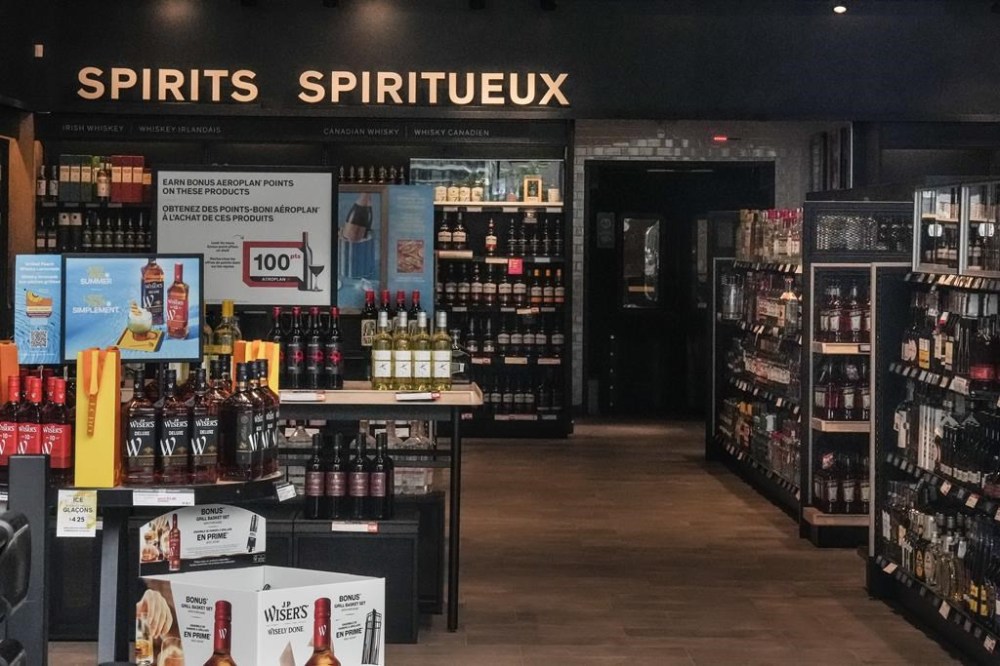
Aisles remain empty in a shuttered LCBO store in Toronto, as LCBO workers continue their strike on Monday, July 15, 2024. Fewer than one-third of Ontarians say they want the provincial government to intervene to end the 12-day strike at Ontario’s main liquor retailer, while about half are supportive of the striking union. THE CANADIAN PRESS/Chris Young

The Leger poll of 601 residents can’t be assigned a margin of error because online surveys are not considered truly random samples.

Approximately 10,000 workers at the LCBO walked off the job on July 5 after negotiations broke down.

The union representing the workers said the sides were headed back to the bargaining table Wednesday.

The poll conducted last weekend asked whether the government should use binding arbitration or legislation to ensure that LCBO stores open back up as soon as possible.

Twenty-nine per cent of respondents supported such a move, while 44 per cent opposed it.

The poll also asked if respondents support the union’s stated goals, including wage increases and more permanent positions. Just under half, 49 per cent, answered in the affirmative, while 25 per cent said they were not supportive.

The Ontario Public Service Employees Union has said the main issue is the province’s alcohol expansion plans, which would see ready-to-drink cocktails sold outside LCBO stores — a move it maintains poses an existential threat to the LCBO and could lead to major job losses.

Colleen MacLeod, chair of the union’s LCBO bargaining unit, has said the plan would “mean thousands of lost jobs, fewer hours for the 70 per cent of LCBO retail workers who are casual and struggling to make ends meet and hundreds of millions in dollars of lost public revenues drained from health care, education and infrastructure.”

The LCBO, a Crown corporation, nets the province $2.5 billion a year.

On Monday, the Ontario government sped up its expansion plan. The 450 stores across Ontario already licensed to sell beer, wine and ciders will be able to start ordering coolers and seltzers on Thursday and sell them as soon as they arrive.

The province has said it does not want to privatize the LCBO, and that the expansion is about giving people more choice and more convenience to buy alcohol.

Stephanie Ross, an associate professor in the school of labour studies at McMaster University, said Premier Doug Ford doesn’t have a great reputation when it comes to labour, given the high-profile disputes in recent years with health-care and education workers.

And he’s faced accusations of making policy moves that benefit friends in the private sector, a criticism that’s been levied against him in the LCBO dispute.

“There is a base of support for the union’s message here, both in terms of the working conditions that they’re trying to fight to improve, and in terms of the role that the LCBO plays in funding public services in the province,” she said.

But the public may not be as sympathetic to LCBO workers as it has been to some others, like in the Metro grocery workers’ strike last year, she said — a relatively straightforward fight by low-paid workers struggling to afford food against the industry being partially blamed for food prices.

“And so in the depths of a kind of historic cost-of-living crisis, I think it was easier to feel sympathy for such workers in terms of really having to fight to make up lost ground.”

That means the LCBO union has its work cut out to try and convince the public of its cause, said Ross, especially when consumers are already divided on the liquor privatization issue in the first place.

She said she thinks the union is doing a good job, however, of arguing the case for the LCBO as a public asset that helps fund important public services.

Larry Savage, a professor in the labour studies department at Brock University, said it’s clear that both the union and the Ford government “are working hard to win over the public to their respective positions.”

The union has a “potentially powerful strategy” to gain public support, but it’s not a surefire one, he said in an email.

This strategy “requires people to connect the dots between the privatization of the LCBO and the loss of a critical revenue stream that contributes billions to public services like health care and education.”

Meanwhile, the government’s strategy has been to try and leverage consumer frustration over the strike in order to drive more support for increased privatization, said Savage.

“It’s a high-risk strategy because a heavy-handed approach can sometimes backfire and garner greater sympathy for the workers and their cause.”

In the Leger poll, 32 per cent of respondents said they looked for alternative locations to buy alcohol due to the strike, while 15 per cent said they were concerned the strike could cause them to spend more money on alcohol.

Savage said while many consumers are likely inconvenienced, he also thinks most Ontarians are suspicious of the premier’s intentions when it comes to the LCBO: “It’s a classic case of private profits over the public good.”

This report by The Canadian Press was first published July 17, 2024.
Report Error Submit a Tip

More Stories

Just 15 per cent of Ontarians say they’re affected by the ongoing LCBO strike: poll

Anja Karadeglija and Rosa Saba, The Canadian Press 5 minute read Preview

Just 15 per cent of Ontarians say they’re affected by the ongoing LCBO strike: poll

Anja Karadeglija and Rosa Saba, The Canadian Press 5 minute read Wednesday, Jul. 17, 2024

A new poll suggests that just 15 per cent of Ontarians are personally affected by the LCBO's ongoing strike, as the provincial government expands access to alcohol at other retailers.

That's despite nearly 90 per cent of respondents in a new Leger poll saying they are aware that the job action is happening.

Fewer than one-third of Ontarians say they want the provincial government to intervene to end the 12-day strike at Ontario’s main liquor retailer, while about half are supportive of the striking union’s demands.

The Leger poll of 601 residents can’t be assigned a margin of error because online surveys are not considered truly random samples.

Read
Wednesday, Jul. 17, 2024

Special teams woes hurt Bombers in loss to Argos

Ken Wiebe 7 minute read Preview

Special teams woes hurt Bombers in loss to Argos

Ken Wiebe 7 minute read Saturday, Sep. 26, 2026

THEY’VE been the most consistent of the three phases in the Winnipeg Blue Bombers arsenal this season.

A port in the proverbial storm, throughout this topsy-turvy campaign of ups-and-downs, the special-teams units have been supplying strength to a group that is still searching for consistency with only four games left in the regular season.

That’s what made this momentary lapse so costly in a 30-28 loss to the Toronto Argonauts on Friday at Princess Auto Stadium.

“We didn’t keep up our end of the bargain. And that hurts our football team, hurts our chances of winning games,” said Blue Bombers special teams ace Tanner Cadwallader. “And if we want to win close games. we’ve got to be a whole lot better than that. And we will. We’re going to come in (on Saturday for the film session) and go through it with a fine-tooth comb and just work a little bit harder.”

Read
Saturday, Sep. 26, 2026

Province invests $3.8M in culinary arts training facility for francophone high school students

Kelly-Anne Riess 3 minute read Preview

Province invests $3.8M in culinary arts training facility for francophone high school students

Kelly-Anne Riess 3 minute read Yesterday at 12:10 PM CDT

A new dedicated culinary arts training facility will give francophone high school students a place to learn the trade in French.

The Manitoba government announced this week that it is providing $3.8 million toward the purchase of a property at 170 Marion St. and beginning design work for its renovation.

The facility will be the first dedicated vocational education site operated by Division scolaire franco-manitobaine, and the first fully French-language culinary arts program for Grade 11 and 12 students, preparing them for work in the restaurant and service sector.

“French-language education is a fundamental part of Manitoba’s identity and strength,” Education Minister Tracy Schmidt said in a news release. “It is an exciting step that will help strengthen both the francophone community and our skilled workforce.”

Read
Yesterday at 12:10 PM CDT

‘In Normandy, we remember’

Aaron Epp 4 minute read Preview

‘In Normandy, we remember’

Aaron Epp 4 minute read Saturday, Sep. 26, 2026

Travelling nearly 7,000 km from his home in France to Winnipeg gave Gabriel Zaranski a new perspective on warfare.

“It’s very different to speak about war in school (than) to speak with real people who (have fought) in a war,” he said. “We can feel the emotion when they speak … The testimony has more impact when it’s real soldiers.”

Zaranski is one of 14 Grade 12 students from Bayeux, a town in France’s Normandy region, in Winnipeg this week for a learning tour.

The students, who attend Lycée Arcisse de Caumont high school, met on Saturday with veterans from the Queen’s Own Cameron Highlanders of Canada, a local military regiment, to discuss their studies and the regiment’s role in the Second World War.

Read
Saturday, Sep. 26, 2026

Respectful separation: an obvious oxymoron

Judy Waytiuk 6 minute read Preview

Respectful separation: an obvious oxymoron

Judy Waytiuk 6 minute read 2:00 AM CDT

“We want a fair and respectful relationship with Canada,” Alberta separatist leader Keith Wilson told the CBC commentator. He paused. Briefly. “On our terms.”

He followed up with a poorly-veiled threat. Trade goods moving east or west across Canada, especially to and from Vancouver, must pass through Alberta, he mused, so…

Wilson and his ilk are blackmailing Canada. If they win this referendum vote, he intends — with Alberta Premier Danielle Smith’s acquiescence — to pull the pin on a genuine separation referendum grenade. The separatists’ transition plan has been largely anonymously authored — much like Trump’s blueprint Project 2025.

Smith claims Albertans will vote against separation. She’s bluffing. Her precarious personal political survival tightrope as she tries to balance atop the UCP could easily carry Canada down a potentially disastrous road. All it will take is for separatists to turn out en masse (about 25 per cent of Albertans, if you believe the polls), and those supporting Canada to stay home because they think it’s in the bag for them.

Read
2:00 AM CDT

Positive anticipation is growing about major housing developments underway in Winnipeg’s downtown

Gabrielle Piché 10 minute read Preview

Positive anticipation is growing about major housing developments underway in Winnipeg’s downtown

Gabrielle Piché 10 minute read Friday, Sep. 25, 2026

If traffic is light and the wind is down, Somia Sadiq is able to hear the roar of Winnipeg Jets fans twice: first through her window, then on TV.

From her apartment view high above downtown, she can look out at Graham Avenue’s painted pedestrian landscape, see construction cranes and hear the heavy equipment at work as massive housing projects take shape at The Forks, at what used to be Portage Place shopping centre and at the former Hudson’s Bay building.

Sadiq has lived at 300 Main for 2 1/2 years, a few steps from the city’s famous, windy and reopened-to-pedestrians Portage Avenue intersection. At 42 storeys, it’s the tallest building in Winnipeg.

She is among 18,000 downtown residents who will soon be joined by thousands of others attracted to the city’s core by the new wave of major construction projects.

Read
Friday, Sep. 25, 2026