Grocery code could spur investment, stabilize prices: Kraft Heinz Canada president
Advertisement
Read this article for free:
or
Already have an account? Log in here »
To continue reading, please subscribe:

Digital Subscription
One year of digital access for only $205*
- Enjoy unlimited reading on winnipegfreepress.com
- Read the E-Edition, our digital replica newspaper
- Access News Break, our award-winning app
- Play interactive puzzles
*First annual payment billed as $205.00 + GST for one year. This annual subscription will automatically renew at $233.00 + GST every 52 weeks (10% off the regular annual price of $259.35). Offer available to new and qualified returning subscribers only. Cancel any time.
To continue reading, please subscribe:
Add Free Press access to your Brandon Sun subscription for only an additional
$1 for the first 4 weeks*
- Enjoy unlimited reading on winnipegfreepress.com
- Read the E-Edition, our digital replica newspaper
- Access News Break, our award-winning app
- Play interactive puzzles
*Your next Brandon Sun subscription payment will increase by $1.00 and you will be charged $17.95 plus GST for four weeks. After four weeks, your payment will increase to $24.95 plus GST every four weeks.
Read unlimited articles for free today:
or
Already have an account? Log in here »
Hey there, time traveller!
This article was published 19/07/2024 (804 days ago), so information in it may no longer be current.
TORONTO – A grocery code of conduct could stabilize food prices in the future and encourage more investment in the Canadian food industry, according to the president of Kraft Heinz Canada.
“It creates a better trade environment for both the supplier and the retailer, but I think at the end of the day, the consumer is winning,” said Simon Laroche in an interview with The Canadian Press.
Laroche thinks the code of conduct, which sets out guidelines for fair dealing between grocers and suppliers, could bring some stability to an industry emerging from a difficult four years marked by empty shelves, sticker shock and rising consumer frustration.
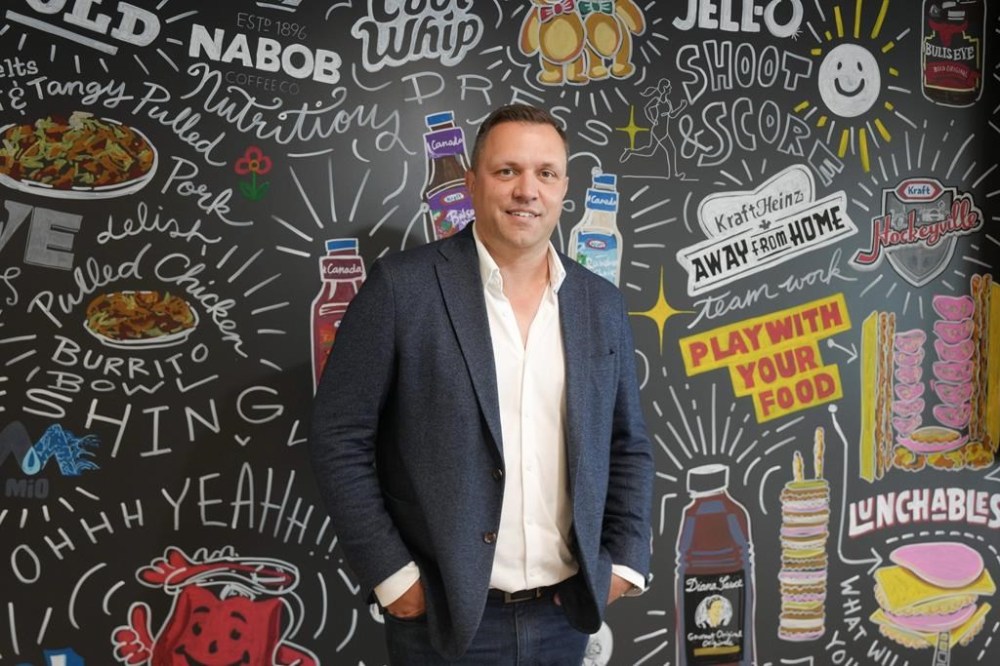
“(The code) helps big companies to have more confidence that they can do business long-term in a fair way.”
Progress on the nearly complete grocery code stalled last year as it became clear that some major grocers had reservations.Loblaw joined earlier this year after some changes to the proposed guidelines. This week, Walmart and Costco confirmed their support, which means all the country’s major grocers are now on board.
Laroche said he’s happy to hear the grocers are on board with the code, and believes it will be a positive thing for consumers and for the industry.
Canada might be still finalizing its code, but Laroche has already seen what it could do for a country with a concentrated grocery market. Before moving into his current role last year, Laroche spent several years leading Kraft Heinz’s business in Australia, New Zealand, Japan and Korea. Australia has had a code of conduct since 2015.
A code brings transparency and encourages fair negotiations between suppliers and retailers, said Laroche, adding that one of the most important benefits is a clear dispute resolution process.
The idea of an industry-led commitment to fair dealings predates the recent bout of food inflation, gaining traction in 2020 amid pandemic supply chain challenges. However, negotiations between grocers and suppliers, long hidden from public view, became hot-button issues as inflationary pressures rose.
Consumers caught wind of these tensions in 2022, when a spat between Loblaw and Frito-Lay Canada resulted in empty shelves across the country.
At its peak, grocery inflation in Canada was 11.4 per cent; since May 2020, food prices have risen by more than 22 per cent.
And as Canada’s largest grocers increasingly came under fire for rising profits amid inflation, some executives pointed fingers at large multinational suppliers, accusing them of asking for unreasonable price increases.
Laroche thinks a code of conduct will help the industry better navigate these kinds of disagreements in the future.
“A lot of people are trying to make a really simple story, ‘Oh, somebody’s taking advantage of a situation,’” he said.
“But it was a complex situation.”
For Kraft Heinz, inflationary pressures have stabilized to a much more manageable level, Laroche said.
The company has also learned a lot about how to mitigate supply chain disruptions after the empty shelves and shortages of the early months of the pandemic, and has made some changes as a result.
“I think one of the big things for the entire industry is about making sure you don’t rely on (a) single source of ingredients,” Laroche said.
“From a procurement standpoint, we did a lot of learning to make sure that if something happened, we have alternatives.”
Kraft Heinz also learned to have backup recipes in case certain ingredients, like the oil in mayonnaise, shot up in price or were difficult to procure, said Laroche.
The fact that Kraft Heinz produces a lot of its products domestically has helped avoid further supply chain disruptions, he added. Half of what the company sells in Canada comes from the Kraft Heinz factory in Montreal, and the company recently renewed its production contract in Leamington, Ont. until the end of 2027.
The company moved its ketchup production to the U.S. in 2015, which was “a mistake,” said Laroche.

Five years later, the company announced it would return to Canada thanks to a joint investment with the Quebec government’s business expansion program.
Today, the Montreal facility makes hundreds of products including Kraft Dinner, Kraft peanut butter and salad dressing, Philadelphia cream cheese and Heinz tomato ketchup. The Highbury Canco facility in Leamington also makes a variety of products, including Heinz tomato juice, Classico tomato sauces, and the tomato paste used in Heinz ketchup.
“The (consumers) were not happy, we brought everything back, and now our ketchup is fully Canadian. And we’re extremely proud of that.”
— With files from The Associated Press
This report by The Canadian Press was first published July 19, 2024.

Advertisement Advertise With Us
Advertisement Advertise With Us