Acai berry producers are concerned as Trump imposes tariffs on Brazil’s exports
Advertisement
Read this article for free:
or
Already have an account? Log in here »
To continue reading, please subscribe:

Digital Subscription
One year of digital access for only $205*
- Enjoy unlimited reading on winnipegfreepress.com
- Read the E-Edition, our digital replica newspaper
- Access News Break, our award-winning app
- Play interactive puzzles
*First annual payment billed as $205.00 + GST for one year. This annual subscription will automatically renew at $233.00 + GST every 52 weeks (10% off the regular annual price of $259.35). Offer available to new and qualified returning subscribers only. Cancel any time.
To continue reading, please subscribe:
Add Free Press access to your Brandon Sun subscription for only an additional
$1 for the first 4 weeks*
- Enjoy unlimited reading on winnipegfreepress.com
- Read the E-Edition, our digital replica newspaper
- Access News Break, our award-winning app
- Play interactive puzzles
*Your next Brandon Sun subscription payment will increase by $1.00 and you will be charged $17.95 plus GST for four weeks. After four weeks, your payment will increase to $24.95 plus GST every four weeks.
Read unlimited articles for free today:
or
Already have an account? Log in here »
Hey there, time traveller!
This article was published 08/08/2025 (418 days ago), so information in it may no longer be current.
BELEM, Brazil (AP) — When U.S. President Donald Trump imposed tariffs of 50% on Brazilian exports in July, acai producer Ailson Ferreira Moreira felt immediately concerned.
After all, who was going to eat all of that Amazon berry, globally famous as a delicious, refreshing and nutritious superfood, if American consumers suddenly could no longer afford it?
As the main importer of the Brazilian berry, prices of acai smoothies and bowls look certain to go up in the United States.
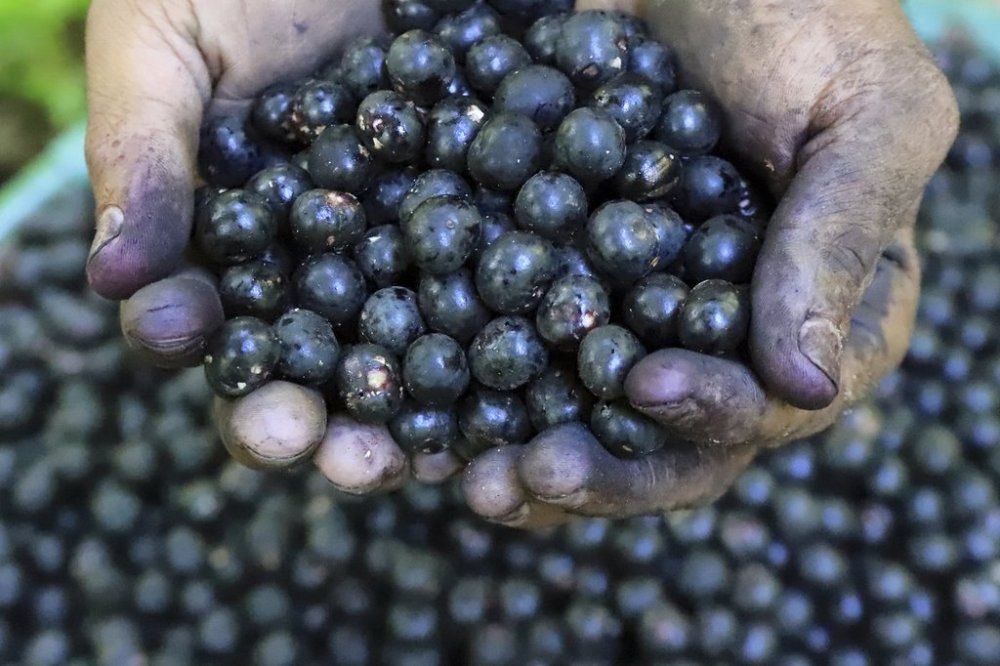
“The acai that’s all produced here … If only people here eat it, it’s going to be a lot of acai, right?” Moreira told The Associated Press outside of Belem, an Amazon city of 1.4 million residents that will host this year’s U.N. climate summit COP30 climate summit in November. “If there’s too much acai here, people won’t be able to eat it all and the price will drop.”
A single full crate of acai sells for around $50 at local markets in Brazil, a price that is now expected to plummet. The U.S. is by far the largest acai importer of a total Brazilian output currently estimated at about 70,000 tons per year.
Impact already being felt
The most vulnerable acai producers in the northern state of Para say they have already been hit by tariffs imposed by the U.S. government, as a surplus of the berry without a clear destination starts to mount only days after the new economic scenario unfolded.
More powerful exporters, such as Sao Paulo-state based company Acai Tropicalia Mix, are also feeling the impact.
One of its owners, Rogério de Carvalho, told the AP that last year he exported to the U.S. about 270 tons of acai cream — an industrialized version of the berry — ready for consumption. As tariffs started to loom, he said, American importers steered away and clients suspended negotiations. Until the end of July, de Carvalho estimates that his company sold 27 tons to the U.S.
“That’s 1.5 million Brazilian reais ($280,000) that we lost,” the businessman said. “We are confident there will be a deal between the two countries to allow not only our clients to return, but also getting some new ones.”
Tariffs linked to Bolsonaro case
Trump has linked the higher tariffs on Brazil to the trial of former President Jair Bolsonaro, who is now under house arrest for his alleged role in leading an alleged coup plot to remain in office, despite his election loss to current leftist President Luiz Inácio Lula da Silva.
And despite several Brazilian exports being exempted from the tariffs, acai berries aren’t among them.
Brazil’s industry ministry didn’t reply to a request for comment on whether acai berries are among the items that remain on the negotiating table with U.S. trade representatives.
Flavor explosion
Nearly all of the acai consumed in the U.S. originates from Brazil, with the state of Para alone accounting for 90% of the country’s total production. Several communities in the Amazon depend on its harvest.
The harvesting of acai is a physically demanding job that requires workers to climb tall trees with minimal safety equipment, and then sliding down branches full of berries to fill baskets and then place them carefully in crates. Analysts say its producers also help protect the rainforest from illegal loggers, miners and cattle ranchers.
The night markets of Belem, such as the Ver-o-Peso acai market, are a hub of activity where the freshly harvested berries are brought in by boat and prepared for sale.
The Brazilian Association of Fruit and Derivative Producers and Exporters estimates there was an explosive growth of acai exports from Para state, from less than one ton in 1999 to more than 61,000 tons in 2023. Another explosive rise was expected for this year, before the tariffs.
On Thursday, Brazil requested consultations at the World Trade Organization over tariffs imposed by the Trump administration against the South American nation that went into effect on Wednesday.
That could be took little too late for acai harvester Mikael Silva Trindade, who agrees that the future of the trade is at risk as higher U.S. tariffs can disrupt the delicate balance of supply and demand that holds the industry.

“There will be nowhere to market (the excess of acai),” Trindade told the AP as he picked berries in Para state. “The more you export, the more valuable it becomes. But if there’s too much to sell, it will stay here and become cheap.”
___
Mauricio Savarese reported from Sao Paulo.
___
Follow AP’s coverage of Latin America and the Caribbean at https://apnews.com/hub/latin-america