Deal reached to allow grocers to avoid accepting beer and wine empties
Advertisement
Read this article for free:
or
Already have an account? Log in here »
To continue reading, please subscribe:

Digital Subscription
One year of digital access for only $205*
- Enjoy unlimited reading on winnipegfreepress.com
- Read the E-Edition, our digital replica newspaper
- Access News Break, our award-winning app
- Play interactive puzzles
*First annual payment billed as $205.00 + GST for one year. This annual subscription will automatically renew at $233.00 + GST every 52 weeks (10% off the regular annual price of $259.35). Offer available to new and qualified returning subscribers only. Cancel any time.
To continue reading, please subscribe:
Add Free Press access to your Brandon Sun subscription for only an additional
$1 for the first 4 weeks*
- Enjoy unlimited reading on winnipegfreepress.com
- Read the E-Edition, our digital replica newspaper
- Access News Break, our award-winning app
- Play interactive puzzles
*Your next Brandon Sun subscription payment will increase by $1.00 and you will be charged $17.95 plus GST for four weeks. After four weeks, your payment will increase to $24.95 plus GST every four weeks.
Read unlimited articles for free today:
or
Already have an account? Log in here »
Hey there, time traveller!
This article was published 26/11/2025 (311 days ago), so information in it may no longer be current.
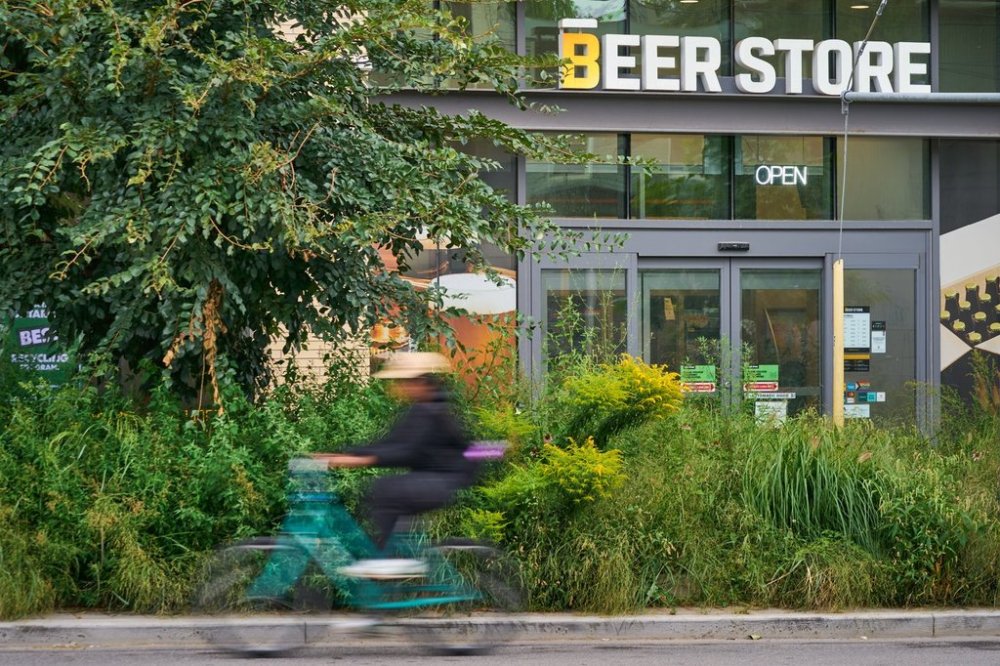
TORONTO – Ontario grocers and The Beer Store have reached an agreement-in-principle on alcohol recycling that will allow the retailers to avoid collecting empties at their stores and gives a renewed role to the brewers, The Canadian Press has learned.
The deal averts a potential death knell for the Ontario Deposit Return Program, as some grocers warned they would refuse to accept empties as required starting Jan. 1, the same day The Beer Store is allowed to close an unlimited number of locations.
Details are still being worked out, but the broad strokes of the agreement mean that consumers will continue to exchange empties for their deposits at Beer Store locations, with grocers footing the bill and the brewers committing to ensuring there is a point of recycling available within 10 kilometres for the vast majority of the population.
“This is positive news for consumers and the environment,” The Beer Store’s president and CEO Roy Benin wrote in a statement.
“We are leaders in operating a deposit return system with a great track record of customer service. This voluntary service agreement will allow Ontarians access to the empty alcohol return system that gets people their deposit money back.”
Behind-the-scenes talks between brewers and grocers — facilitated by the government — have been ongoing for months, sparked by an earlier deal the government reached with The Beer Store in order to speed up Premier Doug Ford’s plan of expanding alcohol sales to convenience stores and more grocery stores.
That deal involved requiring grocery stores more than five kilometres away from a Beer Store to accept empty returns and extending that obligation to all grocers selling alcohol on Jan. 1. Many were not complying with that requirement and had warned the government they would stop selling alcohol if the program wasn’t improved, threatening Ford’s much-touted alcohol expansion.
A spokesperson for Finance Minister Peter Bethlenfalvy welcomed the agreement-in-principle, calling it a win for businesses and consumers.
“This is another step forward in modernizing Ontario’s alcohol marketplace and delivering more choice and convenience to the people of Ontario,” Colin Blachar wrote in a statement.
The earlier agreement to speed up alcohol expansion also involved paying The Beer Store $225 million during the transition and it was allowed to close dozens of locations, which the retailer has been regularly announcing. It has to maintain at least 300 locations as of the end of this year but starting next year there was no agreed-to minimum, leaving some questioning the future of The Beer Store.
This new deal cementing The Beer Store’s continued role in alcoholic container recycling could ensure no mass closure starting Jan. 1, though it is not yet known if it will continue with some closures or even seek to open previously shuttered or new locations to meet its 10-kilometre commitment. The Beer Store would not comment on that aspect.
Karen Wirsig, a senior program manager at Environmental Defence, said the deal is good news, especially if it means the remaining Beer Store locations stay open and continue the recycling program, but as the details get worked out she hopes they get more robust.
“Ten kilometres is really a long distance to expect anybody in an urban area to travel to return empties,” she said in an interview.
“I think we’re going to need to see an augmentation of return points over time though, and then in small towns where Beer Stores have closed, they’re going to need to find alternative sites.”
Grocery stores had for months voiced their concerns with the program, including sanitation issues and space constraints, and say now they are relieved there is a resolution.
“After months of negotiations, grocers and The Beer Store have reached a deal that keeps alcohol container recycling simple and dependable; a system that consumers know and expect,” Retail Council of Canada president and CEO Kim Furlong wrote in a statement.
The total cost to grocers is not yet known and it is unclear if they will pass all or some of it on to consumers.

Gary Sands, senior vice-president of public policy and advocacy with the Canadian Federation of Independent Grocers, said independent and small grocers would have had to shoulder additional costs to set up systems at their stores to collect and store empties for pickup, so there would have been a cost no matter what.
“There’s a number of independent grocers that were not applying for licences because of the recycling requirement, and we also know that there are independents who publicly said, ‘If this isn’t resolved … I’ll be out of the business,'” Sands said in an interview.
“So this ensures that we get back to what the original objective was, providing more choice and convenience for consumers, because now, more independents will be applying for licences, and those who have licences will retain their licences.”
Convenience stores are exempt from recycling requirements.
This report by The Canadian Press was first published Nov. 26, 2025.